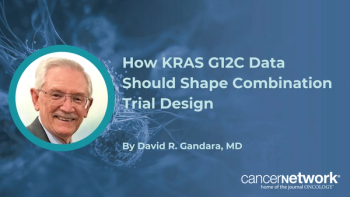
David R. Gandara, MD, discusses how EMPOWER-Lung 1’s findings in KRAS G12C-mutated disease should inform the design of combination trials.
Using T-cell–redirecting therapies in less heavily pretreated populations may be a beneficial space to capitalize on, said Barry Paul, MD.
Following the 2026 National Immune Cell Effector Therapy Conference in Charlotte, North Carolina, Barry Paul, MD, spoke with CancerNetwork® about the most critical updates related to the multiple myeloma paradigm that presenters shared at the meeting. Based on all the data presented at the conference, Paul stated that the current unmet need in multiple myeloma care is the sequencing of therapy.
According to Paul, identifying and immediately treating the subsets of patients whose diseases may be curable is critical. He said that using T-cell–redirecting therapies among less heavily pretreated populations may be a beneficial opportunity to leverage more stimulable T cells in patients. Looking ahead, Paul described how avoiding overtreatment and balancing efficacy with safety are crucial goals of care, which may afford certain patients a “functional cure” that does not affect their life expectancy.
Paul is an assistant professor of cancer medicine at Atrium Health Levine Cancer Institute of Wake Forest University School of Medicine.
Transcript:
The big unmet question [or] unmet medical need right now is the sequencing question. I want to know if there is a patient population who is potentially curable, and if so, [we must] make sure that we don't miss that opportunity when that window is open. Being able to utilize T-cell–redirecting therapies in patients who are less heavily pretreated will likely allow us to utilize more healthy T cells and likely capitalize on a more beneficial space because these patients' T cells are more [stimulable].
Finding these patients who have this curable phenotype or genotype—it may be something genetic—is incumbent because we need to make sure that we are not missing [them]. Similarly, if these patients are not potentially curable but they can respond beautifully long term to other agents or even to CAR [chimeric antigen receptor] [T cells] at some point, [we must] make sure that we're not overtreating these other patients and making sure that we're providing them the safest and most effective care, understanding that even if they're not curable, we can still achieve a functional cure, meaning that they live to a normal life expectancy. Even though their myeloma may not be cured, it doesn't affect their life expectancy.