“Far and away, a unified electronic health record is the single use case that could benefit both patients and physicians most, and AI has the potential to help us achieve that,” said Margarita Racsa, MD, MPH.
Philip Blumenfeld, MD, discussed the feasibility of radium 224 Alpha DaRT sources delivered via endoscopic ultrasound for patients with pancreatic cancer.
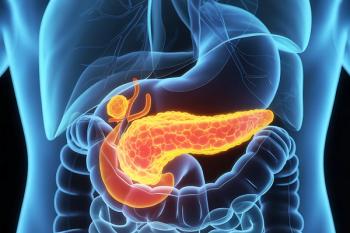
The therapeutic landscape for patients with inoperable pancreatic adenocarcinoma remains a significant challenge, with standard-of-care options often limited by the radiosensitivity of surrounding gastrointestinal structures. Alpha DaRT (diffusing alpha-emitters radiation therapy) represents a novel approach, utilizing radium 224 sources to deliver high-linear energy transfer (LET) alpha particles directly into the tumor microenvironment.
Results from 2 clinical protocols evaluating Alpha DaRT in patients with pancreatic adenocarcinoma conducted at Hadassah Medical Center in Jerusalem, Israel, were shared at Digestive Disease Week (DDW) 2026.1 CancerNetwork® spoke with Philip Blumenfeld, MD, the presenting study author, about the results. Blumenfeld is also the director of the Advanced Radiotherapy Unit at the Sharett Institute of Oncology at Hadassah Medical Center.
Blumenfeld detailed the mechanism of alpha-emitter diffusion, the safety profile of endoscopic ultrasound (EUS)–guided delivery, and early efficacy signals, including a 100% local disease control rate and potential abscopal effects in metastatic disease, in the conversation.
Notably, on April 23, 2026, the FDA approved an investigational device exemption supplement for the Alpha DaRT pilot study, the IMPACT trial (NCT06698458), evaluating Alpha DaRT in combination with chemotherapy as treatment for patients with newly diagnosed unresectable, locally advanced or metastatic pancreatic adenocarcinoma.2
Blumenfeld: The unmet need in pancreatic adenocarcinoma is quite stark. Approximately 87% of patients with pancreatic adenocarcinoma are inoperable at diagnosis. For those patients, the therapeutic tool kit is essentially systemic chemotherapy with very modest survival benefits. External beam radiation has a defined role, but it’s still limited to patients with locally advanced disease or patients requiring palliation. Essentially, with external beam radiation, we are constrained by the radiosensitivity of the surrounding organs. In this case, you have the duodenum, the stomach, the small bowel, and the kidneys, etc. We cannot reliably escalate doses to the tumor, and we are constrained by what we can deliver.
In terms of external beam [radiation], Alpha DaRT is mechanistically distinct in that these are radium 224 seeds or sources that are directly delivered into the tumor. They release short-lived alpha-emitting daughter isotopes, and they can diffuse 2 to 3 mm throughout the tumor tissue. Alpha particles deposit energy with what we refer to as high LET. This high LET can essentially cause direct double-stranded DNA breaks, which are independent of oxygen tension. This matters considerably because of the hypoxic microenvironment in pancreatic adenocarcinoma. Critically, the delivery is using EUS, which is great. It’s a procedure that gastroenterologists already own.
Across 19 patients, we observed a 100% disease control rate at the locally treated tumor using modified RECIST criteria. Approximately 21% of patients had partial responses, and the remaining [patients] had stable disease; we did not note any patients who had progressive disease in the primary lesion. There were no complete responses at this early stage, which is not unexpected in this population, especially because we had partial tumor volume coverage in this particular cohort. However, in the absence of local progression, we believe this is quite clinically meaningful.
We also observed significant pain relief in a subset of patients, which tends to get underreported but can matter significantly for quality of life. We even noted in a single patient with metastatic disease, who did not have a good response to second-line chemotherapy, that he not only achieved good control of his primary lesion but also achieved the complete resolution of other lesions on his PET-CT after the Alpha DaRT was introduced to the regimen. Whether this reflects what we refer to as a direct abscopal effect or some form of immune priming, we cannot say, but it is a signal worth pursuing.
Reassuringly, it was quite safe. We had 26 patients who were treated, and [we] recorded 8 device-associated adverse events in 7 [patients]. These were predominantly grade 1 and grade 2 toxicities, including abdominal discomfort, thrombocytopenia, and fatigue. All were graded per CTCAE v5.0, and all toxicities resolved within 2 weeks, with the single exception of 1 patient who had continued fatigue following the Alpha DaRT treatment. We noted no device-related serious adverse events.
What was very important was that technically, the source delivery was successful in all cases. The procedure would run for approximately 1 hour, and the average number of needle insertions was 33, ranging between 15 and 64. There was a mean of 56 sources placed, with up to 124 sources delivered in 1 patient. Most patients were managed either as outpatients or with a single overnight stay.
There was no additional clinical training needed to manage what we observed. The adverse events were mild and transient. From a procedural standpoint, the EUS-guided insertion is analogous to an EUS fine-needle aspiration. That is a deliberate design feature of this delivery system, so endoscopists who are familiar with EUS-guided tissue acquisition will find this procedurally intuitive. There is a specific setup protocol for loading the Alpha DaRT sources into the needles within a compliant radiation safety framework, but that is institutional logistics and not a clinical skills gap at all.
The PANC protocol specifically enrolled patients with biopsy-confirmed pancreatic adenocarcinoma that was either unresectable, recurrent, or metastatic. [Patients] were unfit for standard therapy. The ALL protocol had much broader eligibility criteria, permitting any malignancy with a targetable lesion and allowing concurrent systemic therapy. Because the ALL protocol opened before the PANC protocol, we decided to do a pooled analysis. We included only the ALL patients who specifically had pancreatic adenocarcinoma in whom the primary tumor was treated with Alpha DaRT.
All patients had to undergo a preprocedural CT simulation and EUS planning. We subsequently did a postprocedure CT confirming the sources were placed correctly. Across the 26-patient cohort, we had a median age of 72 years, 69% were male, 38% had locally unresectable disease, and 62% had metastatic disease. The median follow-up was 91 days. The primary end point was the safety of EUS delivery, and secondary end points were tumor response at 1 and 3 months post implantation by modified RECIST criteria. This is the first-in-human introduction of Alpha DaRT in this setting, so feasibility had to be established before looking at significant efficacy.
For locally advanced and unresectable pancreatic adenocarcinoma, current practice options include systemic chemotherapy, typically FOLFIRINOX [folinic acid, 5-fluorouracil, irinotecan, and oxaliplatin] or gemcitabine-based regimens, with radiation in selected cases. Radiation is typically external radiation with stereotactic body radiation therapy (SBRT) or conventionally fractionated radiation therapy. Unfortunately, the median overall survival remains in the range of 12 to 18 months, even in optimal candidates, and most patients do not reach surgical resection. For metastatic disease, survival is measured in months and could be up to 1 year across most lines of systemic therapy.
Alpha DaRT is unique in that it is not competing with systemic therapy; I look at it as being additive. It addresses the local disease dimension in a way that we cannot currently do without surgery and with our limited ability with external radiation in this difficult anatomical location. Because of the short path length of the alpha particles, it confines the biologically effective dose to the tumor, which is the geometric challenge we have never been able to solve well with photon-based or classic radiation therapy near the duodenum and the bowel. Here we are able to give a very powerful dose of radiation with minimal to no dose to the surrounding structures.
The second thing is the potentially immunogenic dimension. There have been many studies in alpha radiation noting that high LET radiation, which induces cell death, can release significant tumor antigens. This may potentiate the immune response. This is hypothesis generating and is now being tested in combination with checkpoint inhibition in other tumor types where we see early signals of systemic activity. Alpha DaRT can fit into this unmet need and address this very difficult tumor.
Now that we have shown feasibility, we have moved to the IMPACT trial. That study is enrolling patients with newly diagnosed, locally advanced pancreatic cancer to receive Alpha DaRT earlier during cycles 1 to 4 of modified FOLFIRINOX. Our primary end point is safety, but secondary end points include overall survival, progression-free survival, local response, and pain response. The US multicenter pilot study treated its first patient in September 2025, and parallel studies are opening in France [and are] combining Alpha DaRT with capecitabine in locally advanced disease.3
Beyond this, there are 3 high-priority areas. The first one is dose optimization. What we did here was an early experience, and we noted that we were able to only partially cover the tumor with the seeds. We’re somewhere in the range of 8% to 44%. Despite that, we still saw very good responses. Understanding the dose-response relationship and what volume needs to be covered is essential. The second [area] is combinations with immunotherapy. Signals from other disease sites, such as head and neck data, have been compelling enough to warrant formal investigation in pancreatic cancer, a tumor typically seen as not immunogenic. The third [area] is biomarker development to understand which patients are likely to derive local and potentially systemic benefit from Alpha DaRT.
The fact that this has been selected as an oral presentation at DDW—the first Alpha DaRT pancreatic cancer presentation at a major gastrointestinal cancer forum—is an indication that the gastroenterology community, not just the radiation and medical oncology community, is recognizing this as relevant to their practice. That engagement is important because, at scale, endoscopists will be the ones delivering this therapy together with radiation oncologists.