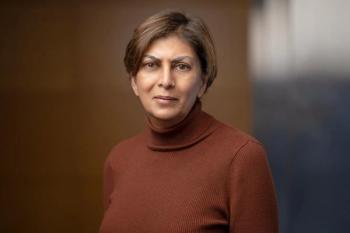
![“[E]ven if patients relapse following an allogeneic transplant, donor lymphocyte infusions can be incredibly helpful,” said Mary Jo Lechowicz, MD.](https://cdn.sanity.io/images/0vv8moc6/cancernetwork/06df696db42b151710c58727b1333ee098de6453-1200x800.jpg?w=350&fit=crop&auto=format)
“[E]ven if patients relapse following an allogeneic transplant, donor lymphocyte infusions can be incredibly helpful,” said Mary Jo Lechowicz, MD.
Craig H. Moskowitz, MD, discussed the transition toward molecularly defined lymphoma care and the declining role of autologous stem cell transplantation.
The landscape of lymphoma treatment is undergoing a seismic shift, moving away from broad-spectrum approaches toward highly specific, molecularly defined interventions. At the 3rd Biennial Miami Precision Medicine Conference, Craig H. Moskowitz, MD, emphasized that although precision oncology is often viewed as an aspirational "Holy Grail," it is increasingly becoming the clinical standard through targeted agents and sophisticated molecular profiling.
In this interview, Moskowitz discussed the critical importance of pretreatment molecular interrogation, particularly in mantle cell lymphoma (MCL) and diffuse large B-cell lymphoma (DLBCL). He argued that the era of "lumping" disease subtypes together is coming to an end, partly due to the rise of T-cell engagers, CAR T-cell therapy, and novel degraders such as proteolysis-targeting chimeras (PROTACs). Perhaps most strikingly, he described the "slow death" of autologous stem cell transplantation (ASCT) as modern therapeutics demonstrate superior efficacy and lower toxicity.
By leveraging tools such as circulating tumor DNA (ctDNA) and advanced imaging, the oncology community is turning its focus to de-escalating therapy for curable malignancies without compromising outcomes. Moskowitz’s insights may provide a road map for clinicians navigating this transition from traditional cytotoxic regimens to a future defined by genomic precision and a significant reduction in adverse effects (AEs).
Moskowitz is a professor of medicine at the Miller School of Medicine of the University of Miami Health System and the director of academic clinician development at Sylvester Comprehensive Cancer Center.
Moskowitz: This [was] the 3rd Biennial Miami Precision Medicine Conference. Much of the leadership here at the meeting is from the University of Miami. In general, the approaches are mostly leading to important questions in common solid tumors as well as in imaging, looking at various types of ways to move molecular and precision medicine into the forefront of diagnosis, and using that information to potentially treat patients differently.
In general, that's more of a Holy Grail. It hasn't really happened all that often [yet]. In [and] of itself, one could argue that many of the new treatments are precision oncology based because they may hit one target and the drug hits that target without off-target [AEs]. That is, in general, what this conference is about.
For community-based hematologists and oncologists, the key thing is knowing when to order more sophisticated testing because these treatments may be more beneficial to certain subtypes of the underlying cancer. Many times, a cancer diagnosis is made, staging is done, and then treatment is initiated. That doesn't necessarily have to be the case, especially in tumors that do not grow quickly. It behooves every clinician to wait until the appropriate molecular markers have come back because it may affect the treatment that's going to be initiated.
Hodgkin lymphoma itself is not common; there are only about 9000 patients each year in the US. In general, the cure rate for [previously] untreated Hodgkin lymphoma approaches 90%. It is not necessarily an unmet need in cancer care, even though I'm an expert in it. It's critical to know which treatment makes the most sense for untreated patients [and] maintaining efficacy while minimizing short-term and long-term toxicity.
Over the past several years, what has happened mostly in Hodgkin lymphoma is the elimination of radiation therapy for early-stage disease and the incorporation of novel agents into the untreated setting. In the relapsed/refractory patient population, where patients were mostly transplanted with an ASCT in first or second relapse, we are seeing changes. Now, with these novel agents, some of the patients can be cured without that approach. In general, a transplant is still the best approach.
For patients who need to receive chronic therapy, the situation right now is somewhat disappointing because Hodgkin lymphoma may not be an unmet need for Big Pharma, so there are not a lot of new drugs out there for the patients who need them and [experience poor outcomes]. For the most common lymphoma, which is DLBCL—the second most curable lymphoma after Hodgkin lymphoma—we're also moving in that direction with modern therapeutic approaches. Close to 80% of patients are cured with their first treatment. That leaves about 20% of patients who need various treatment strategies, whether they are using modern immunotherapeutic approaches like CAR [chimeric antigen receptor] T cells or a laundry list of drugs called T-cell engagers, which are excellent in the relapsed setting and are now being moved to the up-front setting.
There is also a number of targeted agents available. The newest classes of targeted drugs involve either the cereblon pathway or a class of drugs called PROTACs, which are mostly degraders. There are BCL2 degraders, BCL6 degraders, and BIRD-2 degraders. Many of these degraders are coming to fruition. The ones that are probably closest to being approved are the BTK [Bruton tyrosine kinase] degraders. For all the other lymphomas that are not aggressive, these are chronic illnesses, and patients can almost live a normal life with them on and off treatment.
For the common lymphomas, especially DLBCL and MCL, pretreatment and interrogation of the pathology with modern molecular genetics have shown that these are not single diseases; there are many subdiseases. There are prospective studies being [conducted] to try not to lump all the patients together in a research study but rather to perform smaller research studies based upon a molecular profile.
In MCL, that is probably close to being here already because the single most important marker in MCL is abnormalities in TP53: either a TP53 mutation or abnormalities in chromosome 17p. We clearly know that aggressive therapy is not beneficial in that patient population. Lymphoma [clinicians], in general, have moved away from that and are using gentler treatment, which is more effective in that setting. In general, within the next 2 to 5 years, all patients with lymphoma will be sequenced up front and the therapy will be defined based upon the tumor sequence.
ASCT is in the midst of a slow death. The numbers will dramatically decrease. First, in large [B-cell] lymphoma, CAR T cells have been shown to be superior to ASCT. More patients are being cured up front, so there are fewer patients who relapse.
In MCL, it's very clear that the use of ASCT with modern, novel therapeutics is probably not necessary. We don't use it in follicular lymphoma. In Hodgkin lymphoma, more patients are being cured up front, so the number of patients receiving ASCT has markedly decreased. It is not a field I would recommend a junior investigator study these days.
The key thing, from my point of view, is not lumping subtypes of lymphoma together. There's not just one DLBCL, one MCL, one marginal zone lymphoma, or one follicular lymphoma. Each of them has a number of subcategories that behave differently, and the patient should be treated based upon their subcategory, if at all possible.
That is not necessarily easy to do, especially with our industry partners who like to lump all the patients together. At the end of the day, that's not going to move the field forward. The field will move forward by looking at subsets of patients and defining which subset needs to receive more modern therapeutics.
More importantly, for the curable malignancies––large [B-cell] lymphoma and Hodgkin lymphoma––the key thing is using novel techniques to decrease the amount of therapy. By using ctDNA and modern imaging with modern therapeutics, we can cure patients with less treatment. That is where the field is going.
!["Patients [with cancer] and physicians would rather have a fixed-duration treatment, if possible," said Julie M. Vose, MD, MBA, at SOHO 2026.](https://cdn.sanity.io/images/0vv8moc6/cancernetwork/1cfb57db416943d8f8690afb0bc0d13aa3d90683-400x400.jpg?w=350&fit=crop&auto=format)