“The more representation, the more people we have participating in clinical trials, the more applicable the data,” said Patricia A. Robinson, MD.
"I can’t make [treatment] decisions for you, but I can give you realistic expectations," said Herbert Lepor, MD, of NYU Langone Health.
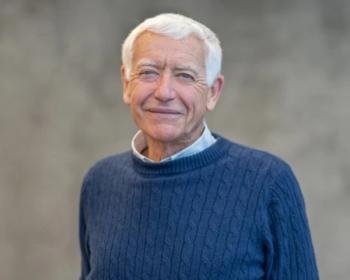
Artificial intelligence (AI) and long-term outcomes data are all reshaping how clinicians and patients navigate treatment decisions in prostate cancer. CancerNetwork® spoke with Herbert Lepor, MD, Martin Spatz Chair of the Department of Urology and director of the Smilow Comprehensive Prostate Cancer Center at NYU Langone Health, about where AI currently stands in his own decision-making, his surveillance protocol following focal cryoablation, how he counsels patients weighing focal therapy against radical prostatectomy, and how personalized, shared decision-making in prostate cancer has evolved.
Lepor: Eventually AI is going to revolutionize a lot of the decision-making in prostate cancer. For example, risk assessment and treatment options. In terms of my practice, I deal primarily with prostate cancer screening, detection, and early-stage disease, and today, it has not made a big impact in my decision-making. With large data sets, we are going to gain better insights into who we should be screening, who we should be treating, and the various options, especially for medical oncologists.
When I was a resident, all we had was hormonal therapy; today there are 10 to 20 approved treatments for advanced prostate cancer, and the question becomes how you sequence these treatments, and whether you can do personalized treatment. That is where AI is going to have a big impact. Today, honestly, in my practice, AI has not revolutionized the decisions I make: Should I biopsy this patient? How do I treat this patient in terms of surveillance, focal therapy, or radical prostatectomy vs radiation therapy? AI has not yet made a major impact on those decisions, but do I think it will? Yes.
What we do today is a PSA [prostate-specific antigen] test every 6 months, and an MRI at 6 months, 2 years, 3.5 years, 5 years, 7.5 years, and soon 10 years. When we first started the focal therapy journey, we did not have a good sense of whether we were effectively destroying the disease, or whether disease was developing out of field, so we biopsied everybody at 6 months and again at 2 years. What we found is that if the MRI showed no suspicion for recurrence in or out of field, and there was no progressive increase in PSA, the detection of what we call clinically significant cancer—any Gleason pattern 4—was about 10%. When we make decisions about who we biopsy, we realize that if we want to identify every single cancer, we would have to biopsy everybody, so we accept a threshold of what we are willing to miss on a biopsy to avoid over-biopsying.
In this case, we feel that missing 10% of cancers by not biopsying men with a normal, stable PSA fits how we make decisions about who gets a biopsy to begin with. We will continue to follow these patients, and in fact, in that 10% of cases where we missed a Gleason pattern 4, it was less than 1 mm, so we will follow that patient, and if the disease becomes clinically significant, we will detect it. At this point, we have that surveillance protocol, and we do not biopsy; we feel confident that this is a good balance between detecting recurrent disease and not over-biopsying everybody.
Everybody sets different priorities. There are some men who are absolutely petrified of any consequence from their cancer, and there are those who are concerned about quality-of-life issues, so this is a shared decision. I have published our data on radical prostatectomy, and I have published the data for focal therapy, both cancer control and quality-of-life outcomes. When I am counseling a patient, I am in a unique position because I can give them my own published data for both. If we take a patient who has focal, let’s say intermediate-favorable-risk disease, I tell them: I can do an ablation, it is outpatient, you will have a very expedited recovery, you will never have incontinence, if you have urinary symptoms from your benign prostate they will likely get better, and while we do have issues with sexual function, they are relatively modest. At 7 years, as far as we have published, you have a 15% chance you will need a salvage radical prostatectomy or radiation, and a 10% chance we will do another ablation, so for the most part, at 7 years, they have not required any other intervention.
Then I go over the radical prostatectomy: at 10 years, you have a 20% chance of recurrence with radical prostatectomy vs 25% with focal therapy, that is not too big a discrepancy, but I have eliminated incontinence vs dealing with incontinence, and I have greatly improved sexual function. In my experience—and I am not biased, since I do both focal therapy and radical prostatectomy—if I give patients my real, validated outcomes data, I would say 80% of those men will choose focal therapy, not 100%, because everybody has different expectations and priorities. When we first started doing this, I was not as confident; it seemed like a reasonable concept, and I was fairly sure I could destroy the cancer without leaving significant disease behind, but when we first started it was maybe 30% [of men choosing focal therapy], and once we had 2-year data, it was more like 50%. Now that we have published 7-year data, I would say 80% of men, given the option, will choose focal therapy.
Today we are more engaged with the patient. It is that whole process of shared decision-making. Patients will say to me, “Well doc, what would you do?” I am not going to answer that, because you are asking me to take my priorities and weigh them, when it should be your priorities: cancer control, how disabling incontinence would be, where sexual function fits into your lifestyle. I cannot make those decisions for you, but I can give you realistic expectations of what to expect if you were to choose pathway A, B, or C.
Are we going to learn more about precision medicine based on the biology of the tumor? Part of the problem is that we do have some molecular signatures that are prognostic about risk, but if you take the same cancer and run the 3 standard molecular signatures we can order, in almost every case there is discordance between them. We can talk about decision-making based on a molecular signature, but the problem is there is discordance between the various molecular signatures. Do I believe that with precision medicine and AI, as we get large data sets and they are analyzed, we will be able to make not just decisions that change our decision-making, but the right decisions?
A lot of times a new marker gets validated, and people say, well, we used this marker and 30% of the time we did not do surgery, but was that the right decision not to do surgery? Just because you decided does not mean you made the right decision. We have a lot of these molecular signatures that can impact decision-making, but we have yet to validate whether we are making the right decision by implementing these markers. Do I believe that as time goes by, and we get large data sets and more experience with them, we will be able to make more personalized decisions? The answer is yes. Are we there right now? We have a ways to go.