

Opinion|Videos|February 11, 2025
Comprehensive Supportive Care for EGFR-Mutant Advanced NSCLC
Panelists discuss the supportive care measures Julia considers for patients with advanced EGFR-mutant NSCLC, including interventions like nutrition and exercise, to enhance overall well-being and support treatment outcomes.
Advertisement
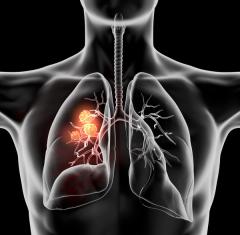
Video content above is prompted by the following:
- Dr. Spira asks Julia: What other supportive care measures do you consider for patients being treated for advanced EGFR-mutant NSCLC? (eg, nutrition, exercise, etc.)
Advertisement
Related to this article
Ralph V. Boccia, MD, FACP, discusses CAR T and bispecific sequencing, fixed-duration therapy, MRD, and bispecifics in AL amyloidosis.

“Those of us who work with NK cells have no doubt that they are incredibly powerful at killing cancer cells,” said Veronika Bachanova, MD, PhD.

Tyler Wilhite, MD, discusses expanding a radiation oncology program to also utilize low-dose radiation therapy for benign diseases.
Allen Khodab, MD discussed how patients with larger prostates had reduced IPSS scores that normalized to the same level as those with normal-sized glands.

Jeffrey V. Matous, MD, explains why ramantamig’s MRD negativity rates are clinically significant in relapsed/refractory myeloma.
In the phase 2 RALLY-MF study, selcodebart produced a 55% major response rate among evaluable non–transfusion-dependent patients with myelofibrosis.
Experts in multiple myeloma discussed long-term MAIA and CEPHEUS trial data and their implications for daratumumab-based regimens in newly diagnosed disease.

Adjuvant radiotherapy significantly reduced meningioma recurrence or death vs observation in grade 2 atypical meningioma after complete surgical resection.
Advertisement
Advertisement
Trending on CancerNetwork
1
Sequencing Bispecifics and CAR T-Cell Therapy in Myeloma and AL Amyloidosis
2
Clinical Applications and the Future of Remote Endovascular Procedures
3
Building a Low-Dose Radiation Therapy Program for Benign Disease
4
FDA Approves Atezolizumab/Chemo for Stage III dMMR Colon Cancer
5