T-DXd and Dato-DXd are now approved treatments in Japan for patients with breast cancer.
Post-surgical treatment, functional gains were improved among patients with breast cancer.
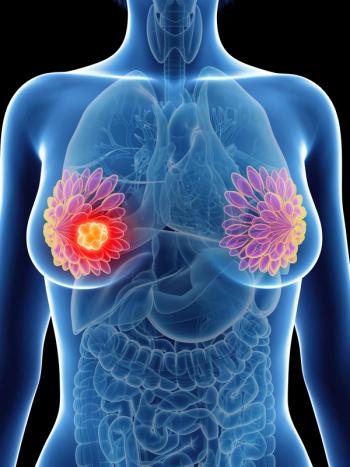
For patients who have received breast cancer surgery, functional gains like strength, and mobility and balance were observed, regardless of the surgical treatment, according to a study presented at the 2026 American Society for Breast Surgeons Annual Meeting.
Functional movement screening (FMS) was similar across both the mastectomy and non-mastectomy groups (P = .371), along with the Y-balance (P = .115). The multivariable regression analysis showed increasing age and receiving radiation therapy equated with a lower baseline FMA (P <.001 and P = .04; R2 = .185). From pre- to post-regimen, the FMS showed a small improvement for age (P = .006; R2 = .067).
“Everyone basically saw an improvement in strength. That was a load calculation, weight times, reps’ times sets per week. We did it for the major movements. All the major movements [improved] strength, muscle mass improved considerably after 3 months, and then fat mass decreased as well. Muscle mass went up by a couple pounds, and then fat mass decreased by a couple pounds. The body composition metrics improved overall,” study author Colin E. Champ, MD, bone marrow and breast cancer radiation oncologist from Alleghany Health Network, said during an interview with CancerNetwork. “We also saw an improvement in Y-balance. We saw an improvement in quality of life, which we didn’t focus on in this study, but we focused on in other studies. The other big marker that we looked at is functional movement screen. It’s very difficult to quantify movement. The FMS is not made to quantify. It’s a screen, but it’s one of the only quantitative movement measurements. We use that pre and post [in] a lot of our workouts and enduring to see how they improved overall. We did see a dramatic improvement in that as well.”
A total of 197 patients were included in this study, 87% did not receive axillary lymph node dissection (ALND), 57% received a lumpectomy, and 43% received a mastectomy. The median patient age for those who received a mastectomy was 51 years vs 59 years for those who didn’t (P <.001). Additionally, treatment included ALND in 24.7% vs 4.5% (P <.001), chemotherapy in 44.7% vs 26.8% (P = .014), and radiation therapy in 64.7% vs 83.9% (P = .003), in each group, respectively.
In the no mastectomy, pre-regimen group, body mass index (BMI) was 26.78 kg/m2vs 26.03 kg/m2 in the post-regimen group (P = .022). For those who received a mastectomy, the BMI was 26.67 kg/m2 vs 26.62 kg/m2 (P <.001). The in-body body fat in the no mastectomy group was 36.60% for pre-regimen vs 34.55% for post regimen (P <.001). In the mastectomy group, it was 36.00% vs 34.40% (P <.001). Additionally, for in-body muscle in the no mastectomy group it was 34.59 lbs for pre-regimen vs 35.75 lbs for post-regimen (P <.001). For those who received a mastectomy, in-body muscle was 34.82 lbs vs 35.75 lbs (P = .002).
Of note, patients 20 to 89 years older with ductal carcinoma in situ or invasive breast cancer were included. A 12-week dose of escalated resistance training supervised by CSCS. The pre-intervention assessment included FMS, Y-balance assessment, and body composition testing.
During month 1, for 3-time week patients were instructed to split squat, trap bar deadlift, incline dumbbell bench, and bird dog row. This was repeated during months 2 and 3. Post-intervention assessment was conducted under the same standards as the pre-intervention one.
“Appropriately dosed resistance training…improves every physical aspect possible, including many that correlate with outcomes after cancer treatment. You can rarely say that about most treatments. Exercise seems to help everything and improve quality of life and decrease [adverse] effects with a small risk of injury. Overall, the risk of injuries is quite low. Rarely, can you say a treatment checks all those boxes,” Champ concluded.
Hernandez LC, Carpenter DJ, Julian TB, et al. Functional outcomes for breast cancer survivors following an intense resistance training program based on surgical management of the breast and axilla. Presented at the 2026 American Society for Breast Surgeons Annual Meeting; April 29-May 3, 2026, Seattle, WA.