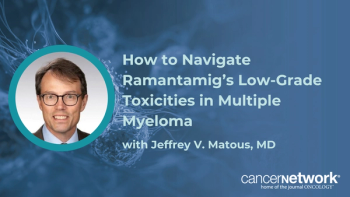
Jeffrey V. Matous, MD, discusses how to counsel patients on chronic, low-grade toxicities to support adherence to ramantamig.
Nathan Goodyear, MD, outlined how exercise and nutrition can counter treatment-induced immunosenescence and improve long-term oncology outcomes.
Malignant disease often triggers a detrimental feed-forward cycle of accelerated cellular aging and chronic inflammation among patients undergoing treatment for cancer, according to Nathan Goodyear, MD. In an interview with CancerNetwork®, he explained that although standard interventions such as surgery, chemotherapy, and radiotherapy demonstrate clear efficacy, they inadvertently promote immunosenescence and senescent-associated secretory phenotypes. To break this continuous cycle of degradation, clinicians may need to reframe lifestyle modifications as targeted biological therapies.
According to Goodyear, integrating structured exercise and precision nutrition into oncology care acts as a powerful adjuvant to conventional regimens. Rather than merely serving as preventive habits, these interventions actively reprogram the body’s healing capacity, counter chronic inflammation, and reengage the immune system. This comprehensive approach shifts the focus of oncology from managing the pathobiology of disease to cultivating systemic health, ensuring patients with cancer can achieve long-term remission while preserving their vitality for the rest of their lives.
Goodyear is an integrative medicine physician at the Williams Cancer Institute.
When we look at the process of cancer and what it’s doing, the accelerated aging process, in part, is why cancer is there, but cancer accelerates aging as well. That, in turn, accelerates the process of immunologic aging: immunosenescence, senescent-associated secretory phenotypes, and chronic inflammation. We get in this feed-forward cycle. We come in with an accelerated aging process, and our intent here is to get into remission and to help patients live a long life. How do we break that?
The challenge over the last 75 years is we come in with surgery, chemotherapy, and radiation, and these are therapies that have efficacy. There’s no question about that, but they then themselves also promote senescence and accelerated aging. What if we’re able to bring in these therapies that can actually work to break those cycles, like exercise and nutrition? Yes, they may not be, quote, unquote, as “sexy.” At the same time, if it improves the outcome, if it helps the patient heal better, if it empowers their immune system in very intended and direct ways that are reproducible in the research, and if it helps to block that accelerated aging, we actually reengage the immune system, countering the immunosenescence that is accelerating that process called inflammation.
Now we can actually work on the process where aging and cancer are simultaneous objectives, where we can not only help people work toward that goal of remission—3 years [to] 5 years, that’s great—but how about the rest of their life? Now you put the body in a position to not just go into remission but to heal. Instead of farming with the pH of disease, we’re now pivoting into farming health and wellness.
Exercise and nutrition, again, are not seen as sexy and not seen as standard therapies in the conventional space. They now help the conventional therapies work better, so they’re not just lifestyle interventions for prevention; they’re interventional biological therapies that enable the body to perform better.