
Commentary|Videos|July 10, 2026
Do Venetoclax Dose Modifications Compromise AML Outcomes?
Author(s)Amer Zeidan, MBBS
Amer Zeidan, MBBS, MD, discusses why real-world venetoclax dose modifications do not appear to compromise response durability in AML.
Advertisement
Episodes in this series


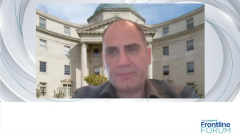
Following a Frontline Forum program, Amer Zeidan, MBBS, MD, discussed real-world evidence suggesting that frequent venetoclax (Venclexta) dose modifications and drug interactions do not compromise response durability in acute myeloid leukemia (AML).
Real-world analyses of venetoclax plus hypomethylating agents have showed that schedule changes and dose modifications, frequently made to manage toxicity, are associated with longer treatment duration and overall survival rather than worse outcomes. He framed close monitoring as essential due to the fact that myelosuppression and prolonged cytopenias can lead to infections, bleeding, and life-threatening complications if not managed.
Zeidan described a management toolkit that includes transfusions, antibiotic prophylaxis, growth factor support (G-CSF), and dose adjustments of both venetoclax and oral decitabine/cedazuridine (Inqovi). He cautioned that good outcomes depend on clinicians actively monitoring and managing toxicity rather than rigidly adhering to a fixed schedule.
Zeidan is a professor of medicine at Yale School of Medicine and chief of the Division of Hematologic Malignancies, director of Hematology Early Therapeutics Research, and assistant director of the Clinical Trial Office for Hematology at Yale Comprehensive Cancer Center in New Haven, Connecticut.
Transcript:
CancerNetwork®: Real-world data from the ARC Initiative shows that frequent venetoclax dose modifications and drug interactions don't compromise response durability. How reassuring is this for community clinicians who worry about deviating from strict clinical trial schedules?
Zeidan: It’s very important to monitor patients closely because myelosuppression and low counts can be a big problem and, if not monitored and corrected appropriately, can lead to infections, bleeding, and sometimes life-threatening complications. Part of the management includes transfusions, antibiotic prophylaxis, and growth factor support with G-CSF, but also dose adjustments of venetoclax and of oral decitabine/cedazuridine. It’s very important that people pay close attention to this. As long as they do and manage the patient properly, I don’t think we’ll see this lead to adverse outcomes. But if [clinicians] drop the ball and don’t monitor or manage appropriately, bad things can certainly happen.
Reference
Vachhani P, Wolach O, Garcia JS, et al. Real-world management of patients with newly diagnosed acute myeloid leukemia treated with venetoclax-based regimens: results from the AML Real World Evidence (ARC) initiative. Blood. 2021;138(suppl 1):1271. doi:10.1182/blood-2021-151586
Advertisement
Related to this article

Jeffrey V. Matous, MD, discusses how to counsel patients on chronic, low-grade toxicities to support adherence to ramantamig.

Melody Rasouli, MD, MBA, FACOG, explained how random-start ovarian stimulation and rapid sperm banking fit fertility preservation into cancer care.

Veronika Bachanova, MD, PhD, discussed how the favorable safety profile of CAR natural killer cell therapies may come with trade-offs in persistence and response durability.

Dan Costin, MD, discusses where personalized mRNA vaccines could fit into lung cancer care within 5 to 10 years.

Melody Rasouli, MD, MBA, FACOG, discussed the system breakdowns that delay fertility referrals and how EHR triggers can automate the process.
Dan Costin, MD, describes counseling his first patient on a personalized mRNA vaccine vs observation in the INTerpath-014 trial.
Jan Kitajewski, PhD, discussed how pooled expertise, pilot funding, and investigator support help move bench discoveries toward multicenter trials.

Natalie S. Callander, MD, discussed the rationale for combining selinexor, carfilzomib, subcutaneous isatuximab, and dexamethasone in relapsed/refractory myeloma.
Advertisement
Advertisement
Trending on CancerNetwork
1
FDA Approves Atezolizumab/Chemo for Stage III dMMR Colon Cancer
2
Novel Cancer Vaccine Plus Temozolomide Miss Primary End Point in Glioblastoma
3
FDA Approves Tucatinib Combo as Maintenance in HER2+ Breast Cancer
4
Iberdomide Combination Doubles PFS vs SOC Therapy in R/R Multiple Myeloma
5