Now Playing
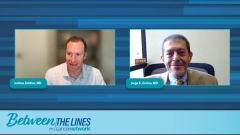
Dr. Joshua Zeidner from University of North Carolina Lineberger Comprehensive Cancer Center and Dr. Jorge Cortes from O'Neal Cancer Center at University of Alabama Birmingham introduce their discussion on frontline chronic myeloid leukemia (CML) management.
Dr. Joshua Zeidner from University of North Carolina Lineberger Comprehensive Cancer Center and Dr. Jorge Cortes from O'Neal Cancer Center at University of Alabama Birmingham introduce their discussion on frontline chronic myeloid leukemia (CML) management. Dr. Zeidner emphasizes the dramatic transformation of CML from a historically fatal diagnosis with 2 to 3 year median survival before blast crisis progression to current management as a chronic condition with near-normal life expectancy.
Before tyrosine kinase inhibitor development, CML represented the primary indication for bone marrow transplantation in the 1980s, with interferon and transplantation offering limited efficacy. Imatinib's 2001 approval fundamentally revolutionized treatment paradigms, followed by second-generation agents (dasatinib, nilotinib), third-generation options (bosutinib), and recently asciminib as an allosteric inhibitor potentially superior to all preceding agents.
Dr. Cortes reflects on the evolution from discussing life expectancy and immediate mortality risks to current conversations focusing increasingly on treatment-free remission possibilities. Early tyrosine kinase inhibitor discussions centered on lifelong therapy requirements, whereas contemporary practice emphasizes quality of life considerations given chronic low-grade toxicities that significantly impact patients despite appearing manageable from physician perspectives.
Patient education levels have dramatically improved, with many arriving at consultation already informed about treatment-free remission concepts and basic disease understanding. This knowledge enables more sophisticated discussions about treatment selection and long-term goals rather than fundamental disease education. The conversation complexity has shifted from survival-focused discussions to optimization strategies for eventual treatment discontinuation, representing a fundamental paradigm change in CML management approaches and patient expectations.


!["Patients [with cancer] and physicians would rather have a fixed-duration treatment, if possible," said Julie M. Vose, MD, MBA, at SOHO 2026.](https://cdn.sanity.io/images/0vv8moc6/cancernetwork/1cfb57db416943d8f8690afb0bc0d13aa3d90683-400x400.jpg?w=350&fit=crop&auto=format)