
Opinion|Videos|June 24, 2026
Frontline Treatment Selection and Shared Decision-Making
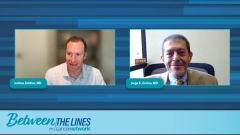
Author(s)Joshua Zeidner, MD
Dr. Zeidner explores frontline treatment selection strategies, emphasizing the abundance of oral options available at diagnosis and sequencing possibilities throughout patient treatment courses.
Advertisement
Episodes in this series
Dr. Zeidner explores frontline treatment selection strategies, emphasizing the abundance of oral options available at diagnosis and sequencing possibilities throughout patient treatment courses. Current options include imatinib, second-generation agents (dasatinib, nilotinib), third-generation bosutinib, and asciminib, providing extensive therapeutic flexibility for diverse patient populations.
Dr. Cortes emphasizes comprehensive initial consultations involving detailed disease education, pathophysiology explanation, risk assessment, monitoring strategies, and goal clarification. Many patients present asymptomatically, requiring explanation of treatment necessity despite symptom absence. Eventually, treatment-related side effects may represent patients' primary disease experience, making goal understanding crucial for long-term adherence and engagement.
Shared decision-making incorporates individual patient preferences including dosing schedules, fasting requirements, and lifestyle considerations. The therapeutic abundance allows personalized approaches accommodating patient-specific factors while optimizing efficacy outcomes. Dr. Cortes advocates against prescriptive approaches, preferring collaborative discussions explaining rationale and options to engage patients as active participants in treatment selection.
Both physicians acknowledge variable patient education levels and consultation quality across practice settings, noting some patients receive minimal information about treatment options or disease biology. They emphasize the need for improved patient education standards and comprehensive discussions regardless of practice environment or time constraints.
Dr. Zeidner highlights that approximately 50% to 60% of patients present asymptomatically with incidental white count elevation prompting further evaluation, whereas others experience gradual symptom onset including splenomegaly, constitutional symptoms, or other manifestations. This presentation variability influences initial discussion approaches and patient understanding of treatment urgency and necessity for immediate intervention.
Advertisement
Related to this article

“When we give the most effective therapy at the time of new diagnosis, we get the most value out of the effort and time that we and our patients are spending,” said Neeraj Agarwal, MD, FASCO.

An aglatimagene besadenovec-based radiotherapy combination increased intratumoral lymphocyte fraction in intermediate- to high-risk localized prostate cancer.

The ROADS investigators reported no differences between cesium-131 tile-based radiation therapy and SRT in quality of life, functional status, or neurocognitive function.
William A. Hall, MD, discussed the SOFT Preop study of preoperative SBRT vs conventional chemoradiation for pancreatic adenocarcinoma.
Chih-Yi “Andy” Liao, MD, discusses how oncologists are sequencing pemigatinib, futibatinib, and lirafugratinib and how their tolerability differs.

“It should be protocol that 100% of your patients with metastatic prostate cancer get germline testing. Full stop. No exceptions,” said Neal D. Shore, MD, FACS.
Chih-Yi “Andy” Liao, MD, discusses the FDA approval of lirafugratinib and what the field has learned about resistance to FGFR2 inhibitors.

In the phase 3 NRG-CC009 trial, SRS led to longer overall survival vs HA-WBRT plus memantine with similar neurocognitive failure in SCLC brain metastases.
Advertisement
Advertisement
Trending on CancerNetwork
1
BCMA/GPRC5D CAR T-Cell Therapy Shows Early Efficacy in R/R Multiple Myeloma
2
Multimodal Biopsy Combo Shows Low Morbidity in Suspected Prostate Cancer
3
Aglatimagene Combo Shows Sustained Immune Remodeling in Prostate Cancer
4
SBRT Matches Chemoradiation, Preserves QOL Before Pancreatic Surgery
5