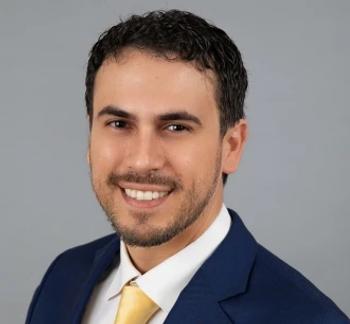
There is a gap in prospective data for radiation use in multiple myeloma, according to Alexandra Dreyfuss, MD, MS.
Paul G. Richardson, MD; and Muhamed Baljevic, MD, FACP, discussed the mechanism, synergy, tolerability, and sequencing of CELMoDs in multiple myeloma.
In a Frontline Forum post-program interview, CancerNetwork spoke with Paul G. Richardson, MD, and Muhamed Baljevic, MD, FACP, about cereblon E3 ligase modulatory drugs (CELMoDs) in the treatment of multiple myeloma. The discussion covered the mechanistic potency of mezigdomide, an investigational CELMoD studied in the phase 1/2 CC-92480-MM-001 trial (NCT03374085), and iberdomide, which was studied in the phase 3 EXCALIBER-RRMM trial (NCT04975997).1,2 Both trials build on older immunomodulatory drugs (IMiDs) such as lenalidomide (Revlimid) and pomalidomide (Pomalyst). Richardson and Baljevic also discussed how CELMoDs synergize with proteasome inhibitors and CD38 antibodies, their tolerability advantages over IMiDs, and how they might be sequenced with T-cell–redirecting therapies such as CAR T-cell therapy and bispecific antibodies.
Richardson is the director of clinical research and clinical program leader at the Jerome Lipper Multiple Myeloma Center at Dana-Farber Cancer Institute, and Baljevic is an associate professor of medicine and director of plasma cell disorders research at Vanderbilt-Ingram Cancer Center.
Richardson: It’s important to understand that CELMoDs are quite distinct from IMiDs. They’re in the broad category of molecular glues and degraders, but their engagement of the cereblon E3 ligase complex, specifically with mezigdomide, is key to understanding their pharmacological potency. That engagement closes the cereblon E3 ligase complex by 100%. For comparison, IMiDs, which have an importantly different molecular structure, close it between 15% and 20%, at best. What CELMoDs share with IMiDs is a glutarimide ring, but the rest of the molecule is completely different, and it’s designed to do several things. In the case of mezigdomide, complete closure of the ligase complex massively accelerates degradation of Ikaros [IKZF1] and Aiolos [IKZF3], which has enormous downstream effects, not only on killing the tumor, but also on activating the immune system. Another key aspect of mezigdomide is its ability to penetrate extramedullary tissue; it was designed at the molecular level to specifically do this. In the study you’re referring to, the mezigdomide-dexamethasone combination [CC-92480-MM-001 trial] study, we were gratified to see a 30% response rate in patients with extramedullary disease, which for an oral therapy alone is remarkable. The overall response rate in this very heavily pretreated population was 41%, and in the BCMA-exposed and/or -refractory population, it was 50%. We were very pleased with that single-agent signal.
Baljevic: I’d only reinforce that, since this is specifically a question about potency, these are agents with a significantly different structure: the binding pocket is very well covered by mezigdomide, so there’s essentially no room for other engagement. Structurally, in terms of binding affinity, mezigdomide works at an IC50 of 0.03 micromolar, compared with about 1.2 for pomalidomide. That’s orders of magnitude more potent. That can also help with toxicity and off-target effects. We’ve seen in the data [Dr Richardson] referenced that some of the neurologic toxicities, like fatigue, have been somewhat better with CELMoDs than with IMiDs, and that’s something that matters to our patients. What’s especially interesting to me is the impact on the tumor microenvironment and immunity, and how that interplay makes CELMoDs, in my opinion, probably the most attractive companion drugs for the immune therapies we already have access to.
Richardson: [Dr Baljevic] raises a good point about how completely the molecule occupies the binding pocket, which limits off-target effects. When we look at iberdomide, for example, which closes the complex by about 50%, what’s striking is the absence of nonhematologic toxicity—an important positive to share. While mezigdomide is more potent, the off-target effects are still less than with IMiDs, which is conceptually important for our audience, since IMiDs have their own spectrum of [adverse] effects. There are other molecular glues under study with different structures, and we’ll have to see whether that translates into differences in tolerability. It’s important to recognize that this class’s unique positive attribute is engaging the pocket and staying there, because patients tolerate these drugs without the [gastrointestinal (GI) adverse] effects, cardiac [adverse] effects, or fatigue that IMiDs can cause. Another piece worth noting is the absence of central nervous system effects; with IMiDs we sometimes see brain fog, especially with prolonged use. At least to date, I personally haven’t seen that with either mezigdomide or iberdomide.
Richardson: The synergy lies in the potency of the cereblon E3 ligase closure. Essentially, you’re achieving targeted degradation. We know the synergy between IMiDs and proteasome inhibitors is almost counterintuitive; mechanistically, you might expect some antagonism, but that’s clearly not the case, and it’s even less the case with CELMoDs because of the potency of degradation. One of the most important and perhaps underappreciated factors is the immunogenic cell death signal triggered by proteasome inhibition. It’s very powerful. You’re seeing a whole constellation of effects on the tumor and, to Muhamed’s earlier point, on the tumor microenvironment, including the immune response. When we combined mezigdomide with either bortezomib or carfilzomib, even in patients who’d been exposed to or were refractory to those agents, we saw robust responses, solidly around 80%. What was so interesting is that across any number of prior lines of therapy, the response didn’t change, which points to this overdrive effect mezigdomide is able to confer.
Baljevic: Historically, proteasome inhibitors and CD38 monoclonal antibodies have represented cornerstones of multiple myeloma therapy, and there’s been a lot of described synergy with agents that have powerful immune-modulating capacity. The way I’d frame it: Anything IMiDs like [lenalidomide], thalidomide, and now pomalidomide can do, CELMoDs can do better and then some. Particularly with CD38 monoclonal antibodies, we’ve learned how important they are in modulating regulatory T-cells and myeloid-derived suppressor cells, including in combination with bispecific antibodies, so I wasn’t surprised by this synergy. We’re still elucidating the immunogenic pathways that improve T-cell function and lower T-cell exhaustion, while also engaging NK [natural killer] cells. One thing that has stood out to me: Even though the neutropenia signal was substantial as the main hematologic toxicity, the vast majority of those patients [with neutropenia] did not develop serious infections. That, to me, points to the possibility that CELMoDs could eventually replace some frontline regimens still in use, particularly for frailer, more comorbid patients, given the more favorable adverse event profile in specific organ systems. I look forward to seeing how the regulatory process unfolds so we can take full advantage of these properties in routine practice.
Richardson: I agree completely, [Dr Baljevic]. One clarification: Iberdomide is being positioned earlier, for early relapse, upfront, and maintenance therapy, while mezigdomide is strictly in the relapsed/refractory space. I also want to echo the point about NK-cell access because when you combine iberdomide or mezigdomide with a CD38 antibody, the potency is clear. We also saw the combination of mezigdomide plus elotuzumab [Empliciti] work very well in patients with CD38-refractory disease, since it isn’t entirely clear how beneficial elotuzumab is after CD38 therapy has already failed a patient. It can work, but it's inconsistent. Similarly, pomalidomide plus elotuzumab after CD38 failure is hit-or-miss. In our study, we saw an almost 50% response rate in that group of patients.
Baljevic: I agree. In my practice, I’ve used elotuzumab mainly in combination with pomalidomide, and I feel strongly that a significant portion of the activity there is being driven by the IMiD itself. These are key drug classes.
Baljevic: GI [adverse] effects are among the most common issues we deal with in patients on lenalidomide or pomalidomide combinations, particularly during maintenance, when patients can be on these drugs for years. In my own clinic, I’ve had to adjust or abandon the IMiD because of this. We have supportive care measures, like cholestyramine [Questran] and other resins, that help many patients, but some still can’t tolerate it despite those measures. I find it notable that certain organ systems seem to be spared with CELMoDs, and as [Dr Richardson] mentioned earlier, the lack of brain fog and preserved mental sharpness shouldn’t be overlooked, either. The fact that GI toxicity seems milder can directly translate into longer median drug exposure and, in turn, better disease control. We’ve seen this pattern with other drug classes too. It isn’t unique to IMiDs or CELMoDs. Drugs like the XPO1 inhibitor selinexor [Xpovio] and drugs like belantamab mafodotin [Blenrep] have run into some of these same issues, sometimes related to dosing or frequency, and sometimes it is just that a different drug class, like CELMoDs, produces a better safety profile. I expect that to be among the key favorable features that community oncologists will weigh when choosing therapy for their patients.
Richardson: I agree. The important message for our audience regarding mezigdomide, specifically, is that neutropenia is an issue, but it’s a differentiation effect, not a stem cell effect. That distinction is extraordinarily important. The use of growth factor support also changes the picture. In the original phase 1 study, dose-determination requirements meant we had to react to neutropenia rather than manage it proactively. In later studies, proactive use of growth factor support brought neutropenia rates down nicely, and what’s striking is that neutropenic infections, as [Dr Baljevic] noted, were remarkably low. The infections we did see were the more typical ones seen in [patients with multiple myeloma]—mainly upper respiratory tract infections. The grade 3 infection rate was about half what we see with bispecific antibodies or CAR T-cell therapy, around 25% to 30% vs 60% to 70% with T-cell–redirecting therapies, where the nature of infection risk is also quite different. In the [phase 3 SUCCESSOR-2 trial (NCT05552976)], the rate of opportunistic infection was under 2%, which tells us a great deal, in a randomized setting, about the more favorable and manageable infection profile with mezigdomide.3
Baljevic: I want to stress how important that opportunistic infection signal is. It ties directly to the improved efficacy signal we see when T-cell function and fitness improve, and T-cell exhaustion is reduced. That doesn’t just enable better tumor killing in multiple myeloma; it also helps reduce infection risk, particularly opportunistic infections. A lot of work with mezigdomide has demonstrated increases in activated adaptive and innate immune signals and effects on senescence and exhaustion markers such as TIGIT, KLRG-1, and ICOS. There’s already a strong basic-science foundation for this CELMoD-driven effect, which is part of why I’m excited about where both iberdomide and mezigdomide are headed. Both are being developed in combination with bispecific and trispecific antibodies, and both before and after CAR T-cell therapy. We’ll meaningfully be able to improve the safety profile of these T-cell–redirecting technologies as a result.
Richardson: You’re right on target because what this allows with bispecifics is shortening and fixing the treatment duration. Mezigdomide can make up the difference through restoration of immune function and reversal of immune exhaustion. There’s some early data from the Asian Myeloma Network, led by a group in South Korea, combining elranatamab-bcmm [Elrexfio] with mezigdomide in the phase 1/2 MELT-MM trial (NCT06645678).4 It’s a small number of patients, but the response rate is 90% and the complete response rate is 75% in a heavily pretreated, high-risk population, with a remarkably favorable [adverse] effect profile. One has to be careful, since both are very powerful platforms independently, but it’s early, promising data.
Baljevic: I’d say there’s a role for both approaches. CELMoDs, particularly in savvy combinations like with [carfilzomib (Kyprolis)], look quite good. [The SUCCESSOR-2 data does look] competitive with KPd [carfilzomib, pomalidomide, and dexamethasone], which we use a lot in our clinics. I’ll also call out the [phase 1 MagnetisMM-30 trial (NCT06215118)] data: at ASH last year, the combination of elranatamab with iberdomide showed overall response rates of 89% to 100%, incredible potency, although dosing of iberdomide is still being worked out to mitigate the neutropenia signal.5 The field is at a point where anti-BCMA [B-cell maturation antigen] bispecific or CAR [chimeric antigen receptor] T-cell therapies are firmly entrenched, at least in the second line. We’re awaiting data on how CAR T-cell therapy may perform in the frontline setting. Several frontline trials are also incorporating bispecifics targeting BCMA and GPRC5D. It’s going to be important to have powerful companion drugs we can use in the second line as we figure out the best sequencing between these therapies. Sequencing one bispecific after another is challenging, because so much depends on the T-cell fitness and innate immune capacity the patient has left. A colleague and I are studying exactly this approach right now: incorporating a CELMoD-based combination for 4 cycles after either CAR T-cell or bispecific therapy, and then sequencing into T-cell–redirecting therapy as we normally would, but prefaced by those 4 cycles of CELMoD therapy. We’re hoping to achieve some T-cell recovery and rejuvenation, giving the immune system a more potent T-cell and NK-cell population to lead tumor killing directly.
Richardson: I like those strategies, though we have to be careful about toxicity, since these are very potent platforms. It’s going to be important to think thoughtfully and rationally about sequencing because combining these agents can be very active, but we still need to work out other effects, like endothelial toxicity. [Dr Baljevic] touched on something important: In the SUCCESSOR-2 trial, median progression-free survival [PFS] across all lines was about 18 months, and it hadn’t yet been reached in the first-line subgroup. You mentioned KPd, and the comparison is telling. In the phase 2 SELECT trial, KPd achieved a median PFS of around 11 months and missed its primary end point of a 60% or higher response rate, coming in at 58%.6 At least in prospective phase 2 data, KPd isn’t going to be able to compete with carfilzomib- or mezigdomide-based regimens.
To another point you made, which I think is valid, as we think about positioning mezigdomide in various immunotherapy settings, this idea of restoring immune activity during immune exhaustion means we need to think carefully about combination partners. My colleague [Clifton Mo, MD], leads a study within the [phase 1b/2 STOMP trial (NCT02343042)] combining mezigdomide with selinexor, where we’re seeing amazing effects, [like] reversal of T-cell exhaustion on multiple markers, but also, interestingly, a reduction in inflammation, which matters because inflammation feeds the multiple myeloma.7 T-cell reactivation and regeneration take that on directly, so these rational combinations are going to have real legs. There’s one more drug class mezigdomide will likely enhance: antibody-drug conjugates, which are appealing because they don’t require hospitalization, carry low infection rates, and have low rates of intravenous immunoglobulin use. Ocular toxicity is something to manage, but we’ve learned to make that much easier than it used to be. With all that in mind, we’re waiting with great interest on combination strategies of mezigdomide with belantamab mafodotin.
Baljevic: [Dr Richardson], I want to echo that. We’re genuinely excited about that STOMP combination. I wish I could have opened that arm at my own institution. We intend to use mezigdomide with selinexor, since XPO1 inhibitors have an analogous immune effect, and we think it’s a great pairing, although we’re adjusting the dosing since you can’t use these agents at the highest doses studied in other regimens. Another point that’s been important to me over the years is the inflammation signal. It’s reflected in the venous thromboembolism [VTE] signal, and CELMoD therapy appears quite favorable on that front compared with IMiDs. Data we’ve analyzed from the MAIA trial, for example, which should be published soon, shows an 18% VTE incidence, with events occurring mostly 2-plus years into treatment, and pulmonary embolism incidence increasing relative to deep vein thrombosis over time.8 Looking at relapsed/refractory and newly diagnosed data with mezigdomide and iberdomide, the VTE rates have been impressively low, in the single digits, not 0, but meaningfully lower than what I’ve seen with other IMiD-containing combinations. Thrombosis risk in newly diagnosed multiple myeloma, where tumor bulk is often higher, is closely tied to use of IMiD-containing regimens. We’ve seen this in the phase 3 ALCYONE trial [NCT02195479] and phase 2 LYRA trial [NCT02951819], for example, where VTE rates were under 5% in a regimen without an IMiD backbone. This has remained, and is largely an IMiD-related issue.9,10 I’m excited about the possibility that CELMoD-containing therapy could produce a more favorable signal on this front. People often forget that pulmonary embolism can be more deadly than a heart attack, and while arterial events like stroke or [myocardial infarctions] are about 2% or less, any of these can range from fatal to severely debilitating to threatening the function and quality of life. That’s another angle I’m excited about.
1. Richardson PG, Trudel S, Quach H, et al. Mezigdomide (CC-92480), a potent, novel cereblon E3 ligase modulator (CELMoD), combined with dexamethasone (DEX) in patients (pts) with relapsed/refractory multiple myeloma (RRMM): preliminary results from the dose-expansion phase of the CC-92480-MM-001 trial. Blood. 2022;140(suppl 1):1366-1368. doi:10.1182/blood-2022-157945
2. Lonial S, Dimopoulos MA, Berdeja JG, et al. EXCALIBER-RRMM: a phase III trial of iberdomide, daratumumab, and dexamethasone in relapsed/refractory multiple myeloma. Future Oncol. 2025;21(14):1761-1769. doi:10.1080/14796694.2025.2501920
3. Richardson PG, Schjesvold F, Fu C, et al. Mezigdomide, carfilzomib, and dexamethasone (MeziKd) vs carfilzomib and dexamethasone (Kd) in relapsed/refractory multiple myeloma (RRMM): results from the phase 3 SUCCESSOR-2 trial. J Clin Oncol. 2026;44(17 suppl):LBA7506. doi:10.1200/JCO.2026.44.17_suppl.LBA7506
4. Byun JM, Min CK, Kim K, et al. Phase I/II study of mezigdomide and elranatamab for relapsed/refractory multiple myeloma patients (MELT-MM): initial results from part 1. Blood. 2025;146(suppl 1):5835. doi:10.1182/blood-2025-5835
5. Suvannasankha A, Kaufman JL, Badros A, et al. Safety and efficacy of elranatamab in combination with iberdomide in patients with relapsed or refractory multiple myeloma: results from the phase 1b MagnetisMM-30 trial. Blood. 2025;146(suppl 1):100. doi:10.1182/blood-2025-100
6. Perrot A, Delimpasi S, Spanoudakis E, et al. An open-label phase 2 study treating patients with first or second relapse of multiple myeloma with carfilzomib, pomalidomide, and dexamethasone (KPd): SELECT study. Leuk Lymphoma. 2024;65(6):833-842. doi:10.1080/10428194.2024.2322030
7. Mo CC, Gasparetto C, Costa C, et al. Selinexor, mezigdomide, and dexamethasone in patients with relapsed/refractory multiple myeloma who relapsed or are ineligible for T-cell-redirecting therapy: STOMP phase 1 results. Blood. 2025;146(suppl 1):4010. doi:10.1182/blood-2025-4010
8. Rosqvist S, Vardell VA, Anto E, et al. High rates of thrombotic events in newly diagnosed multiple myeloma patients enrolled on the Maia trial. Blood. 2023;142(suppl 1):4718. doi:10.1182/blood-2023-190746
9. Mateos MV, Cavo M, Blade J, et al. Overall survival with daratumumab, bortezomib, melphalan, and prednisone in newly diagnosed multiple myeloma (ALCYONE): a randomised, open-label, phase 3 trial. Lancet. 2020;395(10218):132-141. doi:10.1016/S0140-6736(19)32956-3
10. Yimer H, Melear J, Faber E, et al. Daratumumab, cyclophosphamide, bortezomib, and dexamethasone for multiple myeloma: final results of the LYRA study. Leuk Lymphoma. 2022;63(11):2638-2646. doi:10.1080/10428194.2022.2076847