

Opinion|Videos|November 25, 2026
Investigational IKZF1/3 Degraders in Relapsed/Refractory Multiple Myeloma
Author(s)Rahul Banerjee, MD, FACP, Muhamed Baljevic, MD
Dr. Rahul Banerjee and Dr. Muhamed Baljevic discuss treatment considerations for a clinical scenario involving a 62-year-old man with quad-class-refractory multiple myeloma following four prior lines of therapy, including a BCMA-directed bispecific antibody.
Advertisement
Episodes in this series
Dr. Rahul Banerjee and Dr. Muhamed Baljevic discuss treatment considerations for a clinical scenario involving a 62-year-old man with quad-class-refractory multiple myeloma following four prior lines of therapy, including a BCMA-directed bispecific antibody. The patient remains CAR T-cell therapy-naive but has progressed on BCMA-directed treatment. The experts consider potential options, including non-BCMA-targeted bispecific antibodies, CAR T-cell therapy, approved and investigational CELMoDs, and other Ikaros/Aiolos degraders. Dr. Baljevic reviews early-phase findings for cemsidomide, an investigational oral cereblon-modulating protein degrader that targets IKZF1 and IKZF3. He discusses its activity in a heavily pretreated population, including evidence of Ikaros and Aiolos degradation, T-cell activation, and treatment-related toxicities such as neutropenia and infections. The conversation also addresses growth factor support and the potential future role of cemsidomide in later-line treatment sequencing, including strategies that may incorporate CELMoDs before moving between bispecific antibodies targeting different antigens.
Advertisement
Related to this article

Adding bezuclastinib to sunitinib may lead to additional responses after initial progression on sunitinib monotherapy, according to Neeta Somaiah, MD.

In a phase 1/2 pilot study, seleno-L-methionine plus axitinib and pembrolizumab yielded a 70% ORR in treatment-naive metastatic clear cell RCC.

Peak subgroup data at CTOS 2026 show numerically longer PFS with bezuclastinib plus sunitinib in exon 9-mutant GIST and activity after sunitinib failure.

Halneuron met the primary end point of a phase 2b trial, as more patients had at least 50% pain reduction at week 4 vs placebo in chemotherapy-induced neuropathic pain.
Neeta Somaiah, MD, explains how combining bezuclastinib and sunitinib provides complementary KIT coverage, including in the exon 9 subgroup.
Bezuclastinib plus sunitinib is now FDA approved for imatinib-pretreated GIST after the phase 3 PEAK trial showed a median PFS of 16.5 vs 9.2 months.

In honor of Pancreatic Cancer Awareness Month, experts discuss how advances in SBRT, MRI-guided adaptive radiation, and systemic therapy are reshaping care.
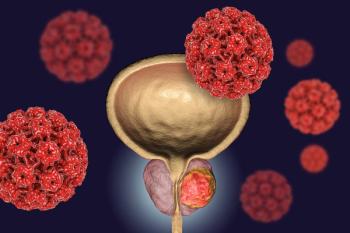
Copper Cu 64 PSMA I&T is under evaluation in 2 phase 3 prostate cancer trials, SOLAR-STAGE and SOLAR-RECUR.
Advertisement
Advertisement
Trending on CancerNetwork
1
FDA Approves Bezuclastinib Plus Sunitinib for Imatinib-Pretreated GIST
2
Bezuclastinib/Sunitinib Shows Activity in Exon 9, Crossover GIST Subgroups
3
Why Radiation Belongs in the Future of Pancreatic Cancer Care
4
Seleno-L-Methionine Combo Yields 40% CR Rate in Treatment-Naive ccRCC
5