

Opinion|Videos|November 25, 2026
Positioning Mezigdomide in Relapsed/Refractory Multiple Myeloma
Author(s)Rahul Banerjee, MD, FACP, Muhamed Baljevic, MD
Dr. Rahul Banerjee and Dr. Muhamed Baljevic discuss a clinical scenario involving a 66-year-old man with relapsed/refractory multiple myeloma following two prior lines of therapy: daratumumab, lenalidomide, bortezomib, and dexamethasone (Dara-VRd) followed by daratumumab, pomalidomide, and dexamethasone (Dara-Pd).
Advertisement
Episodes in this series
Dr. Rahul Banerjee and Dr. Muhamed Baljevic discuss a clinical scenario involving a 66-year-old man with relapsed/refractory multiple myeloma following two prior lines of therapy: daratumumab, lenalidomide, bortezomib, and dexamethasone (Dara-VRd) followed by daratumumab, pomalidomide, and dexamethasone (Dara-Pd). The patient has progressed after exposure to lenalidomide, pomalidomide, bortezomib, and a CD38-directed antibody but has not received carfilzomib, CELMoDs, or BCMA-directed therapy. The experts consider how mezigdomide plus carfilzomib and dexamethasone (MeziKd), if approved, might fit among treatment options, including bispecific antibodies and CAR T-cell therapy. Dr. Baljevic emphasizes individualized decision-making based on patient preferences, quality of life, treatment logistics, and access to T-cell-redirecting therapies. He discusses MeziKd as a potential next-line option, as well as a possible holding or bridging regimen before CAR T-cell therapy, particularly for patients who cannot readily access cellular or other T-cell-redirecting treatments.
Advertisement
Related to this article

Adding bezuclastinib to sunitinib may lead to additional responses after initial progression on sunitinib monotherapy, according to Neeta Somaiah, MD.
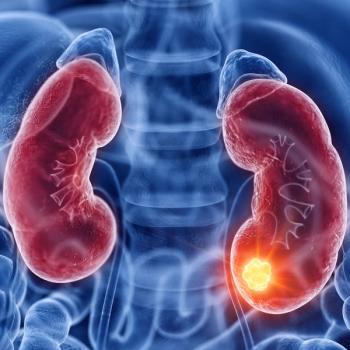
In a phase 1/2 pilot study, seleno-L-methionine plus axitinib and pembrolizumab yielded a 70% ORR in treatment-naive metastatic clear cell RCC.

Peak subgroup data at CTOS 2026 show numerically longer PFS with bezuclastinib plus sunitinib in exon 9-mutant GIST and activity after sunitinib failure.

Halneuron met the primary end point of a phase 2b trial, as more patients had at least 50% pain reduction at week 4 vs placebo in chemotherapy-induced neuropathic pain.

Neeta Somaiah, MD, explains how combining bezuclastinib and sunitinib provides complementary KIT coverage, including in the exon 9 subgroup.
Bezuclastinib plus sunitinib is now FDA approved for imatinib-pretreated GIST after the phase 3 PEAK trial showed a median PFS of 16.5 vs 9.2 months.

In honor of Pancreatic Cancer Awareness Month, experts discuss how advances in SBRT, MRI-guided adaptive radiation, and systemic therapy are reshaping care.
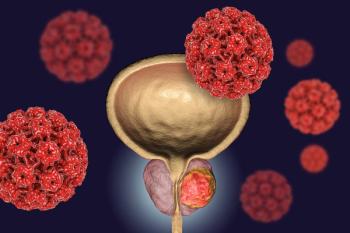
Copper Cu 64 PSMA I&T is under evaluation in 2 phase 3 prostate cancer trials, SOLAR-STAGE and SOLAR-RECUR.
Advertisement
Advertisement
Trending on CancerNetwork
1
FDA Approves Bezuclastinib Plus Sunitinib for Imatinib-Pretreated GIST
2
Bezuclastinib/Sunitinib Shows Activity in Exon 9, Crossover GIST Subgroups
3
Why Radiation Belongs in the Future of Pancreatic Cancer Care
4
Seleno-L-Methionine Combo Yields 40% CR Rate in Treatment-Naive ccRCC
5