Data from the phase 3 HER2CLIMB-05 study support the FDA approval of tucatinib-based maintenance treatment in HER2-positive metastatic breast cancer.
Natalie Berger, MD, discusses the evolving landscape of ADC sequencing in breast cancer, the role of HER2 expression, and the "sandwich approach" to treatment.
As the therapeutic arsenal for breast cancer expands, antibody-drug conjugates (ADCs) have emerged as a cornerstone of modern treatment. However, the rapid introduction of multiple agents—such as fam-trastuzumab deruxtecan-nxki (T-DXd; Enhertu), sacituzumab govitecan-hziy (Trodelvy), and datopotamab deruxtecan-dlnk (Datroway)—has raised a complex clinical question: What is the optimal order in which to administer these drugs?
Natalie Berger, MD, explored the current challenges of sequencing ADCs. While definitive answers remain pending from ongoing prospective studies, Berger highlighted the importance of individualized care. Decisions today are driven by a patient’s specific clinical characteristics and tumor biology, particularly HER2 immunohistochemistry (IHC) expression levels, which can range from 0 to 2+.
Berger also addressed the clinical reality of diminishing returns in sequential dosing, where the first ADC typically yields a more robust response than the second. To combat this, she discusses emerging strategies such as the "sandwich approach"—inserting traditional chemotherapy between ADC regimens to potentially alter tumor biology and restore sensitivity to subsequent targeted therapies. Although the data on these methods remain mixed, Berger provided a grounded perspective on navigating the frontline and beyond in an era of rapidly shifting standards of care.
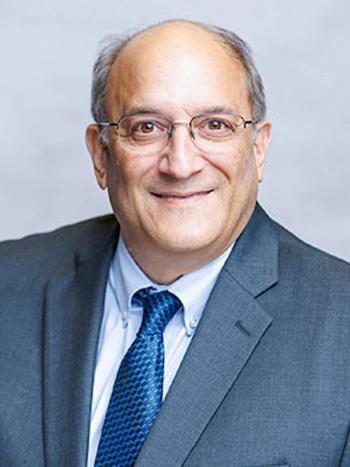
Berger is an assistant professor of medicine at the Columbia University Medical Center and associate director of Breast Medical Oncology at New York Presbyterian-Hudson Valley Hospital.
Sequencing antibody-drug conjugates is an important question, and it’s a question that we don’t have the answer to, but we’re studying it now, and there are ongoing prospective studies that are trying to help us better understand the role of sequencing. We have retrospective data, and in clinical practice, we see that when you sequence these antibody-drug conjugates, typically you see a better response to that first antibody-drug conjugate that you administer. Each patient is going to have different clinical characteristics, different HER2 IHC from, either what we call 0 or ultralow, 1+, or 2+. These are patients who may be eligible for trastuzumab deruxtecan or T-DXd, but in patients who are HER2-negative and have no expression of that receptor, those are patients who will traditionally choose another antibody-drug conjugate, like sacituzumab govitecan. How you choose these is also dependent on the patient. There’s also another antibody-drug conjugate called datopotamab deruxtecan. How we choose these depends on patient characteristics, what their HER2 IHC expression is.
In the triple-negative space, we have the ASCENT trials, [and] we have TROPION-Breast02 and those 2 antibody-drug conjugates we’re using in the frontline setting. Now we have to decide what we’re going to do in the second [line], third line, and beyond. These prospective trials are ongoing now [and] are going to help us better understand the role of sequencing to help us understand biomarkers that may help us predict which patients may respond to that second antibody-drug conjugate and which patients may not. We talk about the sandwich approach, where you may give one antibody-drug conjugate and [before] the second give chemotherapy to hopefully change some of the biology of that tumor, so you may get a better response to that second antibody-drug conjugate in the third line. Data on that is mixed as well, and so we’re still trying to figure that out. The simple answer is, we don’t know for sure what the best sequence is, but it’s important to look at the patient characteristics, look at the biology of the tumor for each individual patient, and make your decision based on that.