
Opinion|Videos|January 24, 2025
Overview of the CAR T-Cell Therapy Process: Apheresis, Manufacturing, Potential Bridging Therapies, Lymphodepletion, and Infusion
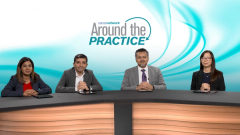
Panelists discuss how chimeric antigen receptor (CAR) T-cell therapy’s mechanism of action and treatment workflow requires extensive institutional coordination, from patient selection through bridging therapy and infusion, with varied approaches to managing patients during the manufacturing period across different centers.
Advertisement
Episodes in this series
Video content above is prompted by the following:
- Could you explain how CAR T-cell therapy works and describe the treatment process?
- Do you consider CAR T therapy a complex process at your institution, or have you been able to streamline the logistics and integration into clinical workflows?
- Dr Usmani to ask Dr Mailankody: Can you explain your institution’s approach to bridging therapy for patients awaiting CAR-T manufacturing and infusion?
- Do you send patients back to community center or does it happen in-house?
Advertisement
Related to this article
Peter Forsyth, MD, discusses a first-in-human trial of intrathecal dendritic cell therapy for leptomeningeal disease from breast cancer.
Adding radiotherapy to tislelizumab and chemotherapy also appeared to prolong progression-free survival in a real-world setting.
![“[E]ven if patients relapse following an allogeneic transplant, donor lymphocyte infusions can be incredibly helpful,” said Mary Jo Lechowicz, MD.](https://cdn.sanity.io/images/0vv8moc6/cancernetwork/06df696db42b151710c58727b1333ee098de6453-1200x800.jpg?w=350&fit=crop&auto=format)
“[E]ven if patients relapse following an allogeneic transplant, donor lymphocyte infusions can be incredibly helpful,” said Mary Jo Lechowicz, MD.

The Community Oncology Alliance is urging CMS and Congress to address Medicare Part B drug negotiation policies that threaten independent cancer practices and patient access.

In a phase 1 trial, the MVA-vectored neoantigen vaccine TG4050 produced no dose-limiting toxicities or relapses in those with resected HPV-negative HNSCC.

At SOHO 2026, experts highlighted new findings and advances across diseases including lymphoma, myelodysplastic syndrome, and leukemia.

Poster sessions at WCLC 2026 detail how surgery, nursing, and pathology can contribute to the multidisciplinary care of patients with lung cancer.
A positive CHMP opinion supports the perioperative use of pembrolizumab plus enfortumab vedotin in resectable MIBC regardless of cisplatin eligibility.
Advertisement
Advertisement
Trending on CancerNetwork
1
Key Takeaways for Multidisciplinary Lung Cancer Care From WCLC 2026
2
CELMoDs After T-Cell–Engaging Therapy in Multiple Myeloma
3
FDA Approves Imlunestrant Combo in ESR1-Mutated Breast Cancer
4
Pembrolizumab/Enfortumab Vedotin Earns Positive CHMP Opinion in MIBC
5