
Opinion|Videos|December 24, 2024
Precision Pathways: Targeted Therapies, Mutation-Driven Treatment Strategies
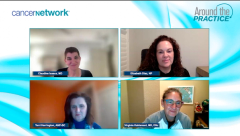
Panelists discuss how the introduction of oral targeted therapies has transformed the patient experience by offering actionable treatment options for identifiable mutations, influencing prognosis and treatment discussions, and altering the nature of initial patient conversations, while Dr Isaacs highlights key efficacy and safety data from the INAVO120 trial and the implications of inavolisib’s PI3Kα-specific mechanism, and Dr Kaklamani addresses the evolving rationale for targeting truncal mutations earlier in treatment, emphasizing the role of combination therapies in first-line settings and trials such as ELEVATE/ELECTRA and CAPItello-292.
Advertisement
Video content above is prompted by the following:
- Dr Kaklamani asks Ms Diaz: How has the introduction of these oral targeted therapies changed the patient experience? What does it mean for patients to know they have actionable mutations that can be targeted?
- How do these targeted options influence your discussions about prognosis and treatment planning with patients? Has it changed the nature of those initial conversations?
- Dr Kaklamani asks Dr Isaacs: Please highlight the key efficacy and safety data from the
INAVO120 trial that led to approval. - What implications does inavolisib’s PI3Kα-specific mechanism of action have for its safety and efficacy compared to less specific agents such as capivasertib?
- Dr Kaklamani addresses: This brings up an important point about the evolving landscape and emerging rationale for targeting truncal mutations earlier in treatment. As precision medicine informs earlier treatment lines, please expand on the rationale for targeted therapy combinations in earlier lines of treatment. Additionally, could you highlight the
ELEVATE /ELECTRA andCAPItello-292 trials and this shift toward combination strategies in the first-line and earlier treatment settings?
Advertisement
Related to this article
Ralph V. Boccia, MD, FACP, discussed educating hospital teams and using tocilizumab to manage bispecific toxicities when patients need admission.
Martin Gleave, CM, MD, FRCSC, FACS, explained how the GUNS trial is using tumor genomics to guide neoadjuvant therapy in high-risk prostate cancer.
Daniel Y.C. Heng, MD, MPH, FRCPC, explained how subsequent therapy and durable responses may have shaped overall survival results in LITESPARK-011.
Ralph V. Boccia, MD, FACP, noted how designated hospitals and a 24/7 on-call team support emergencies during bispecific step-up dosing.

Arturo Loaiza-Bonilla, MD, MSEd, FACP, co-founder of Massive Bio and system-wide chief of hematology and oncology at St. Luke’s, explains how AI is matching patients to clinical trials, where the technology falls short, and why he left academia to build what oncology was missing.
The FDA granted RMAT and fast track designations to prizlon-cel, a CD20/CD19 CAR T-cell therapy, for relapsed/refractory large B-cell lymphoma.
Ralph V. Boccia, MD, FACP, explained the caregiver’s role in monitoring and reporting during bispecific antibody step-up dosing.
Findings from the phase 3 VOLGA trial support the FDA approval of perioperative durvalumab plus neoadjuvant enfortumab vedotin in muscle-invasive bladder cancer.
Advertisement
Advertisement
Trending on CancerNetwork
1
Subsequent Therapy May Have Narrowed the Overall Survival Gap in LITESPARK-011
2
FDA Approves Perioperative Durvalumab/Enfortumab Vedotin in MIBC
3
Managing Emergencies During Outpatient Bispecific Step-Up Dosing
4
ACS Updates Prostate Cancer Screening Guideline With Risk-Based PSA Intervals
5