
|Videos|September 22, 2022
Selecting and Sequencing Therapies to Improve Outcomes in Patients With Lymphoma
Key opinion leaders describe when to refer a patient with lymphoma and at what point treatments should be switched, and the evolution of T-cell engaging therapies.
Advertisement
Episodes in this series
Advertisement
Related to this article

Health Canada approved epcoritamab plus lenalidomide and rituximab for relapsed/refractory grade 1 to 3a follicular lymphoma, backed by the EPCORE FL-1 trial.

Hematologic specialists discussed where ciltacabtagene autoleucel fits in the treatment paradigm at first relapse and beyond in multiple myeloma.
![“[E]ven if patients relapse following an allogeneic transplant, donor lymphocyte infusions can be incredibly helpful,” said Mary Jo Lechowicz, MD.](https://cdn.sanity.io/images/0vv8moc6/cancernetwork/06df696db42b151710c58727b1333ee098de6453-1200x800.jpg?w=350&fit=crop&auto=format)
“[E]ven if patients relapse following an allogeneic transplant, donor lymphocyte infusions can be incredibly helpful,” said Mary Jo Lechowicz, MD.

Posters highlighted sex-based differences in aggressive B-cell NHL, third-line therapies in aggressive BCL, and real-world safety with CD20/CD3 bispecifics.
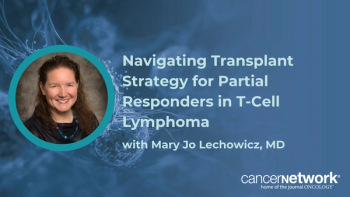
Mary Jo Lechowicz, MD, discussed how pre-transplant depth of response informs the choice between autologous and allogeneic HSCT in T-cell lymphoma.
SOHO 2026 sessions covered chemoimmunotherapy in frontline DLBCL, treatment selection via molecular classifiers, and bispecific antibodies for unfit patients.

Jasmine Zain, MD, emphasized the importance of good patient counseling when outlining the potential risks of secondary T-cell malignancies following CAR T-cell therapy.
Adult T-cell lymphoma and leukemia may warrant up-front allogeneic transplant, according to Mary Jo Lechowicz, MD.
Advertisement
Advertisement
Trending on CancerNetwork
1
Acting on a HER2 Result and Navigating Access to Therapy
2
The Case for Frontline Zongertinib in HER2-Mutant NSCLC
3
Emerging Endocrine Doublets and Serial ESR1 Testing in HR+/HER2− mBC
4
Isatuximab-Based Therapy Shows “Impressive” PFS Projections in NDMM
5