Ethan B. Ludmir, MD, explains why advanced radiation techniques like protons fit nonoperative cholangiocarcinoma better than the preoperative setting.
Parul Barry, MD, discussed the evolving role of ADCs and targeted therapies in breast cancer, highlighting strategies for sequencing them with radiation.
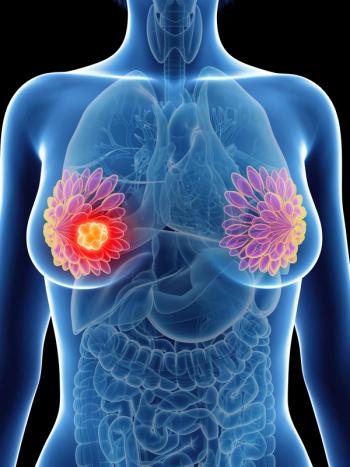
As antibody-drug conjugates (ADCs) and novel targeted therapies migrate into earlier lines of breast cancer care, the traditional radiation oncology playbook is being rewritten. While agents like fam-trastuzumab deruxtecan-nxki (Enhertu) and sacituzumab govitecan-hziy (Trodelvy) offer unprecedented systemic control, their integration with regional radiation therapy requires a sophisticated balance of timing and toxicity surveillance.
At the
Barry is a clinical assistant professor of radiation oncology at the University of Pittsburgh Medical Center Magee-Womens Hospital.
Transcript:
A lot of these new targeted therapies—like [trastuzumab deruxtecan], ADCs, and [sacituzumab govitecan]—are so important and so advanced, and [they] do such a great job at getting on top of the cancer. I was just talking with some of my colleagues today about how we integrate [capecitabine] and radiation for [patients] that are at high risk for relapse. This is such an important question because we do want people to complete all their treatments, which is very important systemic therapy and very important radiation therapy. It’s critical that there’s excellent communication between the radiation oncologist, medical oncologist, and surgeons together to make sure we’re all on the same page about when each of us is done with a certain treatment so the other person can pick up the baton and lead. At this point, we’re not using a lot of radiation at the same time as ADCs due to some of the concerns about toxicity. But I do think in the future, as things advance, there is a lot of interest, especially in high-risk cancers that don’t respond well to systemic therapy alone or radiation alone, [in] using them together to potentiate the effects and kill off cancer cells that are more resistant. I don’t think we're at that level yet, but I think we eventually will be.