
Opinion|Videos|November 18, 2026
Sequencing CELMoDs and Integrating Treatment Strategies in Relapsed/Refractory Multiple Myeloma
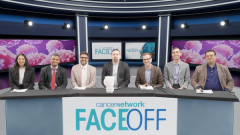
Faculty discuss the potential role of CELMoDs in the evolving treatment landscape for relapsed/refractory multiple myeloma, including their mechanism of action, toxicity profiles, and potential impact on treatment sequencing.
Advertisement
Episodes in this series
Faculty discuss the potential role of CELMoDs in the evolving treatment landscape for relapsed/refractory multiple myeloma, including their mechanism of action, toxicity profiles, and potential impact on treatment sequencing. They consider how increased specificity for cereblon may influence antimyeloma activity and off-target toxicities, while emphasizing that further evidence is needed to establish meaningful differences among agents. The discussion explores the use of CELMoDs following CAR T-cell therapy and BCMA-directed bispecific antibodies, highlighting the need for effective combination strategies to achieve deeper and more durable responses in heavily pretreated patients. Faculty also consider whether CELMoDs should be viewed as an extension of the immunomodulatory drug class or as a distinct therapeutic class. Although structural and mechanistic differences may support using multiple agents throughout a patient’s treatment journey, the optimal sequence remains uncertain. The segment concludes with practical considerations for community practice, including oral treatment convenience, proactive growth factor support, infection prevention, and individualized treatment selection based on prior exposure and patient needs.
Advertisement
Related to this article

At the 2026 Chemotherapy Foundation Symposium, Ajai Chari, MD, explained how disease pace and BCMA sequencing guide choosing CAR T or bispecifics.

In the phase 1/2 TRANSCEND CLL 004 trial, liso-cel plus ibrutinib produced a 45% CR/CRi rate in a heavily pretreated relapsed/refractory CLL/SLL population.

The FDA has assigned a target action date of June 28, 2027, for selinexor plus ruxolitinib as a therapeutic regimen for patients with myelofibrosis.

In the phase 2 TRAP trial, the median PFS after SBRT was 3.0 months with detectable ctDNA vs 7.8 months without it in oligoprogressive CRPC.
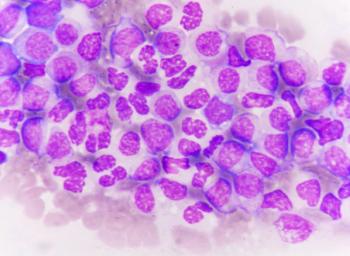
In the pivotal phase 3 REGAL trial, galinpepimut-S was generally well tolerated among patients with acute myeloid leukemia.
Amir T. Fathi, MD, discusses where venetoclax/azacitidine fits in fit patients with AML and why a phase 3 trial may be unlikely.
Data from the phase 1/2 ALKOVE-1 trial support the FDA approval of neladalkib in this non–small cell lung cancer population.

After an FDA Type C meeting, registrational trials of the DLL3-targeting ADC IDE849 in pretreated neuroendocrine carcinomas are set to begin by year-end.
Advertisement
Advertisement
Trending on CancerNetwork
1
FDA Approves Neladalkib in Advanced ALK+ Non–Small Cell Lung Cancer
2
Lung Cancer Survival Rate Climbs to 31%, Although Screening Gaps Persist
3
Selecting Patients With High-Risk Prostate Cancer for Perioperative ARPI Therapy
4
64Cu-SAR-bisPSMA Earns FDA Breakthrough Designation in Recurrent Prostate Cancer
5