

Opinion|Videos|December 4, 2023
The Future of Treatment for NSCLC With EGFR Exon 20 Insertion Mutations
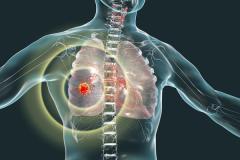
Dr Sai-Hong Ou discusses the future of treatment for non-small cell lung cancer with EGFR exon 20 insertion mutations, highlighting the complexity of these mutations and the need for precision treatments.
Advertisement






Advertisement
Related to this article

Jyoti Malhotra, MD, MPH on first-in-human clinical trials, lung cancer precision medicine in 2026, the disparities tension in drug development, and her move to Yale Cancer Center.
Clinicians must think a lot about how to make testing and novel treatment advances available for patients globally, according to Chul Kim, MD, MPH.
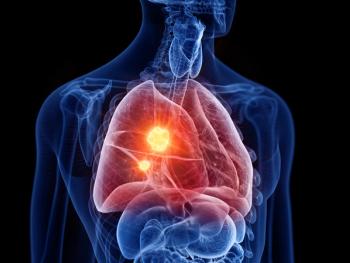
Three nurses discuss the differences in the care and education required for patients with first-line EGFR-mutated non–small cell lung cancer.
Time to worsening of symptoms was improved with amivantamab plus chemotherapy compared with chemotherapy alone in the phase 3 PAPILLON trial.
Xiuning Le, MD, PhD, discusses the confirmatory SOHO-02 trial needed to convert sevabertinib’s accelerated approval to full approval.
David R. Gandara, MD, discusses how EMPOWER-Lung 1’s findings in KRAS G12C-mutated disease should inform the design of combination trials.
Hematologic specialists discussed where ciltacabtagene autoleucel fits in the treatment paradigm at first relapse and beyond in multiple myeloma.
David R. Gandara, MD, explains what makes KRAS G12C biologically distinct from other KRAS subtypes in NSCLC immunotherapy response.
Advertisement
Advertisement
Trending on CancerNetwork
1
Neoadjuvant Radiation May Improve Tolerability in Cholangiocarcinoma
2
Distal Extrahepatic Cholangiocarcinoma May Gain From Neoadjuvant Radiation
3
Hydrogel Spacer Receives FDA 510(k) Clearance for Prostate Cancer Radiotherapy
4
Isatuximab-Based Therapy Shows “Impressive” PFS Projections in NDMM
5