

Opinion|Videos|March 10, 2025
Utilizing Chemotherapy and Immunotherapy in Bladder Cancer Treatment
The Oncology Brothers, discuss how advances in bladder cancer management have demonstrated significant clinical benefits by strategically combining chemotherapy and immunotherapy, which leverages cytotoxic agents to directly target malignant cells while simultaneously activating immune-mediated tumor recognition, as well as checkpoint inhibitors that have shown promise in maintaining disease control after initial chemotherapy response, especially in metastatic settings.
Advertisement
Advertisement
Related to this article
In a phase 2 study, azacitidine plus ruxolitinib produced a 78% objective response rate in patients with chronic phase myelofibrosis.

Shankar Siva, MBBS, PhD, FRANZCR, discussed when to consider cytoreductive SABR in patients with metastatic kidney cancer responding to systemic therapy.
At The Liver Meeting 2026, Daniel Q. Huang, MBBS, PhD, explained why cirrhosis-based HCC surveillance misses many patients with MASLD and how to find them.

At The Liver Meeting 2026, Hashem B. El-Serag, MD, MPH, discussed when patients with MASLD and F3 fibrosis may merit HCC surveillance.

At The Liver Meeting 2026, Pierre Gholam, MD, explained why liver tumor board plans often break down at implementation and how navigators can help.

Surveillance guidelines limited to cirrhosis may miss up to a third of patients with MASLD-related HCC, according to Daniel Q. Huang, MBBS, PhD.
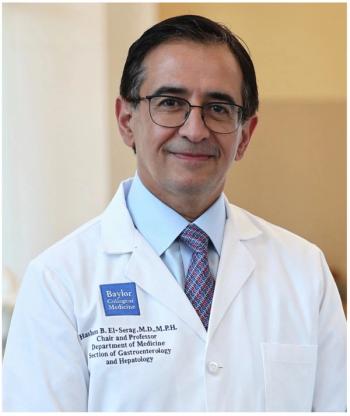
Hashem B. El-Serag, MD, MPH, discussed fibrosis-based HCC surveillance, ultrasound limits, chemoprevention, and alcohol screening for patients with MASLD.

At The Liver Meeting® 2026, Andrew Moon, MD, MPH, discussed research revealing gaps between clinician and patient priorities in HCC treatment choice.
Advertisement
Advertisement
Trending on CancerNetwork
1
Closing the HCC Surveillance Gap in MASLD Without Cirrhosis
2
Rethinking Surveillance and Multidisciplinary Care in MASLD-Related HCC
3
Building Systems to Catch Liver and Other Cancers in Patients With MASLD
4
Weighing HCC Surveillance for Patients With MASLD and F3 Fibrosis
5