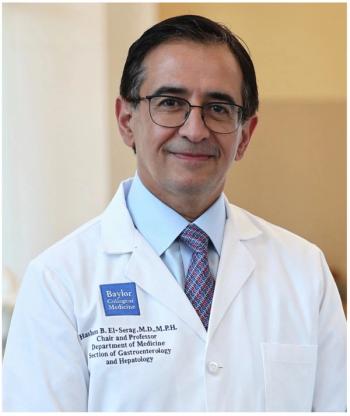
Hashem B. El-Serag, MD, MPH, discussed fibrosis-based HCC surveillance, ultrasound limits, chemoprevention, and alcohol screening for patients with MASLD.
Surveillance guidelines limited to cirrhosis may miss up to a third of patients with MASLD-related HCC, according to Daniel Q. Huang, MBBS, PhD.
Metabolic dysfunction–associated steatotic liver disease (MASLD) is a growing driver of hepatocellular carcinoma (HCC) worldwide, yet many patients with MASLD-related HCC fall outside current surveillance strategies and present with metabolic comorbidities that complicate treatment.
At The Liver Meeting 2026, CancerNetwork® spoke with Daniel Q. Huang, MBBS, PhD, senior consultant at the National University Centre for Digestive Diseases and chair of the Hepatobiliary Cancer Programme at the National University Cancer Institute, Singapore, about risk stratification and multidisciplinary care for patients with MASLD-related HCC.
Huang began by describing how genetic risk factors and body composition differ between Asian and Western populations and why those differences matter when assessing risk. He then discussed the interplay of obesity, sarcopenia, and frailty in patients with HCC and explained how surveillance guidelines limited to patients with cirrhosis miss a substantial proportion of MASLD-related cases. He also highlighted the risk scores and biomarkers available for selecting patients for surveillance, and outlined how his program structures multidisciplinary care.
It is a complex interplay of multiple factors. On one hand, the patient may be obese; on the other hand, they might be sarcopenic. Added to that, patients with advanced cancer tend to lose weight, which might have implications for their frailty and their overall ability to tolerate surgery or even systemic therapy. There needs to be a holistic, multidisciplinary approach to these patients. We should not just look at BMI and assume that a patient is nutritionally adequate or fit enough to tolerate certain treatments.
We looked at this a few years ago, and we, as well as many other groups, found that a large proportion of people with MASLD-related HCC do not have cirrhosis. Current estimates are up to a third, and some go as high as almost 40%.² This has big implications for how we survey patients. Current [AASLD] practice guidelines recommend cancer surveillance only for those with cirrhosis; therefore, we are missing a third of patients with MASLD-related HCC who do not have cirrhosis.
What is immediately available are the Fibrosis-4 [FIB-4] index and transient elastography with FibroScan. We use them daily in clinical practice. They are not perfect, and there is ongoing work to be done. In the future, blood-based biomarkers hold great promise for how we might risk-stratify these patients.
The key is to develop clear care pathways between the various specialties. There is often duplication of work for patients between, say, oncology and hepatology, or between hepatology and hepatobiliary surgery. One of the things we are looking at is having detailed pathways for each condition, so that the relevant specialties can be called in early and any duplicated work can be evened out between them.