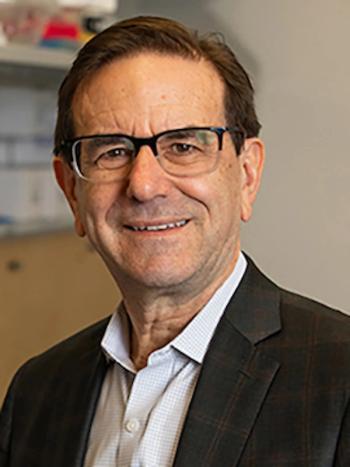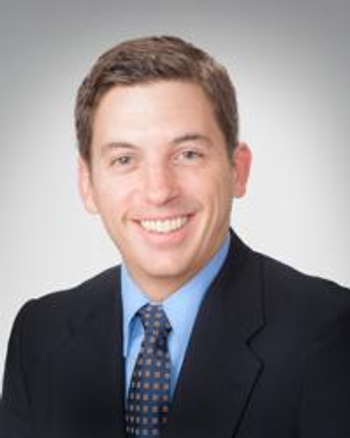
Adam C. Olson, MD, MSc-GH, discussed the infrastructure, training, and shared decision-making behind building a prostate HDR brachytherapy program.
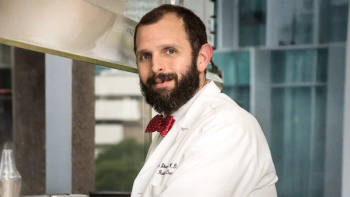
Bhanu Prasad Venkatesulu, MBBS, MD, discussed why fewer radiation oncologists offer prostate brachytherapy and the patients for whom he still recommends it.
The faculty at the University of Pittsburgh Medical Center (UPMC) organized the
In an interview with CancerNetwork® at the symposium, Bhanu Prasad Venkatesulu, MBBS, MD, discussed the talk he gave on spacers and fiducials in prostate cancer, why brachytherapy makes a useful case study for a meeting built around service lines, and the patients for whom focal radiation matters most. He addressed the national decline in brachytherapy use and the training, procedural, and workload reasons behind it.
Venkatesulu closed by discussing where the evidence for brachytherapy is strongest and where it thins out, the 2 program models UPMC uses to staff prostate brachytherapy, and what a symposium of roughly 100 attendees offers that a national meeting does not.
Venkatesulu is a clinical assistant professor in the Department of Radiation Oncology at the University of Pittsburgh and a radiation oncologist at UPMC Hillman Cancer Center. He practices at Magee-Womens Hospital of UPMC and at UPMC Hillman Cancer Center at Arnold Palmer Pavilion in Greensburg, Pennsylvania.
CancerNetwork: What was your presentation about?
Venkatesulu: Today my talk was on the role of spacers and fiducials in prostate cancer, and my colleague also talked about high-dose rate brachytherapy for prostate cancer.
Why is brachytherapy a good example of a service line that needs to be rebuilt in many places?
There are various treatment options for men with prostate cancer, where the cancer is confined to the prostate alone. The options include surgery and radiation, and radiation has multiple options. Some of them include external beam radiation—stereotactic body radiation therapy (SBRT), where you can do it within 5 treatments. Then you have brachytherapy, and brachytherapy also [has] multiple options. There is low-dose rate brachytherapy, where you use prostate seeds. Then there is high-dose rate brachytherapy, where you don’t do anything permanent inside the patient, but you deliver the radiation and take things out. All of those are reasonable options for patients with prostate cancer. There are some patients in whom one option [would] be better compared with the other, and we always have this shared discussion.
Now, in terms of building a service line for brachytherapy, as the survival of patients improves, we want the radiation to be as focused as possible. There are a lot of younger patients who don’t prefer surgery and would rather have radiation. Whenever you do external radiation, the radiation comes from outside, so [there’s] always some risk of a second malignancy in the long run, compared with brachytherapy, which is much more conformal.
Second, about 15% to 20% of the patients can recur after their first course of external radiation. In those patients, it also becomes important to deliver radiation as precisely and focally as possible. That’s another reason why I would say brachytherapy is important.
I have a lot of patients who actually live in the mountains close to Greensburg. For them, commuting for 6 weeks is super hard. From a practical perspective, I tell them, “You’re a good candidate for SBRT. You just need to come maybe 5 to 6 times.” It’s still important for them to do all the treatments in as short a time as possible. In that regard, brachytherapy is a pretty attractive option, where you can finish within 2 treatments. It’s pretty patient-friendly in that regard, and the cure rates are pretty similar to what you’d achieve with surgery or with other forms of radiation.
Brachytherapy use has fallen in the United States. What is causing that?
There are a few reasons. One of them is that not many radiation oncologists are comfortable performing brachytherapy in general. If you don’t have people to do it, you’re obviously not going to get that as an option for you.
Second, it’s an invasive procedure. Especially with the advent of SBRT, where you can do 5 treatments, get the treatment done, and probably achieve an equivalent outcome to brachytherapy, patients question, “Why do I have to go through an invasive procedure? That’s the main reason I did not want surgery in the first place.” The perspective may be a little bit different in that regard.
And from an economic standpoint of view, if [a clinician] has to do brachytherapy, they usually have to wake up at 5 or 6 in the morning, and get to the hospital. It’s more work in general. A lot of radiation oncologists [consider] their work-life balance, [and think], “Why should I do this when I can easily [achieve] the exact same cure rate with just an external radiation treatment?”
There are various reasons. Some of it is physicians not having enough training. Some of it is physician reluctance as well; some of it is because [there’s] another [available] option which is as [short] as possible, because historically, when we used to do brachytherapy, the number of treatments for prostate cancer was 39 to 44 treatments. Now it has come down to 28 for external radiation. For SBRT, it’s just 5. Some of that is also because the external beam’s ability to deliver external radiation has become much more precise and accurate.
But at the end of the day, though I do a lot of brachytherapy, I’m not somebody who would say that brachytherapy is better. At the end of the day, it’s another option. But in patients who have had prior radiation and have a local recurrence, it’s a really good option. I do think it outdoes external radiation or other forms of focal therapies in that regard.
The morning session focused on clinical evidence. What is the strongest evidence for brachytherapy, and where is it thinnest?
Brachytherapy has been around for 60 to [80] years. For prostate [cancer], especially, the best data are with low-dose rate [brachytherapy], or prostate seeds, more so in the 1980s and 1990s. It’s been around for about 40 to 50 years, but the downside of prostate seeds is that it’s permanent. You place it inside the patient and it stays there forever. There are some restrictions on whether they can be close to kids [or] pregnant women. There are some restrictions as well. The thing with prostate seeds is that once you place it, [that] does not mean it’s going to stay there. It can move. That’s how the human body is. There are some randomized trials that have compared prostate seeds with high-dose rate brachytherapy, and have shown slightly increased toxicity with the low-dose seeds.1
Now, coming to high-dose rate brachytherapy, which is a little newer, I would say it’s been there for the last 30 years. You have better control over the radiation dose, and compared with low-dose rate, it has been shown to have better outcomes.
Now, when comparing external beam radiation, it’s very hard to do clinical trials when you have to compare [head-to-head] between brachytherapy and SBRT or external radiation. You are offering a drastically different treatment option. You’re essentially telling patients you might have to come for 6 weeks for external radiation. [To another] patient, you are saying it’s 2, but it’s invasive. When you’re offering a radically different treatment option, it’s very hard to do those trials. We don’t really have a [head-to-head] comparison between external radiation and brachytherapy.
We have it in the context of boost, where you do purely external radiation for somebody with high-risk prostate cancer, and you do external radiation with brachytherapy boost. We have data for that, and it clearly shows that brachytherapy does improve biochemical control in the long run.2 [There’s also the] survival question. There is one trial out of [the] UK which showed a survival difference at 15 years, but it was registry-based, so there’s some limitation there as well.
Prostate brachytherapy involves urologists, physicists, and dosimetrists. How is that team structured at UPMC, and which collaboration is hardest to make flow seamlessly?
I work in 2 different programs for brachytherapy. One of them is actually a radiation oncologist-led program, so everything is done by the radiation oncologist. Patients are sent by urology. We see the patient, obtain consent, do the actual procedure, and do the cystoscopy at the time of the procedure. We work with the physicist to do the planning, deliver the treatment, take everything out, and we follow up with them. That’s one kind of setup we have.
The second one is a little different, where both the urologist and radiation oncologist do it together. The urologist usually places the needles. Sometimes I also place the needles, and the urologist does a cystoscopy, and we push the needles a little bit. Then the radiation oncologist takes over the planning.
I think both the programs have worked out pretty well, and it’s always good to get a buy-in from your referring physicians, especially urologists in this case, so they are also aware of what we are doing. Both programs have flown seamlessly. We also have a low-dose rate brachytherapy program at [UPMC] Mercy. We also have one at Heritage Valley. Each of those also has a little bit of a different setup…. There are different ways to do it. Some of it is navigating what the expectations are from your referring physicians, and some of it is what kind of setup you have as well. Multiple factors come into play for how you build that program.
This conference is smaller than the American Society of Clinical Oncology (ASCO) Annual Meeting or the American Society for Radiation Oncology (ASTRO) Annual Meeting, but that doesn’t make it less valuable. What different goals should attendees have coming here, and what will they find that they wouldn’t at one of those?
ASCO and ASTRO are more business meetings—it’s a lot of networking and business. Here, it’s one-on-one. It’s a much smaller conference. We have about 100 [in-person] attendees and some [more] over Zoom. In that regard, whenever somebody has a thought to establish a program, or if they wish to refer patients here for us to see and take care of them, we have a better ability to communicate with them and talk about how to set up the process.
We also have really good sponsorship from companies as well. I’m also learning a lot from them, because most of them are PhDs or [people] who have been in the field for decades. I [learned] a lot about upcoming newer molecules, technology, and clinical trials.