News|Articles|May 29, 2026

What Are The Top Lymphoma Abstracts at ASCO 2026?

Fact checked by: Russ Conroy

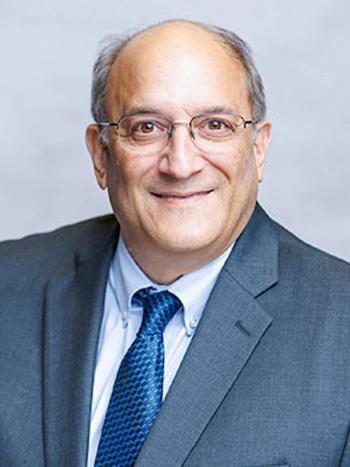
Matthew Matasar, MD, of Rutgers Cancer Institute, spoke about upcoming trials in lymphoma to look out for at the ASCO 2026 Meeting.

The 2026 American Society of Clinical Oncology (ASCO) Annual Meeting has arrived!

Emerging data from this year’s meeting, including late-breaking abstracts, poster sessions, and other key presentations, could make a sizeable impact on the evolution of the lymphoma space. Specifically, targeted immunotherapies, bispecific T-cell engagers, and CAR T therapies are among the agents poised to shake up current standards for several lymphoma indications.

In the days leading up to the meeting, CancerNetwork® spoke with Matthew Matasar, MD, chief of the Division of Blood Disorders at Rutgers Cancer Institute and Cancer Survivorship editorial advisory board member for ONCOLOGY®, about key abstracts he is looking out for at the conference. Specifically, he highlighted readouts he was excited for and 2 additional presentations that he believed would be the standout and underdog sessions, respectively.

“I’m excited to see some emerging data at ASCO this year. Yes, as an oncologist and citizen, I’m excited about the progress being generated by my solid tumor sisters and brothers––looking at you, RAS inhibitors,” Matasar said. “But lymphoma is not being left out this year.”

LBA7000: frontMIND: phase 3 study of tafasitamab (Tafa) plus lenalidomide (Len) and R-CHOP for patients (pts) with newly diagnosed diffuse large B-cell lymphoma (DLBCL)

Presentation: May 30, 3:00 – 3:12 PM CST by Georg Lenz, MD, PhD

“The [phase 3] frontMIND trial [NCT04824092] evaluated the efficacy of adding tafasitamab-cxix [Monjuvi] and lenalidomide [Revlimid] to rituximab [Rituxan], cyclophosphamide, doxorubicin, vincristine, and prednisone [R-CHOP] for higher-risk newly diagnosed diffuse large B-cell lymphoma [DLBCL],” Matasar explained regarding the abstract, which he listed as his standout trial.1 “The story was spoiled a bit by the required press release… but I am excited to see the data in detail, including magnitude of benefits and subset analyses, with this late-breaker.”

Previous findings from the trial revealed that the primary end point of the trial was met, with the tafasitamab-based investigational regimen showing an advantage in progression-free survival (PFS) per investigator assessment over R-CHOP alone (HR, 0.75; 95% CI, 0.59-0.96; P = .019).2 Moreover, the secondary end point of investigator-assessed event-free survival (EFS) was met, with no new safety signals identified.

6508: First-in-human dual-epitope nanobody anti-CD5 CAR-T for relapsed/refractory T-ALL/PTCL: phase I dose-escalation and expansion results from the CONQUER trial.

Presentation: June 2, 12:09 – 12:21 PM CST by Meng Lv, MD, PhD

Another key abstract, one that Matasar suggested could be an underdog at the conference, is a readout of the first-in-human phase 1 CONQUER trial (NCT06874946), which evaluated a dual-epitope nanobody anti-CD5 CAR-T product among patients with relapsed/refractory T-cell acute lymphoblastic leukemia (T-ALL) or peripheral T-cell lymphoma (PTCL).3

“[T]he PTCLs remain a range of illnesses with a lot of unmet need, unfortunately. It’s been difficult to get CAR-T to gain traction here because of challenges of fratricide––kill bad T cells, but not your fellow CARs––but there is a lot of sophisticated [design] being brought online,” Matasar explained regarding the upcoming results from the trial.

Within the abstract, cytokine release syndrome (CRS) was observed at a rate of 66.7% among 18 evaluable patients, with no grade 3 or higher CRS events observed. Moreover, 1 grade 1 immune-effector cell association neurotoxicity syndrome (ICANS) event was reported, with 4 (22.2%) and 5 (27.8%) patients experiencing grade 3 or 4 immune-cell–associated hematotoxicity (ICAHT).

The objective response rate (ORR) within this population was 77.8%, with 61.1% of patients experiencing a complete response (CR), CR with incomplete hematologic recovery, or complete molecular response (CMR). Additionally, 4 non-responders, including 2 in the PTCL cohort, demonstrated low CAR-T expansion, with peak levels remaining under 500 copies/µg genomic DNA. Moreover, patients treated at the recommended phase 2 dose (RP2D) experienced an ORR of 100%, with 85.7% attaining a CR/CMR.

7002: Phase 2 trial of epcoritamab in combination with rituximab-mini CVP for older unfit/frail or anthracycline-ineligible adult patients with newly diagnosed diffuse large B-cell lymphoma: interim futility analysis.

Presentation: May 30, 3:24 – 3:36 PM CST by Dai Chihara, MD, PhD

Another notable abstract Matasar identified is an MD Anderson-led phase 2 trial (NCT06045247) evaluating epcoritamab-bysp (Epkinly) plus non-anthracycline chemotherapy (R-miniCVP) among patients with DLBCL deemed unfit or frail per Lymphoma Italian Foundation (FIL) simplified geriatric assessment or ineligible for anthracycline.4

“We’ll…get early readout from the study evaluating epcoritamab plus mini-CVP in anthracycline-ineligible newly diagnosed DLBCL, a critical unmet need,” Matasar explained.

According to the data in the abstract, investigators in the single arm protocol enrolled 22 patients, all of whom completed planned treatment. The CR rate after 6 cycles was 86% (95% CI, 65%-97%), with an additional 2 patients experiencing a partial response (PR) and continuing therapy with epcoritamab for up to 12 cycles. After a median follow-up of 11 months (range, 50-23), the 1-year PFS rate was 94.7% (95% CI, 68%-99%).

CRS events were observed in 55% of patients, all of which were grade 1, occurred around day 15 of cycle 2, and resolved within 1 to 2 days. Additionally, 1 patient developed grade 2 neurotoxicity after cycle 2, day 15, which resolved within 24 hours after swapping prednisone for dexamethasone.

7003: A phase 1 study of the PRMT5 inhibitor AZD3470 in patients with relapsed/refractory classic Hodgkin lymphoma (PRIMAVERA).

Presentation: May 30, 4:00 – 4:12 PM CST by Enrico Derenzini, MD, PhD

Additionally, Matasar suggested that the readout of the phase 1 PRIMAVERA trial (NCT06137144) could address a need for patients with relapsed/refractory classic Hodgkin lymphoma who progressed following checkpoint inhibition and brentuximab vedotin (Adcetris).5

“I’m excited for the phase 1 data for AZD3470, a novel PRMT5 inhibitor being studied in relapsed Hodgkin lymphoma. The post-checkpoint and post-brentuximab vedotin [settings] have been very challenging areas to make progress in, but there are patients who have been failed by both in need of novel options,” Matasar stated in the conversation with CancerNetwork.

In the study, patients 18 years and older treated with at least 3 prior lines of therapy, including brentuximab vedotin and an anti–PD-1 therapy, received escalating doses of AZD3470 daily in ascending dose levels.

According to data from the abstract, treatment-emergent adverse effects (TEAEs) occurred in 85% of patients (n = 39) in the study, which were primarily grade 1 or 2 in severity. The most common TEAEs included anemia and nausea at 28% and 15%, respectively, as well as asthenia, constipation, fatigue, and neutropenia, which all occurred in 13% of patients. Grade 3 TEAEs occurred in 28% of patients.

Dose reductions occurred in 2 patients due to TEAEs; grade 4 hypertriglyceridemia and grade 3 esophagitis. No dose-limiting toxicities, discontinuations, or deaths attributable to TEAEs occurred in the trial. A total of 14 patients experienced an objective response, all occurring from dose levels 4 to 8. Dose level 7 accounted for the highest ORR at 80% and a CR rate of 50%.

References

  1. Lenz G, Trněný M, Burke JM, et al. frontMIND: phase 3 study of tafasitamab (Tafa) plus lenalidomide (Len) and R-CHOP for patients (pts) with newly diagnosed diffuse large B-cell lymphoma (DLBCL). J Clin Oncol. 2026;44(suppl 17):LBA7000. doi:10.1200/JCO.2026.44.17_suppl.LBA7000
  2. Incyte Announces positive topline results from pivotal study of tafasitamab (Monjuvi®/Minjuvi®) as a first-line treatment for diffuse large B-cell lymphoma. News release. Incyte. January 5, 2026. Accessed May 28, 2026. https://tinyurl.com/r5jfr3va
  3. Lv M, Wang L, Mingkun W, et al. First-in-human dual-epitope nanobody anti-CD5 CAR-T for relapsed/refractory T-ALL/PTCL: phase I dose-escalation and expansion results from the CONQUER trial. J Clin Oncol. 2026;44(suppl 16):6508. doi:10.1200/JCO.2026.44.16_suppl.6508
  4. Chihara D, Chauhan A, Lin R, et al. Phase 2 trial of epcoritamab in combination with rituximab-mini CVP for older unfit/frail or anthracycline-ineligible adult patients with newly diagnosed diffuse large B-cell lymphoma: interim futility analysis. J Clin Oncol. 2026;44(suppl 16):7002. doi:10.1200/JCO.2026.44.16_suppl.7002
  5. Derenzini E, Morschhauser F, Ribrag V, et al. A phase 1 study of the PRMT5 inhibitor AZD3470 in patients with relapsed/refractory classic Hodgkin lymphoma (PRIMAVERA). J Clin Oncol. 2026;44(suppl 16):7003. doi:10.1200/JCO.2026.44.16_suppl.7003

Latest CME