Melody Rasouli, MD, MBA, FACOG, explained why male fertility preservation information trails female content online and how cancer centers can fix it.
This section aims to enhance provider empathy, mitigate burnout, and center the patient’s lived experience within the rigorous framework of medical science.
Language.
A bridge, a barrier, a living thing that connects—or separates—souls. It is the vessel through which we share knowledge, build trust, and seek understanding. Yet sometimes, in medicine, even the richest language fails to carry the weight of what our hearts want to say.
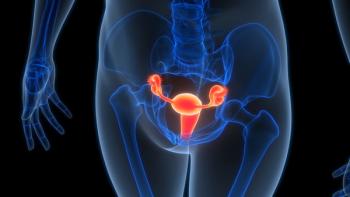
During the fall of 2025, I cared for a 35-year-old woman recently diagnosed with advanced ovarian cancer. Only 2 weeks earlier, she had been full of life—working, laughing, taking care of her family. A recent emigrant from China, she lived here surrounded by love: parents, a sister, and a small but fiercely close-knit community. In the blink of an eye, her life changed. She came to the hospital with shortness of breath. The scans were devastating: widespread metastases to the lungs and abdomen. Within days, her condition spiraled. A rapid response was called. She was intubated and transferred to the critical care unit, and her family’s world collapsed around her.
From the moment visiting hours began until late into the night, her family sat by her bedside, holding her hands, whispering prayers, clinging to hope. They searched for any sign of improvement, any flicker of life that would tell them she was still fighting. Every time we entered the room, the air grew still. Dozens of eyes turned toward us—the doctors in white coats—as though we carried divine answers. But we are not gods. We are human, standing in the same fragile space between hope and helplessness.
The language barrier made everything heavier. We used interpreters, yes, but translation cannot capture the tremor in a mother’s voice or the heartbreak behind a sister’s question. I don’t speak Mandarin, but compassion transcends language. I learned to listen with my eyes, to bow my head when words failed, to let silence speak when explanations only deepened pain.
Each day, I watched her family’s strength and sorrow intertwine. They asked about lab results, about the single chemotherapy dose she had received. “Is she responding?” they asked, again and again. “Her labs are stable,” we answered. “It will take time.” Deep down, we knew. The disease was moving faster than medicine could follow. There are moments in oncology when our knowledge feels like armor made of paper: thin, powerless against the weight of reality.
I often think of her now, the 35-year-old woman with no husband, no children, and so many dreams left unwritten. I think of her sister, who never left her side, eyes swollen from tears, but voice steady when she said, “Thank you for trying.” I think of how fragile and profound the act of communication can be, not just in words, but in gestures, in presence, in shared silence.
Moments like this remind me why I do what I do. They reveal the deep vulnerability of our patients—and the urgency of our calling. For every patient whose disease moves faster than our medicine, we must move faster still: to research, to innovate, to build new trials and therapies that can bring not only hope but also real change because behind every chart and protocol lies a life, a family, a story that deserves more tomorrows.
Medicine teaches us many things: the art of healing, the limits of science, and the beauty of resilience. Above all, it teaches us to listen to what is spoken and what is not.
Language may fail us. But empathy—and the drive to make things better—never does.
8 months ago
Advances in Immunotherapy for Breast Cancer
![“We want to make sure we are not producing a financial burden for patients in exchange for that convenience [with subcutaneous therapies],” said Thaddeus Beck, MD, FACP.](https://cdn.sanity.io/images/0vv8moc6/cancernetwork/cbb0bc385f194a5dd84702ed02a21020e3a6977b-1200x1800.jpg?w=350&fit=crop&auto=format)