

Investigators say that among those with platinum-refractory recurrent or metastatic head and neck squamous cell carcinoma who responded to nivolumab plus ipilimumab duration of response was not reached.

Ariana Pelosci, managing editor for CancerNetwork® and the journal ONCOLOGY®, has been with the team since June 2021. She specializes in both web and print, and runs the social media accounts for CancerNetwork®.
She graduated from the University of Delaware, where she studied Media Communications and minored in journalism and marketing. At heart, she is a Jersey girl, and you can always find her down the shore during her free time.
Ariana loves to read, specifically historical or contemporary fiction. Follow Ariana on Twitter @APelosci or email her at apelosci@mjhlifesciences.com.
Investigators say that among those with platinum-refractory recurrent or metastatic head and neck squamous cell carcinoma who responded to nivolumab plus ipilimumab duration of response was not reached.

Pharmacy director Kirollos Hanna, PharmD, BCPS, BCOP, FACC, discusses how to navigate shared toxicities between combination immunotherapy and VEGF inhibitors for patients with renal cell carcinoma.

During the ODAC meeting, members voted to restrict the use of olaparib plus abiraterone and prednisone or prednisolone to patients with BRCA-mutated metastatic castration-resistant prostate cancer.
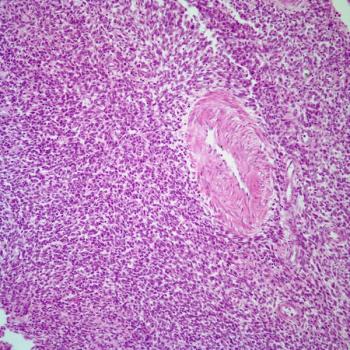
The European Medicines Agency validates the potential indication of dostarlimab/chemotherapy in mismatch repair deficient/microsatellite instability–high endometrial cancer based on the phase 3 RUBY trial.

Investigators cite the need for further study of the 25 mg, 3 times weekly exemestane dosing schedule in prevention studies among those with post-menopausal, stage 0 to II estrogen receptor–positive breast cancer who can’t tolerate daily adjuvant treatment.

A senior physician’s assistant from Johns Hopkins examines why adverse effect management is so crucial and reviews how to help maintain quality of life while undergoing treatment.

Experts in the multiple myeloma space review available therapies such as CAR T-cell therapy, bispecifics, and B-cell maturation antigen–targeted agents for patients with multiple myeloma.

Results from cohort K of the phase 1b/2 KEYNOTE-869 trial led to the accelerated approval of enfortumab vedotin plus pembrolizumab in patients with locally advanced or metastatic urothelial cancer who cannot receive cisplatin-based chemotherapy.
Based on results from the phase 2 KEYNOTE-158, KEYNOTE-164, and KEYNOTE-051 trials, the FDA has given full approval to pembrolizumab for patients with microsatellite instability-high or mismatch repair deficient solid tumors.
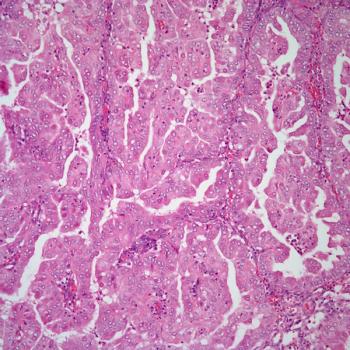
The phase 3 RUBY trial of dostarlimab plus carboplatin and paclitaxel significantly improved progression-free survival in patients with dMMR/MSI-H or MMRp/MSS endometrial cancer.
In the SOLAR phase 1b trial, a clinical benefit was observed when patients with RAS-mutated ovarian or endometrial cancer were given olaparib plus selumetinib.
Results from the phase 2 CDRB436G2201 trial lead to the approval of dabrafenib plus trametinib in patients with low-grade glioma and a BRAF V600E mutation who require systemic therapy.

Shilpa Gupta, MD, discusses bladder preserving strategies for unfit or young patients, trials assessing immunotherapy combinations, and results from the BLASST-1 trial presented at ASCO GU.

Disparities in pediatric cancer survival in Europe might be mitigated through cross-border care, twinning programs, and use of pan-Europe cancer control plans.

All patients with platinum-resistant, small-cell neuroendocrine prostate cancer who responded to treatment with BXCL701 plus pembrolizumab were microsatellite stable and/or tumor mutational burden–low with a low probability of response to pembrolizumab.

Polatuzumab vedotin-piiq plus R-CHP was found to produce clinical efficacy in phase 3 POLARIX trial in patients with previously untreated diffuse large B-cell lymphoma, leading to an 11-to-2 vote from the FDA’s Oncologic Drug Advisory Committee.

Patients with advanced clear cell renal cell carcinoma are “unlikely” to experience a clinically meaningful decrease in overall survival following planned treatment cessation with a tyrosine kinase inhibitor.
A prefilled autoinjector presentation of pegfilgrastim-cbqv, a pegfilgrastim biosimilar, has been approved by the FDA for patients with cancer undergoing chemotherapy who may experience febrile neutropenia.
Results from cohort A of the HCRN GU16-260 trial showed treatment-free survival was enhanced in patients with advanced renal cell carcinoma who received nivolumab monotherapy plus salvage nivolumab and ipilimumab maintenance.
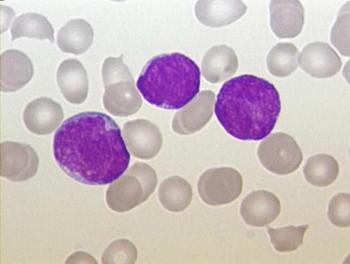
An expert from the University of Texas MD Anderson Cancer Center says that ponatinib plus reduced-intensity chemotherapy may be a new standard of care for frontline Philadelphia chromosome–positive acute lymphoblastic leukemia.

Survival appears to be significantly improved when idecabtagene vicleucel is given vs standard of care in relapsed/refractory multiple myeloma.

An expert from Dana-Farber Cancer Institute speaks not only to racial disparities in access to opioids for end-of-life cancer care but gender/racial discrepancies, as well.

In a meeting with the FDA’s Oncologic Drugs Advisory Committee experts discussed findings that have read out with regard to dostarlimab for patients with mismatch repair deficiency/microsatellite instability–high locally advanced rectal cancer.

During a live Tweet Chat, Hope S. Rugo, MD, and Paolo Tarantino, MD, reviewed a patient case and discussed current standard of care for those with metastatic triple-negative breast cancer.
Patients with pre-treated, unresectable locally advanced or metastatic hormone receptor-positive, HER2-negative breast cancer can now receive treatment with sacituzumab govitecan following approval from the FDA.
The approval for pirtobrutinib in the treatment of patients with relapsed or refractory mantle cell lymphoma was based on data from the phase 1/2 BRUIN trial.

The FDA approved adjuvant pembrolizumab for the treatment of patients with resected non–small cell lung cancer, based on data from the phase 3 KEYNOTE-091/EORTC-1416-LCG/ETOP-8-15-PEARLS trial.

Under a new FDA initiative, the agency recently updated a decades’ old approval of the chemotherapy capecitabine. This move, according to an expert, will springboard further change in the treatment of cancer.

The findings, according to a group of researchers, warrant the development of treatments that attack HER2-low advanced gastric cancer.

The FDA based its accelerated approval of tucatinib and trastuzumab combination therapy for HER2-positive metastatic colorectal cancer on results from the phase 2 MOUNTAINEER trial.