

Patients with metastatic cancer had improved health-related quality of life, physical function, and symptom control at 3 months when a weekly electronic patient reported outcomes survey was used.

Ariana Pelosci, managing editor for CancerNetwork® and the journal ONCOLOGY®, has been with the team since June 2021. She specializes in both web and print, and runs the social media accounts for CancerNetwork®.
She graduated from the University of Delaware, where she studied Media Communications and minored in journalism and marketing. At heart, she is a Jersey girl, and you can always find her down the shore during her free time.
Ariana loves to read, specifically historical or contemporary fiction. Follow Ariana on Twitter @APelosci or email her at apelosci@mjhlifesciences.com.
Patients with metastatic cancer had improved health-related quality of life, physical function, and symptom control at 3 months when a weekly electronic patient reported outcomes survey was used.

Based on results from the phase 2 GEOMETRY mono-1 trial, the European Commission has approved capmatinib for patients with non–small cell lung cancer who have MET exon 14 skipping mutations, and a need for systemic therapy following prior treatment with immunotherapy and/or platinum-based chemotherapy.

Results from the phase 3 AENA trial led to the United Kingdom’s Medicine and Healthcare products Regulatory Agency accepting a marketing authorization application for aumolertinib for review in patients with locally advanced or metastatic non–small cell lung cancer with activating EGFR mutations, and those with locally advanced or metastatic EGFR T790M mutation–positive non–small cell lung cancer.

Results from the WSG-ADAPT-HER2+/HR- study showed promising survival rates with pathological complete response when patients with HER2-positive, hormone receptor-negative early breast cancer were treated with a de-escalated dose of trastuzumab plus pertuzumab without or without paclitaxel over a 12-week period.

Nutritional markers such as body mass index, weight loss, and albumin should be assessed to identify pre-operative malnutrition in patients with gynecologic cancers.

The 3-year follow-up update from the phase 2 ZUMA-2 trial showed continued responses for patients with relapsed/refractory mantle cell lymphoma treated with brexucabtagene autoleucel.

Independent factors such as the integrated clinical radiomics model and 18F-FDG PET/CT radiomics signature may be predictive of progression-free survival in breast cancer.

Despite women with multiple myeloma being more likely to have certain cytogenetic risk factors vs men, sex did not appear to impact efficacy.

Based on results of the phase 3 KEYNOTE-091/PEARLS trial, the FDA has accepted a supplemental biologics license application for pembrolizumab for patients with stage IB, II, or IIIA non–small cell lung cancer after a complete resection.

Based on results of the phase 3 RATIONALE-309 trial, the China National Medical Products Administration has approved tislelizumab plus chemotherapy for the first-line treatment of recurrent or metastatic nasopharyngeal cancer.

An expansion cohort from the phase 2 EPCORE NHL-1 trial demonstrated strong efficacy of epcoritamab in patients with relapsed/refractory large B-cell lymphoma.

FoundationOne CDx has been approved by the FDA as a companion diagnostic for entrecitinib for the treatment of ROS1 fusion–positive non–small cell cancer or NTRK fusion–positive solid cancers.
Based on results from the phase 1/2 GO29781 trial, the European Commission has approved mosunetuzumab for adult patients with relapsed/refractory follicular lymphoma.

Results from the phase 3 SPOTLIGHT trial showed 18F-rhPSMA-7.3 increased post-scan disease upstaging in recurrent prostate cancer.
The phase 3 HER2CLIMB-05 trial will investigate tucatinib plus standard of care maintenance in the first-line setting for patients with HER2-positive metastatic breast cancer.
Results from a correlative analysis conducted with 3-years of follow-up showed pembrolizumab monotherapy resulted in the greatest long-term survival benefit in patients with non–small cell lung cancer and a PD-L1 tumor proportion score of 90% or more.

Results from the phase 3 PEARLS/KEYNOTE-091 trial showed improved disease-free survival with pembrolizumab vs placebo for patients with completely resected early-stage non–small cell lung cancer, without regard surgical treatment, extent of disease, or adjuvant chemotherapy.

The ATHENA-MONO trial showed a significant improvement in progression-free survival when patients with platinum-sensitive ovarian cancer were treated with maintenance rucaparib vs placebo in the first-line setting, regardless of HRD status.

Elderly frail patients with relapsed/refractory multiple myeloma treated with ixazomib plus daratumumab experienced favorable response rates.

A subgroup analysis of the phase 3 MAIA trial showed rapid, deep, and durable responses with daratumumab plus lenalidomide and dexamethasone vs standard therapy for newly diagnosed multiple myeloma across patient subgroups.

Atezolizumab plus fluorouracil, leucovorin, oxaliplatin, and irinotecan resulted in a tolerable safety profile and improved progression-free survival vs the control regimen in patients with metastatic colorectal cancer.

High body mass index in patients with apparent early-stage endometrial cancer may be predictive of sentinel lymph node mapping failure and decrease overall detection rate.
Investigators indicated that comprehensive geriatric assessment could be used to determine whether older, frail patients with hematologic cancers can undergo intensive treatment with chemotherapy and whether curative treatment is viable.

Chemoradiotherapy plus cisplatin administered weekly was found to be non-inferior to cisplatin once every 3 weeks for patients with high-risk locally advanced squamous cell carcinoma of the head and neck.
A biologics license application for pegfilgrastim-pbbk was accepted by the FDA for use in patients experiencing neutropenia while receiving chemotherapy.

Results from the phase 2 ELARA trial supported an accelerated approval from the FDA for tisagenlecleucel for patients with relapsed/refractory follicular lymphoma.
The FDA has granted approval to nivolumab plus ipilimumab and nivolumab plus chemotherapy for patients with unresectable advanced or metastatic esophageal squamous cell carcinoma.

Results from the phase 2 BIONIKK trial highlighted the feasibility and positive impact of selecting patients with metastatic clear cell renal cell carcinoma for treatment with nivolumab plus or minus ipilimumab and a VEGFR-tyrosine kinase inhibitor based on molecular phenotype.

The phase 3 ALTER 0303 trial demonstrated that although patients with non–small cell lung cancer and liver metastases have a worse prognosis than those without, treatment with anlotinib may result in better progression-free survival vs a placebo.
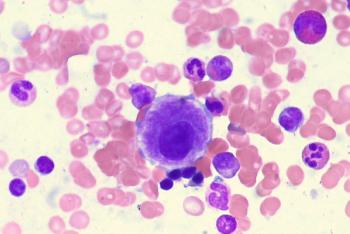
Early discontinuation of a hypomethylating agent was associated with an increase in economic burden for those with refractory anemia with excess blasts, a diagnosis that overlaps with high-risk myelodysplastic syndrome.