Articles by Neil M. Iyengar, MD

Panelists discuss a high-level overview of systemic therapies for advanced HER2+ breast cancer, outlining the roles of HER2-targeted monoclonal antibodies, tyrosine kinase inhibitors (TKIs), and antibody-drug conjugates (ADCs) in treatment, as well as treatment strategies for patients with brain metastases. They also explore the shared decision-making process that informed the recommendation of the HER2CLIMB regimen.
Panelists discuss how a patient navigated her treatment journey at Memorial Sloan Kettering (MSK), detailing the specific treatments received, her responses to those treatments, and her active participation in the shared decision-making process regarding her care.
Panelists discuss how education and resources are provided to patients with breast cancer upon diagnosis, highlighting the importance of tailoring educational approaches to individual needs and preferences, and they also explore the various courses, books, and resources that patients have found helpful in their self-education journey.
Panelists discuss how a patient experienced care coordination during treatment at Memorial Sloan Kettering (MSK), detailing the health care professionals involved, the integration of services such as wound care and integrative medicine, and the positive impact of a team-based approach on her treatment experience and confidence in her care.
Panelists discuss how effective care coordination at Memorial Sloan Kettering (MSK) involves a multidisciplinary team of health care professionals working collaboratively to optimize the patient’s journey from diagnosis through treatment and follow-up, highlighting the essential role of nurse practitioners in this process.
Panelists discuss how a patient navigated her recurrent breast cancer diagnosis, detailing the symptoms, referral process, diagnostic tests, treatment considerations, and the concerns faced throughout the journey, while also examining the steps taken to confirm her HER2+ diagnosis.
Panelists provide a brief overview of breast cancer, discussing typical presentations of advanced breast cancer; key risk factors such as age, gender, and family history; various subtypes of the disease; and the essential steps in diagnosing, risk assessing, and staging patients.

Neil M. Iyengar, MD, highlighted the most important data in breast cancer to come from 2024 ESMO.

Neil M. Iyengar, MD, highlights how to best integrate exercise oncology into multidisciplinary care.

Neil M. Iyengar, MD, and Paolo Tarantino, MD, discuss updated data on agents such as T-DXd and abemaciclib in breast cancer presented at 2024 ASCO.

Neil M. Iyengar, MD, focuses on the use of artificial intelligence in the oncology space.
Neil M. Iyengar, MD, spoke about the potential impact of exercise on patient-reported outcomes in cancer and achieving work-life balance.

Several presentations from the 41st Annual Miami Breast Cancer
Conference focused on new and evolving data in the space, according to Neil M. Iyengar, MD.
Data from the phase 3 NATALEE trial highlight a positive toxicity profile for ribociclib as an adjuvant therapy for patients with hormone receptor–positive, HER2-negative breast cancer, says Neil M. Iyengar, MD.
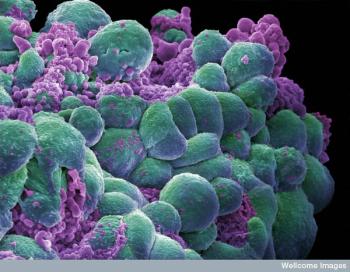
Neil M. Iyengar, MD, gives new directions and ideas as he begins his new position as co–editor-in-chief of ONCOLOGY.

Exercise and healthy lifestyles can lower the risk of cancer or the symptoms of cancer treatment despite having genetic dispositions, said Neil M. Iyengar, MD.

Closing out their review of treatment strategies for HR+ metastatic breast cancer, a panel of experts highlights ongoing investigations and future directions in care.
Expert panelists consider the appropriate use of PARP and immune checkpoint inhibitors, respectively, in the setting of HR+ metastatic breast cancer.
A brief review of Trop-2 directed therapy and its role in the HR+ metastatic breast cancer treatment landscape.
Centering discussion on HER2-targeted trastuzumab deruxtecan, experts reflect on the presence of HER2-low metastatic breast cancer and optimal treatment strategies.
After briefly addressing resistance to endocrine therapy, expert panelists broadly review novel treatment modalities in the setting of HR+ metastatic breast cancer.
Expert perspectives review a case of relapsed HR+ metastatic breast cancer and consider treatment options available in the second line and beyond.
Highlights from key clinical data informing the selection of targeted therapy in particular subsets of patients with HR+ breast cancer.
Comprehensive insight to the selection of CDK4/6 inhibitors as first-line therapy for patients with metastatic HR+ breast cancer, followed by a brief review of available endocrine partners.
Centering discussion on a patient scenario of stage II HR+ breast cancer, expert panelists consider how they would approach workup and selection of therapy.
Neil Iyengar, MD; Claudine Isaacs, MD; Virginia Kaklamani, MD; and Vijayakrishna Gadi, MD, PhD, share clinical pearls for the evolving treatment landscape of HER+ metastatic breast cancer.
Vijayakrishna Gadi, MD, PhD, presents the case of a 63-year-old woman with grade 3 HER+/HR- metastatic breast cancer.
Breast cancer experts discuss the importance of patient quality of life when considering treatment recommendations for HER2+ breast cancer.
Claudine Isaacs, MD, comments on the follow-up and monitoring for a patient similar to the case presentation with HER2+ breast cancer.
Experts in breast cancer discuss the management of visceral metastases in HER2+ breast cancer, and Vijayakrishna Gadi, MD, PhD, presents the case of a 50-year-old woman with HER+/HR- breast cancer.
