



























































Single-agent blinatumomab demonstrated antileukemia activity in pediatric patients with relapsed or refractory B-cell precursor acute lymphoblastic leukemia (BCP-ALL) in a recently published phase I/II study.
Single-agent blinatumomab demonstrated antileukemia activity in pediatric patients with relapsed or refractory B-cell precursor acute lymphoblastic leukemia (BCP-ALL) in a recently published phase I/II study.
Although ibrutinib-related atrial fibrillation (IRAF) occurs in up to 11% of patients in clinical trials, these studies have rarely fully characterized bleeding events or risk factors for bleeding when ibrutinib is combined with anticoagulation. Furthermore, guidelines do not provide direction regarding the preferred anti-arrhythmic agent for IRAF.
Expression levels of CD62L and related immunologic markers are correlated with treatment responses and outcome in patients with CML, according to a new analysis. The markers could have prognostic value if validated in other cohorts.
The combination of ATRA and arsenic trioxide for the treatment of low- or intermediate-risk acute promyelocytic leukemia had advantages compared with ATRA plus chemotherapy.
A study found that deregulation of homeobox transcription factor genes underlies a subtype of precursor B-cell acute lymphoblastic leukemia.
Patients with chronic myeloid leukemia with a history of prior malignancies generally fare as well as those without such a history, according to a new study.
Chronic infection with hepatitis B or C virus was associated with an increased risk for non-Hodgkin lymphoma among patients with HIV who are on antiretroviral therapy.
A new collaboration among industry, nonprofit, academia, and the federal government may lead to a change in the treatment paradigm for acute myeloid leukemia.
Maintenance therapy with norethandrolone significantly improved survival in elderly patients with acute myeloid leukemia without increasing toxicity.
An analysis of tyrosine kinase inhibitor initiation and adherence in Medicare beneficiaries with chronic myeloid leukemia suggests that out-of-pocket costs may be a barrier to treatment.
Frontline intensive therapy with rituximab plus high-dose sequential chemotherapy did not improve outcomes for high-risk patients with DLBCL compared with treatment with R-CHOP-14.
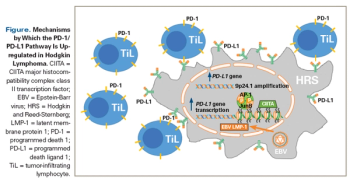
In this article we review the scientific rationale, preclinical evidence, and most recent clinical data for the use of checkpoint inhibitor therapy in patients with relapsed Hodgkin lymphoma.
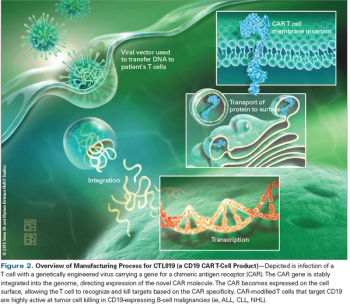
In this review, we will describe the mechanism of action of CAR T cells, discuss outcomes of current clinical trials, and highlight emerging directions for this exciting approach to cancer treatment.
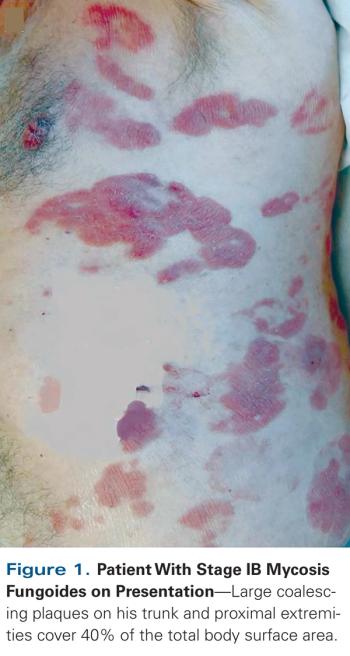
An 80-year-old man presented with a disabling pruritic rash characterized by disseminated and coalescing plaques on the trunk and proximal extremities and covering 40% of his total body surface area, without peripheral lymphadenopathy.
Ultimately, the management goal is not for patients with relapsed/refractory disease to live with chronic Hodgkin lymphoma while receiving immune checkpoint blockade therapy, but rather to cure more patients with first- or second-line therapy.
Identification of effective lymphodepletion strategies, optimization of patient selection, and management of novel toxicities remain challenges in the growing field of cellular immunotherapy.
Several FDA-approved anti-malarial and anti-fungal drugs might be able to overcome a previously unexploited mechanism that allows some leukemia cells to escape programmed cell death.
A supplemental New Drug Application has been submitted to the US Food and Drug Administration for marginal zone lymphoma (MZL), and if approved, ibrutinib (Imbruvica) will be the first therapy specifically approved for patients with MZL.
It turns out that CAR T cells can do more than directly attack cancer cells. They can be used as “micro-pharmacies” for precise therapeutic delivery in B-cell lymphomas.
Development of targeted therapies for acute myeloid leukemia (AML) represents an ongoing challenge for the field. There is substantial promise, however, in several different approaches to targeted AML therapy, including IDH inhibitors, FLT3 inhibitors, and others.
The 5-year survival rate for relapsed/refractory acute lymphoblastic leukemia has been below 10%. Immunotherapies, however, are starting to challenge that paradigm.
Because of the high cure rate in early-stage classical Hodgkin lymphoma, reducing toxicity is a primary concern. One idea for doing so is a subject of ongoing research: is elimination of all radiotherapy in many of these patients a possibility?
The idea of determining the “cell of origin” in diffuse large B-cell lymphoma, and using it as a prognostic indicator or to guide treatment, remains somewhat controversial, but is there now a way that the cell of origin can be used?

In this interview we discuss the different types of T-cell lymphomas and how supportive care is used in the management of these malignancies.
The monoclonal antibody rituximab (Rituxan) improves event-free survival (EFS) among adults with CD20-positive B-cell acute lymphoblastic leukemia (ALL), according to authors of a phase III clinical trial conducted in France and Switzerland.