
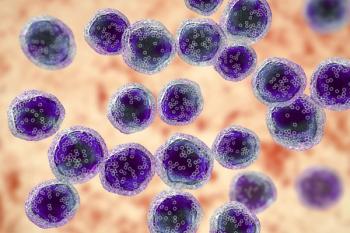
The regulatory organization indicated that duvelisib induces increased risk of death or serious adverse effects in patients with chronic lymphocytic leukemia and small lymphocytic leukemia.
The regulatory organization indicated that duvelisib induces increased risk of death or serious adverse effects in patients with chronic lymphocytic leukemia and small lymphocytic leukemia.
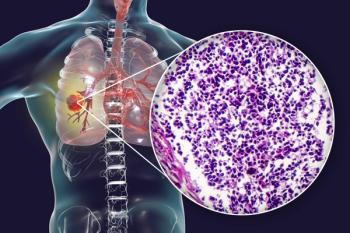
Those with non–small cell lung cancer who had increasing tumor mutational burden appeared to experience better inflammatory T-cell–mediated responses compared with those who had low tumor mutational burden.
Biagio Ricciuti, MD, spoke about results of pembrolizumab monotherapy administration in patients with non–small cell lung cancer who had a PD-L1 tumor proportion score of 90% or more.

The phase 2 CTMX-2009-002 trial met its primary end point of confirmed objective response greater than 10% for patients with hormone receptor–positive, HER2–non-amplified breast cancer being treated with praluzatamab ravtansine.
Saad Z. Usmani, MD, MBA, FACP, discusses the use of lenalidomide, bortezomib, and dexamethasone with or without elotuzumab for newly diagnosed, high-risk multiple myeloma.

Ola Landgren, MD, PhD, highlights how future research efforts in multiple myeloma are likely to focus on chemotherapy-free regimens and minimal residual disease detection.

Enzalutamide monotherapy could be a promising alternative to active surveillance for patients with low- and intermediate-risk localized prostate cancer.

After receipt of a complete response letter in May 2022, a biologics license application for toripalimab monotherapy in the second line or later following platinum chemotherapy or in combination with chemotherapy in the first-line setting for advanced recurrent or metastatic nasopharyngeal carcinoma was resubmitted to and accepted by the FDA.
Black adolescent young adult patients with acute myeloid leukemia appeared to have inferior outcomes compared with White patients.
Patients with advanced newly diagnosed ovarian, tubal, or peritoneal cancer did not derive further survival benefit from maintenance chemotherapy, although a modest improvement in progression-free survival was observed compared with surveillance.
Catherine S. Diefenbach, MD, spoke about refining understanding of CAR T-cell therapies after the approval of lisocabtagene maraleucel for patients with relapsed/refractory large B-cell lymphoma.

The phase 3 RATIONALE 306 trial showed improved overall survival for patients receiving tislelizumab plus chemotherapy vs placebo and chemotherapy for unresectable, locally advanced or metastatic esophageal squamous cell carcinoma regardless of PD-L1 status.
Patients with previously treated HER2-positive metastatic colorectal cancer experienced durable responses following treatment with tucatinib in combination with trastuzumab.

Results from the phase 3 AEGEAN trial showed an improved pathological complete response in patients with resectable non–small cell lung cancer treated with durvalumab plus neoadjuvant chemotherapy vs chemotherapy alone.
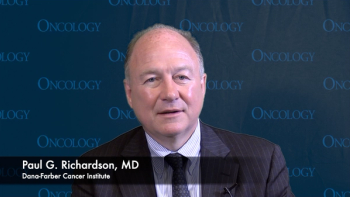
At 2022 ASCO, Paul G. Richardson, MD, reviewed the rationale of the phase 3 DETERMINATION study that set out to determine the benefit of lenalidomide maintenance with or without autologous stem transplantation in newly diagnosed multiple myeloma.

Patients with relapsed/refractory large B-cell lymphoma may benefit from treatment with epcoritamab, for which a biologics license application will be submitted to the FDA.

Based on results of a phase 1/2 trial of single-agent mosunetuzumab in B-cell malignancies, the agent was granted priority review by the FDA for the treatment of relapsed/refractory follicular lymphoma.

Belzupacap sarotalocan received fast track designation from the FDA for and will be assessed in a phase 1 clinical trial of patients with non–muscle invasive bladder cancer.
Treatment strategies might be better tailored through the use of next-generation sequencing to detect NRG1 fusions.

Tony S. Mok, MD, spoke about future research efforts focused on capmatinib plus pembrolizumab in patients with previously untreated MET-unselected, PD-L1–positive non–small cell lung cancer.
Patients with TRK fusion–positive disease experienced promising survival outcomes following treatment with larotrectinib vs standard of care.

Patients with HER2-low unresectable or recurrent breast cancer in Japan could receive treatment with trastuzumab deruxtecan in the future if the newly submitted supplemental new drug application for this indication is approved.

Steven J. Chmura, MD, PhD, discussed recent findings from the phase 2R/3 NRG-BR002 trial in patients with newly diagnosed oligometastatic breast cancer.

Paolo Tarantino, MD, and Sara M. Tolaney, MD, MPH, spoke with CancerNetwork® about highlights from 2022 ASCO in breast cancer research.
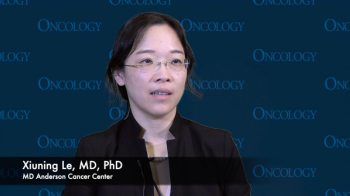
Xiuning Le, MD, PhD, spoke about which patients with advanced non–small cell lung cancer with high MET-amplification could benefit most from tepotinib based on molecular markers.

In a new series from CancerNetwork®, 2 teams of fellows from leading institutions go head-to-head to debate the latest datasets and advances in acute lymphoblastic leukemia.

Shubham Pant, MD, spoke to the potential of ELI-002 2P as a treatment for minimal residual disease positivity in patients with KRAS-mutant solid tumors.
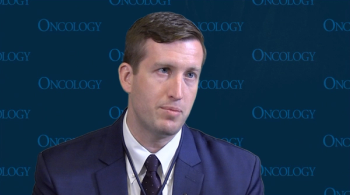
Benjamin Cooper, MD, discussed potential future studies exploring TAK-676 plus pembrolizumab after radiation for those with solid tumors.
Stacy A. Cohen, MD, and Mark Lewis, MD, review results from the GALAXY study on circulating tumor DNA dynamics in CRC.
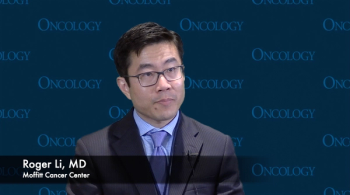
Roger Li, MD, spoke about the safety profile of CG0070 plus pembrolizumab for patients with non–muscle invasive bladder cancer.