

Ginger J. Gardner, MD, FACOG, discussed the state of gynecologic cancers and her role in empowering research, education, and awareness surrounding them.
Ginger J. Gardner, MD, FACOG, discussed the state of gynecologic cancers and her role in empowering research, education, and awareness surrounding them.

Phase 2 data indicate that the use of DetermaIO was predictive of a pathologic complete response with the addition of immunotherapy to chemotherapy in TNBC.

Data support the addition of daratumumab to standard lenalidomide maintenance in patients with newly diagnosed multiple myeloma following transplant.

James Ninia, MD, discussed a phase 2/3 trial seeking to answer whether complete consolidation offers more benefit than incomplete consolidation in SCLC.
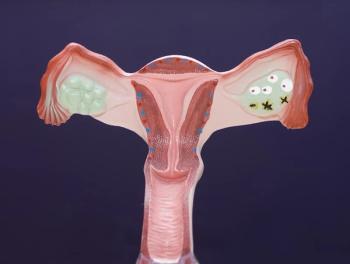
A new surgical option of uterine transposition may help preserve fertility for women who have cancers of the pelvic region.

Overall survival benefit was significant with complete vs incomplete consolidation therapy, but lost significance when stratified by disease burden.

Data also show an improvement in major pathological response in the perioperative pembrolizumab arm of the KEYNOTE-689 trial.
James Ninia, MD, discussed treatment options for patients with extensive-stage small cell lung cancer undergoing metastasis-directed radiotherapy.

Results from KEYNOTE-671 show an improvement in OS when a neoadjuvant/adjuvant regimen of pembrolizumab was used to treat patients with NSCLC.
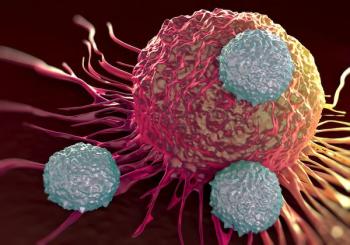
Investigators are currently assessing possible predictors for response to inavolisib as part of the phase 2 CRAFT trial.
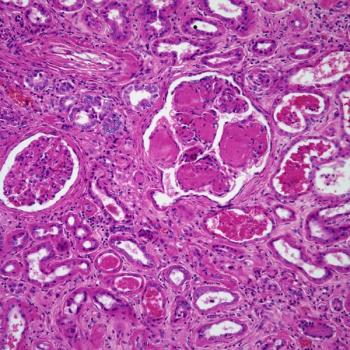
Treatment with durcabtagene autoleucel meets the primary end point of a phase 2 study in relapsed/refractory multiple myeloma.

Data from the LUMINOSITY trial support the application for telisotuzumab vedotin in nonsquamous NSCLC harboring c-Met protein overexpression.

Whole or accelerated partial breast ultra-hypofractionated radiation in older patients with early breast cancer may reduce recurrence with low toxicity.

The only way forward in the brain cancer field is to be open to mentoring others, according to Yoshie Umemura, MD.
Ultra-hypofractionated radiation in those 65 years or older with early breast cancer yielded no ipsilateral recurrence after a 10-month follow-up.

Investigators report no grade 4 adverse effects among patients who received elacestrant/abemaciclib in the phase 1b/2 ELECTRA trial.
The unclear role of hypofractionated radiation in older patients with early breast cancer in prior trials incentivized research for this group.

Data from a phase 1b/2 trial show that sonrotoclax/dexamethasone appears to be well tolerated in a heavily pretreated multiple myeloma population.

Thomas G. Martin, MD, discussed the advantages of quadruplet therapy for multiple myeloma in light of an FDA approval for Isa-VRd in this indication.
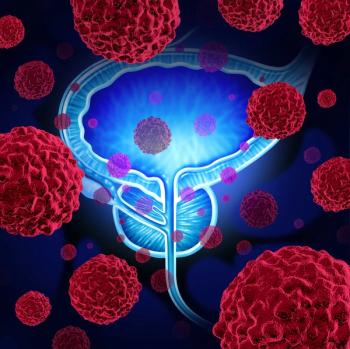
Phase 2 data support further evaluation of nivolumab plus standard radiotherapy in patients with Gleason grade 5 prostate cancer.
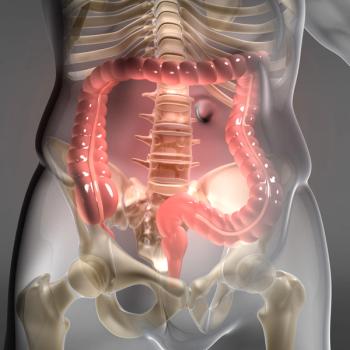
Data from the BLUE-C trial support the approval of the Cologuard Plus test for colorectal cancer screening among at-risk individuals.

Nearly all patients in the per-protocol population of the MIDAS study achieved a very good partial response or better following study treatment.

Phase 3 data support a daratumumab-based quadruplet as a new potential regimen in transplant-ineligible newly diagnosed multiple myeloma.
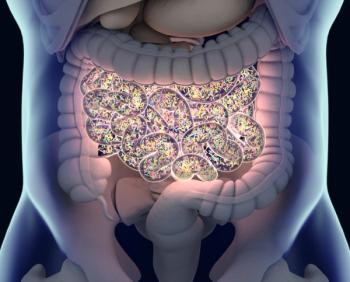
Results from the INNATE trial showed the use of sotigalimab to be a safe and efficacious regimen for patients with rectal cancer.

Data show that twice-daily radiotherapy may confer improved survival vs once-daily radiation in patients with limited-stage small cell lung cancer.
The FDA has set a Prescription Drug User Fee Act date in the first quarter of 2025 for the potential approval of acalabrutinib in previously untreated MCL.

Findings from the phase 3 CheckMate 77T trial support the approval of nivolumab plus chemotherapy for resectable NSCLC.

Concurrent chemoradiation yielded similar contralateral breast recurrence outcomes vs a sequential approach in early-stage breast cancer.

Adding bortezomib to Isa-Rd triplet therapy enhanced MRD-negative responses in patients with transplant-ineligible multiple myeloma.
Isatuximab plus VRd triplet therapy did not significantly increase toxicity in patients with transplant-ineligible multiple myeloma in the IMROZ trial.