

At the 2022 Tandem Meetings, Nina Shah, MD, spoke about key findings from the phase 2 KarMMa trial that used idecabtagene vicleucel in patients with relapsed/refractory multiple myeloma.

Your AI-Trained Oncology Knowledge Connection!
At the 2022 Tandem Meetings, Nina Shah, MD, spoke about key findings from the phase 2 KarMMa trial that used idecabtagene vicleucel in patients with relapsed/refractory multiple myeloma.

Topical ruxolitinib cream resulted in benefit to patients with cutaneous chronic graft-vs-host based on results of a trial that were presented at the 2022 Tandem Meeting.

The phase 2 KarMMA trial showed that certain characteristics were potentially linked to complete responses in patients with multiple myeloma.

The phase 3 JUPITER-08 trial assessed toripalimab plus chemotherapy, which was granted an orphan drug designation by the FDA, in patients with extensive-stage small cell lung cancer.
Findings from the phase 2 CARITUDE-2 trial which investigated ciltacabtagene autoleucel in patients with multiple myeloma indicated that a single infusion produced deep responses.
The use of axicabtagene ciloleucel for relapse/refractory indolent non-Hodgkin lymphoma continued the duration of response during the follow-up of the phase 2 ZUMA-5 trial.
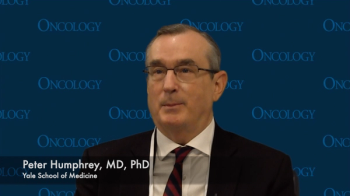
At the 15th Annual Interdisciplinary Prostate Cancer Congress® and Other Genitourinary Malignancies, Peter Humphrey, MD, PhD, spoke about how enrollment for specific trials in renal cell carcinoma may incorporate a patient’s tumor histology.
Patients with relapsed/refractory large B-cell lymphomas experienced durable responses to treatment with lisocabtagene maraleucel.
Findings from a phase 1 study indicate that belimumab could be a safe prophylactic option to prevent chronic graft-versus-host disease in adult patients undergoing allogenic transplant.

Findings from a phase 2 clinical trial identified a differentially expressed gene profile in those diagnosed with nonsclerotic and superficially sclerotic chronic graft-vs-host-disease who responded to topical ruxolitinib.
A phase 2 trial reported a reduction in steroid-refractory chronic graft versus host disease and prednisone use following treatment with abatacept after stem cell transplant.
The long-term overall survival rate yielded by axicabtagene ciloleucel appeared to support 1- and 2-year event-free survival as a surrogate end point in relapsed/refractory large B-cell lymphoma.
Patients with high-risk large B-cell lymphoma experienced potent, long-term responses following treatment with axicabtagene ciloleucel in the first line.

Patients with KRAS G12C-mutated colorectal cancer treated with sotorasib showed modest anti-tumor activity during a phase 2 trial.

Bevacizumab-maly was approved by the FDA across numerous cancer indications, becoming the third FDA-approved bevacizumab biosimilar.
At the 15th Annual Interdisciplinary Prostate Cancer Congress® and Other Genitourinary Malignancies, Daniel P. Petrylak, MD, spoke about ongoing trials may hold promise for the treatment of patients with bladder cancer.

Patients with estrogen receptor–positive HER2-mutated metastatic breast cancer experienced promising clinical activity following treatment with neratinib and fulvestrant.
A unanimous vote cast by the FDA’s Oncologic Drugs Advisory Panel highlighted a need for randomized clinical trial data to support FDA approvals of PI3K inhibitors for patients with hematologic malignancies.

Ixazomib did not appear to be an effective replacement for carfilzomib or bortezomib in combination regimens containing the 2 proteosome inhibitors in patients with relapsed/refractory multiple myeloma.
In an interview with CancerNetwork®, Ursula A. Matulonis, MD, discusses the toxicities associated with mirvetuximab soravtansine in folate receptor α–high platinum-resistant ovarian cancer.
Frederick Lock, MD, spoke about how future research regarding axicabtagene ciloleucel for patients with large B-cell lymphoma will progress.

Through traditional treatment, acupuncture, acupressure, and mind-body therapy, Heather Greenlee, ND, PhD, MPH, discusses how clinicians who treat patients with breast cancer can become more aware of integrative approaches for their practices.

Patients with previously untreated IDH1-mutant acute myeloid leukemia experienced significant clinical benefit following treatment with ivosidenib and azacitidine compared with the placebo combination.

A real-world study found patients with relapsed/refractory multiple myeloma who were triple-class exposed had higher healthcare costs and unmet treatment needs.

Susan F. Slovin, MD, PhD, spoke about how new approaches can support clinical practice guidelines and physician intuition in treating patients with prostate cancer.
At SGO 2022, Catherine Watson, MD, spoke about how to improve genetic education for patients with ovarian cancer.

Patients with HER2-mutated metastatic non–small cell lung cancer who have previously received treatment with systemic therapies appear to benefit from treatment with fam-trastuzumab deruxtecan-nxki, which received priority review from the FDA.

Investigators of the phase 3 RATIONALE-309 trial found an improvement in progression-free survival for patients with recurrent or metastatic nasopharyngeal cancer treated with tislelizumab plus chemotherapy vs chemotherapy alone.

Thought leaders Daniel P. Petrylak, MD; Benjamin H. Lowentritt, MD; Alan H. Bryce, MD; and Tanya Dorff, MD, joined CancerNetwork® following the 2022 Genitourinary Cancers Symposium to discuss highlights of the meeting in a game show–style production.
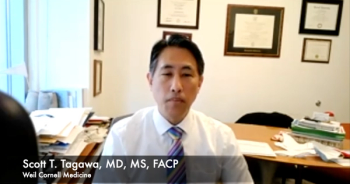
Scott T. Tagawa, MD, spoke about potential approvals in the coming year for prostate cancer.