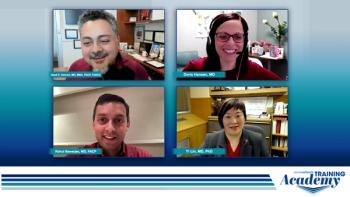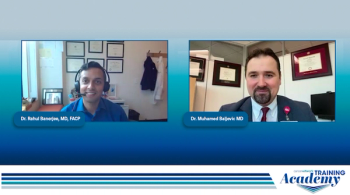
In this Cancer Network Training Academy program, Dr. Rahul Banerjee and Dr. Muhamed Baljevic discuss the evolving role of cereblon E3 ligase modulators (CELMoDs) in relapsed/refractory multiple myeloma. The discussion examines emerging clinical evidence for mezigdomide, including findings from the phase 3 SUCCESSOR-2 trial, and considers how different combination backbones may influence its potential role in treatment. The experts also explore the biological rationale and emerging evidence for combining CELMoDs with T-cell-redirecting therapies, including bispecific antibodies and CAR T-cell therapy, while highlighting the need for further clinical data to guide sequencing strategies. Two clinical scenarios illustrate treatment considerations across different stages of relapsed/refractory disease, including patient selection, treatment access, and management of treatment-related toxicities. Finally, the faculty review early-phase findings for cemsidomide, an investigational IKZF1/3 degrader, and discuss potential future development strategies for this class of agents.