‘Stay Curious’ Incoming ASCO President Notes Regarding Successes of Career
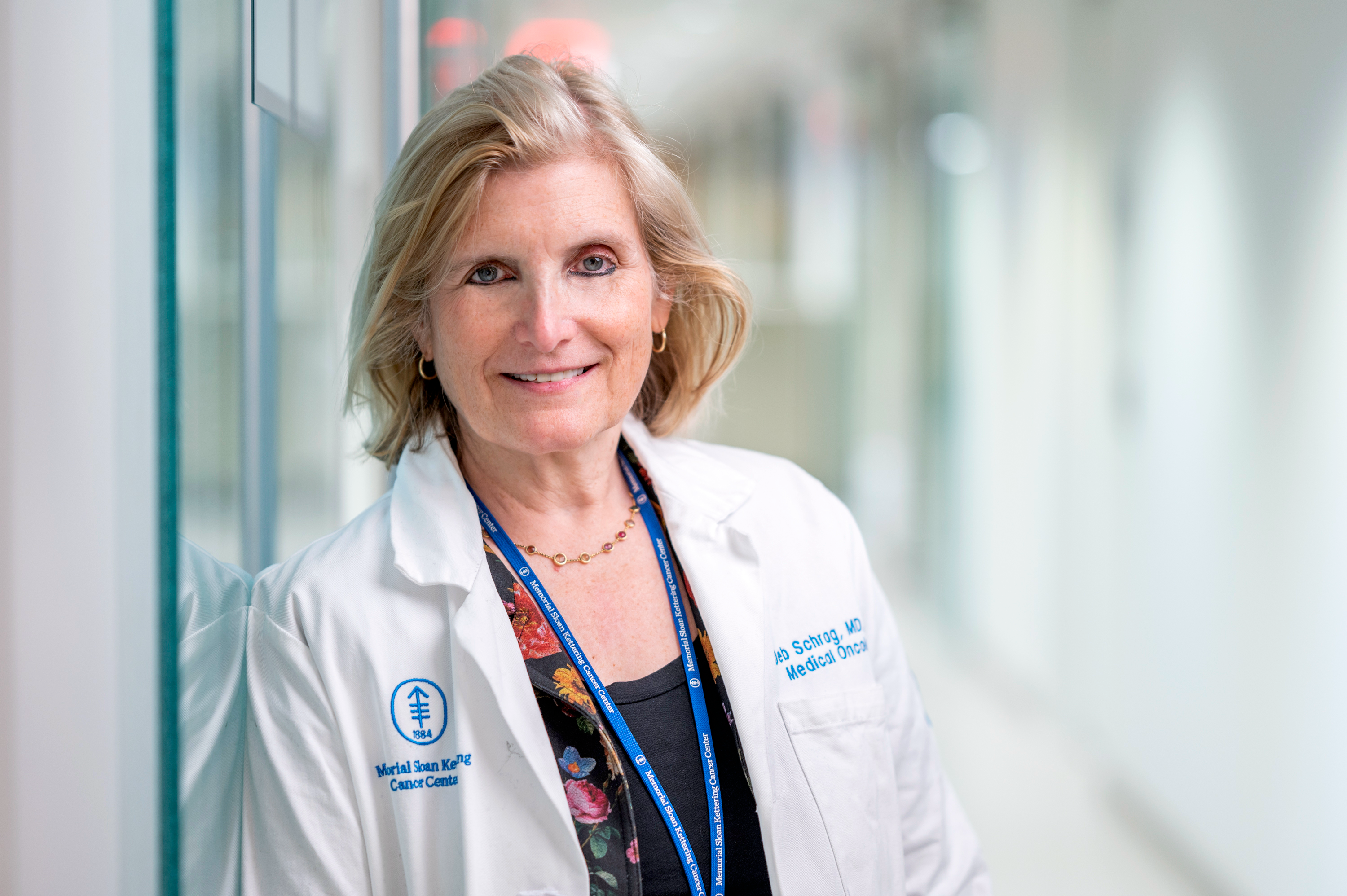
Deb Schrag, MD, MPH, will assume the role as ASCO president in 2027, and hopes to continue the work of transcending global, political, and geographic barriers in oncology.
Gastrointestinal (GI) cancer, Deb Schrag, MD, MPH, describes as like playing soccer. It’s a team sport, including not just medical oncologists but radiation oncologists, surgeons, and the entire multidisciplinary team. The incoming American Society of Clinical Oncology (ASCO) president for the 2027-28 term began her career at Columbia Presbyterian during the “triple epidemic” of human immunodeficiency virus (HIV), multidrug-resistant tuberculosis, and cocaine. Training during that period changed her point of view and career trajectory.1
“I had a front row seat to how social determinants of health influenced patient outcomes. I had an opportunity to see all the multiple dimensions and components of the complexity of patients’ lives and how that influenced the health care that they were able to access and receive, and ultimately what the outcomes were,” Schrag, chair in the Department of Medicine, and George J. Bosl Chair at Memorial Sloane Kettering Cancer Center (MSKCC), said in an interview with CancerNetwork®. “It launched my interest in public health, and I decided to obtain further training in public health, population science, and GI oncology.”
From esophageal cancer to gastric cancer, GI oncology is made up of many diverse diseases, which allowed Schrag to utilize her population science and public health background in her oncology career. She further noted that some diseases are related to environmental exposure and have genetic susceptibility, which piqued her interest.
From NYC to Boston and Back
Schrag is a New Yorker at heart, but she also trained in Boston. Both are major hubs located on the East Coast that come with their own ways to go about life. Part of the reason she loves working in New York City (NYC) is the “diverse life experiences” that she encounters on a daily basis, especially with patients from all over the world who come for treatment at MSKCC. Even though NYC and Boston are urban centers, patients still travel from rural or suburban areas to receive care.
“…people bring their cultures and traditions and values, and that includes cultures where we don’t use the word cancer, just different coping styles, different traditions. It makes the job of being a clinical oncologist challenging, but also incredibly rewarding, and it has been such a privilege to learn about people’s lives from [different] countries,” Schrag said.
The Upcoming Presidential Term
Having worked with ASCO since her early career days, Schrag highlighted that she has made connections from all over the country and the world. These relationships have allowed her to have a community and sounding board whether working on research projects or thinking about tough cases.
Now, as Schrag prepares to step into the most influential role ASCO has to offer, she’s preparing to do so in a “big picture” way. ASCO’s mission to work with the global cancer community and “join forces to align for the best values that transcend political, geographic, and economic boundaries” is why Schrag has stayed with the organization.
At the conclusion of her presidency, she noted that having an effective team and patient’s or ASCO members knowing their voice matters would be a hallmark of an effective legacy.
At the beginning of Schrag’s career, oncology was more of a general field. However, as the years passed, research and sub-specialties became more prevalent.
“When I started training, there were fewer than 50 drugs to treat cancer, and now there’s more than 1000. It is no longer possible for 1 human being to retain all that knowledge. It used to be that we memorized all the drugs and all their [adverse] effects. That’s not possible [anymore]. How we access information and knowledge has changed, and how we do our work has changed,” Schrag said.
Schrag is especially proud of the work she has done to make cancer care more responsive to patient needs. When we develop new cancer treatments, we now understand what those drugs are like from the patient’s perspective, not just the clinician’s perspective. We are improving outcomes for our patients such that its not just about living longer, its also about living well. To accomplish that, we have to partner with patients to understand their experiences.
“A patient is in a doctor’s office every 2 or 3 weeks noting his or her symptoms, but a patient is living with that nausea all the time. We needed to know from the patient’s perspective, not [just] Tuesday afternoon when you’re in the doctor's office, ‘How bad is the nausea?’ What can we do to help you cope with your treatment better and help you live well? Not just when you are at your oncology visit. Because we know that Tuesday afternoon when you’re in the doctor’s office, the doctor is interested in is the nausea significant enough today that I need to make a change in my treatment plan that’s different than what your experience has been over this 3-week interval coping with this treatment and its [adverse] effects. We developed a system to get from patients the severity of [adverse] effects, the frequency of [adverse] effects and how much they’re interfering with patients day-to-day lives,” Schrag said. “We say patient centered [care], but what does that mean? We developed how to ask it in a reproducible, rigorous way. We developed the right questions, made them accessible, available in [many] languages, and now I’m proud to say that they’re integrated into electronic health records and used in many trials around the world.”
A Lasting Piece of Advice
As Schrag looked back at her career, she reminisced on a piece of advice she tries to live up to every day, “Don’t forget to read.”
While she does take this advice literally and tries to find time to read about different aspects of medicine than what she practices in, she also thinks about it from an aspect of always staying curious or wanting to learn something new. In today’s digital age, having that curiosity, the focus, and wanting to learn something new can be hard, but it’s a necessary skill.
“Your attention is a precious gift, and it is a powerful tool. Stay curious. Stay engaged. Keep paying attention. Learn something new,” Schrag concluded.
References
- Dr. Deb Schrag elected ASCO president for 2027-28 term. News release. December 19, 2025. Accessed January 21, 2026. https://tinyurl.com/2vxpfh9b
- Basch E, Iasonos A, McDonough T, et al. Patient versus clinician symptom reporting using the National Cancer Institute Common Terminology Criteria for Adverse Events: results of a questionnaire-based study. Lancet Oncol. 2006;7(11):903-909. doi:10.1016/S1470-2045(06)70910-X
Newsletter
Stay up to date on recent advances in the multidisciplinary approach to cancer.