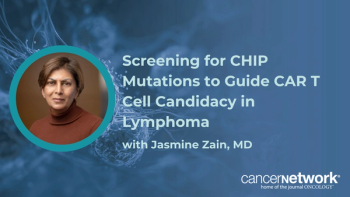
Jasmine Zain, MD, described how pre-existing CHIP mutations should inform pre-infusion risk counseling and treatment selection.
Although institutional cancer centers boast large amounts of resources, community centers do not always have the resources to initiate clinical trials, according to Loretta Nastoupil, MD.
Cancer treatment is not inexpensive. As treatments continue to improve and survival rates continue to rise, they continue to become more costly. It is one of many aspects of the conversations surrounding the finances of oncology.
There are different types of oncology centers, however, and in these different centers, there is nuance required in handling the costs associated with cancer care. CancerNetwork® spoke with Loretta Nastoupil, MD, about these differences.
Nastoupil, a practicing oncologist at Southwest Oncology in Durango, Colorado, an affiliate of CommonSpirit Oncology Mercy, who once practiced at MD Anderson Cancer Center in Houston, Texas, has a unique perspective on how the finances are handled differently at a community cancer center compared with an academic, institutional cancer center.
First, Nastoupil highlighted the differences in resources that were available at MD Anderson. Her ancillary staff of nurses, research coordinators, and administrators were capable of handling the regulatory aspects of oncology, such as paperwork. At Southwest Oncology, she no longer has that experience. She spoke directly about wanting to open a clinical trial; however, the center does not have enough staff to dedicate the necessary resources to fill out the necessary paperwork.
Trials, in her opinion, can not only expand the options of treatment available to patients but also help the care providers become familiar with newer treatments that require practice to become adept with. She referenced bispecific antibodies and chimeric antigen receptor (CAR) T-cell therapy as examples of these.
MD Anderson was unique in that it was a cancer center that was affiliated with the University of Texas, and so there were probably large state-based academic programs that were part of the university. We were a subsidiary of that. But what I was really accustomed to is [having] a large group of ancillary staff. We had a huge number of research staff in the form of research nurses, research coordinators, and staff who handled all of the regulatory aspects, such as [institutional review board] and making sure we were up to date on all of our paperwork.
Now I’m in a center where I would love to open clinical trials so that I, again, can serve the community where patients want to stay and live. They don’t want to travel most of the time to receive care, so it would behoove me to open trials in a setting like where [I am] now, given I have an understanding and history of how to conduct trials. But there are challenges in terms of who’s going to fund that infrastructure. We don’t have additional staff who can pick up that additional burden in terms of the paperwork aspect of opening trials. That’s a major difference between a large academic practice that’s affiliated with the university vs a community practice that doesn’t have the resources to fund the research infrastructure, which is important if we’re going to continue to provide good quality care to patients and also to train our staff on some of the latest developments, because some of these newer therapies, including bispecifics and CAR Ts, have unique toxicity profiles.
The best way to train everyone who’s going to [engage] with that patient is on a clinical trial, where you have a more controlled environment. You have a protocol that outlines exactly what toxicity to watch for, how to manage it, and you’re usually doing it in a one-case-at-a-time situation where you get to learn. That’s a big disservice to [patients with cancer] in the US: not having access to a number of clinical trials so you can view it through the lens of “it’s experimental” and not “tried and true.” Oftentimes, patients say they don’t want to be our guinea pig. There is a fine balance of trying to provide the infrastructure to do things that are innovative and provide access to the latest and greatest, while doing that in a center where you don’t have the resources to support it.