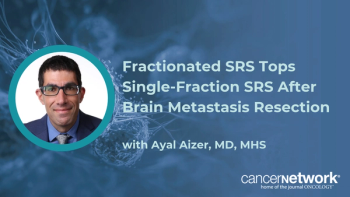
In the phase 3 NRG-CC009 trial, SRS led to longer overall survival vs HA-WBRT plus memantine with similar neurocognitive failure in SCLC brain metastases.
In a phase 1 first-in-human trial, BMS-986453 showed a favorable safety profile and high response rates in relapsed/refractory multiple myeloma.
BMS-986453, an autologous dual-targeting BCMA/GPRC5D chimeric antigen receptor (CAR) T-cell therapy, demonstrated promising efficacy and a favorable safety profile in patients with relapsed/refractory multiple myeloma (RRMM), according to initial results from a first-in-human phase 1 trial (NCT06153251) presented at the
At a median follow-up of 12 months among all 58 treated patients, the overall response rate (ORR) was 83%, and 74% of patients achieved a very good partial response (VGPR) or better. By dose level, the ORR was 67% at 25 × 10⁶ CAR T cells, 95% at 75 × 10⁶ cells, and 93% at 150 × 10⁶ cells, with a complete response (CR) or better rate of 67% at the second highest dose level and 79% at the highest dose level.
The median time to response was 1 month; responses continued to deepen with extended follow-up, and 15 of 16 responses (94%) were ongoing at the data cutoff. The median duration of response (DOR) was not reached across dose levels.
Responses were most pronounced among patients who had not received prior BCMA- or GPRC5D-targeted therapy. Among the 16 BCMA- and GPRC5D-naive patients treated at the 75 × 10⁶ or 150 × 10⁶ dose levels, the ORR was 100%; all patients (100%) achieved a very good partial response (VGPR) or better, and the complete response rate was 88% (n = 14/16). All 16 of these patients were evaluable for measurable residual disease (MRD), and 100% were MRD negative at the 10⁻⁵ threshold per flow cytometry.
Grade 3/4 treatment-emergent adverse events (TEAEs) occurred in 98% of patients, and the most common were hematologic, consistent with known CAR T-cell class effects, including neutropenia (88%), thrombocytopenia (48%), and leukopenia (36%). Cytokine release syndrome (CRS) occurred in 78% of patients and was mostly low grade, with grade 3 or higher CRS in 3%; the median time to CRS onset was 3 days (range, 1-13), and the median time to resolution was 2.5 days. Two grade 5 CRS events occurred, 1 of which in a patient treated at the highest 300 × 10⁶ dose level and was attributed to BMS-986453.
Immune effector cell–associated neurotoxicity syndrome occurred in 3% of patients. On-target, off-tumor AEs, including skin, oral, and nail events associated with GPRC5D targeting, occurred in 50% of patients, with 3% being grade 3 or 4. Dose-limiting toxicities occurred in 19% of patients, including hematologic dose-limiting toxicities in 12%.
“Across dose levels, BMS-986453 demonstrated good tolerability with low frequency of grade 3 or higher AEs,” lead study author Doris Hansen, MD, an assistant member and associate professor in the Department of Blood and Marrow Transplant and Cellular Immunotherapy at Moffitt Cancer Center, stated in her presentation of these data. “BMS-986453 demonstrated a favorable safety profile and very high efficacy in heavily pretreated patients with relapsed/refractory multiple myeloma. The study is ongoing to include an earlier line cohort of patients treated with 1 to 3 prior lines of therapy; those patients are BCMA and GPRC5D naïve, and we look forward to sharing those data at an upcoming conference.”
The multicenter, open-label, dose-finding study evaluated BMS-986453 across dose levels of 25 × 10⁶, 75 × 10⁶, 150 × 10⁶, and 300 × 10⁶ CAR T cells in patients with relapsed/refractory multiple myeloma who had received at least 3 prior lines of therapy, including a proteasome inhibitor, an immunomodulatory drug, and a CD38 monoclonal antibody. Prior BCMA- or GPRC5D-targeted therapy was allowed.2 Of 60 patients who underwent leukapheresis, 58 received BMS-986453 following lymphodepleting chemotherapy, and 42 received bridging therapy. The median age was 67 years (range, 50-79); patients had received a median of 4 prior lines of therapy, 50% had triple-refractory disease, 16% had penta-refractory disease, and 60% had prior BCMA-directed therapy exposure.
The primary objectives were safety, tolerability, and determination of the maximum tolerated dose or recommended phase 2 dose. Secondary end points included preliminary efficacy and the pharmacokinetic profile.
BCMA and GPRC5D are highly expressed, clinically validated targets in multiple myeloma, but single-antigen approaches are limited in part by tumor heterogeneity and antigen loss. Simultaneously targeting both antigens with a dual-targeting CAR T-cell approach may help prevent resistance and enable deeper, more durable responses. The pharmacokinetic profiles of the 75 × 10⁶ and 150 × 10⁶ dose levels were similar, with higher peak concentrations and greater total exposure than the 25 × 10⁶ dose level.