A personalized ctDNA assay demonstrated 100% specificity but limited sensitivity for detecting recurrence after liver transplantation in HCC and CCA.
In a secondary analysis of the DEPROMP trial, 94.8% of biopsy-naive men had no AEs immediately after multimodal MRI- and PSMA PET/CT–guided prostate biopsy.
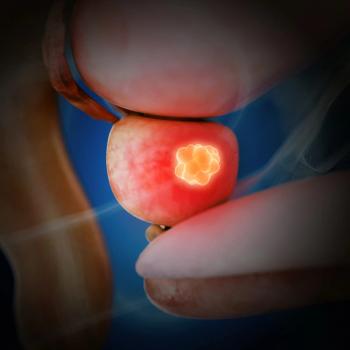
Combined systematic, MRI-targeted, and prostate-specific membrane antigen (PSMA) PET/CT–targeted transrectal biopsy was associated with low morbidity and favorable patient-reported outcomes (PROs) in biopsy-naive men with suspected prostate cancer. The results came from a secondary analysis of the prospective, multicenter DEPROMP trial published in World Journal of Urology.1
Immediately after biopsy (t1), 94.8% of patients reported no adverse events (AEs). Urinary retention requiring catheterization occurred in 2.6% of patients and orthostatic symptoms in 1.3%, and no infectious complications were observed. Per the Clavien-Dindo classification, 1.3% of patients had grade 1 events, and 2.6% had grade 2 events.
AEs peaked at the intermediate follow-up visit (t2), when 61.3% of patients reported no AEs. Hematuria lasting more than 2 days was the most common event (23.5%), followed by hematospermia (6.1%) and combined hematuria/hematospermia (4.8%). One patient (0.4%) required hospitalization for hematuria with urinary retention and continuous bladder irrigation. Grade 1 and grade 2 AEs occurred in 34.8% and 1.7% of patients, respectively.
At 6 months (t3), 87.4% of patients were symptom free, with grade 1 events occurring in 7.0% and grade 2 events in 0.4%. Biopsy core number was not associated with AEs at t1 (P = .57), t2 (P = .50), or t3 (P = .24), or across all timepoints (P = .76). AEs were numerically more frequent among patients receiving anticoagulation, but clinically significant complications did not increase.
At 6 months, 42.6% of patients reported unchanged quality of life (QOL), 22.1% reported improvement, and 29.5% reported deterioration. Patients attributed changes to their cancer diagnosis more often than to biopsy-related AEs (49.6% vs 1.7%). In total, 85.7% of patients said they would agree to a repeat biopsy under local anesthesia if clinically indicated.
In the multivariable analysis, a cancer diagnosis was associated with worse QOL (odds ratio [OR], 12.94; 95% CI, 4.45-44.14; P <.001). Surgery (OR, 1.46; 95% CI, 0.64-3.34; P = .366) and AEs (OR, 1.35; 95% CI, 0.70-2.64; P = .369) were not. Willingness to undergo repeat biopsy was significantly lower among patients who experienced AEs (OR, 0.22; 95% CI, 0.07-0.59; P = .005).
“Our findings suggest that integration of MRI- and PSMA-based targeting strategies does not result in a clinically meaningful increase in patient-reported morbidity and is associated with high patient acceptance. These data may support patient counseling and shared decision-making when discussing contemporary image-guided biopsy pathways,” lead author Clarissa Julia Schmidt, of the Department of Urology and Paediatric Urology at University Hospital Bonn in Germany, wrote in the publication with study coinvestigators.1
The open-label DEPROMP trial enrolled 230 biopsy-naive men with suspected prostate cancer who were eligible for multiparametric MRI, PSMA PET/CT, and transrectal fusion biopsy. In a single session, patients underwent 3 biopsy types: a 12-core systematic biopsy, MRI-ultrasound fusion-targeted biopsy of PI-RADS 3 to 5 lesions, and PSMA PET/CT-ultrasound fusion-guided biopsy of 1 to 3 PSMA-positive regions. Procedures were performed under intravenous ceftriaxone prophylaxis, reflecting the standard of care in 2019. Overall, 137 patients (59.6%) were diagnosed with prostate cancer, and 106 (46.1%) underwent surgery during follow-up.
The parent trial primarily evaluated the diagnostic and therapeutic impact of combined MRI- and PSMA-informed biopsy. End points of this secondary analysis included AEs, assessed at 3 predefined timepoints and graded by Clavien-Dindo classification. They also included PROs at 6 months, including perceived QOL change, its attributed cause, and willingness to undergo repeat biopsy.
The authors acknowledged several limitations:
The authors wrote that their findings extend prior data, including the PRECISION trial (NCT02380027), which showed that MRI-targeted biopsy does not substantially increase morbidity compared with systematic biopsy alone.2 Infectious complication rates in DEPROMP were also lower than those reported in previous prospective and population-based studies. The authors suggested this may reflect the prophylactic measures used.