![“[E]ven if patients relapse following an allogeneic transplant, donor lymphocyte infusions can be incredibly helpful,” said Mary Jo Lechowicz, MD.](https://cdn.sanity.io/images/0vv8moc6/cancernetwork/06df696db42b151710c58727b1333ee098de6453-1200x800.jpg?w=350&fit=crop&auto=format)
“[E]ven if patients relapse following an allogeneic transplant, donor lymphocyte infusions can be incredibly helpful,” said Mary Jo Lechowicz, MD.
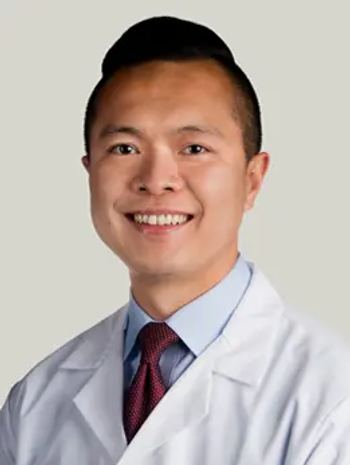
“To me, the biggest differentiator might be how the patient wants to experience care,” said Krish Patel, MD, on treatment options for patients with lymphoma.
Treatment options for patients with relapsed/refractory follicular lymphoma have expanded rapidly. CD19-directed CAR T-cell therapies are approved in the third-line setting and beyond, and CD20 x CD3 bispecific antibody–based regimens are now available as early as the second line.
Following the
Patel began by outlining the clinical and logistical factors that guide his choice between CAR T-cell therapy and bispecifics in later lines. He then discussed what is known about sequencing the 2 modalities and how community and academic centers can collaborate to manage toxicity and expand access. Turning to MCL, he described which patients may be best suited to chemotherapy-free frontline regimens, which combinations show promise for high-risk biology, and how to sequence treatment after progression on a covalent BTK inhibitor. He concluded by reflecting on broader themes from the meeting, including the growing role of community-based hematology care.
Patel: In the third-line setting and beyond, where we have both tools available, a number of factors weigh in. Beyond biology, patient considerations such as logistics and caregiver support might be an initial filter. Many patients who are seeking CAR T-cell therapy, or who would be candidates for it, need to have those layers of support. That is also certainly important for bispecifics, but it can be a little different in how that support is structured or layered.
To your point, high-risk biology is well represented in the trials that support the use of both CAR T-cell therapy and bispecifics. To me, the biggest differentiator might be how the patient wants to experience care. CAR T-cell therapies are delivered over a short period of time, with the hope that patients will maintain a remission for a long time without any ongoing therapy. With bispecifics, we certainly have an opportunity for fixed-duration treatment, but that is still an extended period of time. Those are factors and considerations.
With CAR T-cell therapies, we probably have more confidence in the long-term data. That is simply because 5-year outcomes have been reported from the
Our experience from clinical trials of CD19 CAR T cells is really in patients who are completely naive to T-cell–engaging therapies, including the available CD20 bispecifics. This is an important question. We do not have a lot of evidence in follicular lymphoma to guide us, but we can look to other lymphoma histologies where the sequence may be more common, such as [diffuse large B-cell lymphoma (DLBCL)]. There, we have seen that in lymphoma, perhaps unlike other disease states, we generally seem to be able to sequence the 2. Patients can receive a CD20 T-cell engager and then go on to receive CD19 CAR T cells, with responses that look comparable to those in patients who are naive.
The questions we do not quite have answers to, which we will probably need to look to real-world evidence for, include whether the gap between therapies matters. A question that often comes up is whether CD20 T-cell engagers lead to some degree of T-cell exhaustion. If a patient then needs CAR T-cell therapy within a short time, would that affect our ability to successfully manufacture a CAR [chimeric antigen receptor], or the efficacy of the CAR T cells we deliver? So far, we have not really seen that in lymphomas, but it has been seen in other disease states like [multiple] myeloma. That is a question we will need to answer.
For the reverse sequence, we have a little more data from pivotal trials of T-cell engagers: we can certainly use CD20 T-cell engagers in patients who have progressed after CD19 CAR T-cell therapy. That scenario may be a little less common in follicular lymphoma, however, our broader experience in other lymphoma histologies like DLBCL gives us some confidence that these therapies can be interchangeable. The real question may be how much time passes between when those therapies are delivered, and whether that will have some impact.
We have these 2 tools, and they may be employed in different or sometimes overlapping centers of care. It is really important to be patient-centered. That means recognizing that some patients may want to travel to receive CAR T cells because the therapy can be given over a short period of time, after which the patient can be off therapy. In that circumstance, it is key for community oncologists to know where the CAR T centers are. They should be able to engage those centers in a discussion about whether a patient is an appropriate candidate who would benefit from a consultation. It is also key to understand what the community oncologist can do to support the patient’s journey after they return to the community, in terms of monitoring for infections and helping guide long-term disease surveillance.
The same holds in the other direction. Centers that see patients for a CAR T evaluation may recognize that a patient has some limitations in meeting the operational requirements for receiving CAR T-cell therapy. In that case, it helps to identify where the patient might be able to receive an alternative therapy, such as a T-cell engager, in their home community. We also have 2 different bispecific antibodies [in follicular lymphoma]. They are delivered in slightly different ways and have slightly different safety profiles. We can help give local oncologists some guidance about what might be a reasonable alternative to CAR T-cell therapy for a patient who is not able to receive it. The need for bidirectional communication… is key.
Both therapies also carry the risk of long-term immune suppression. For everybody delivering either of these therapies, whether in the community or in an academic medical setting, it is really important to have a game plan. That plan should cover how you monitor patients for infections, how you reduce the risk of infections through the use of prophylactic antimicrobials, and how you assess immunoglobulin G [IgG] levels and decide who benefits from immunoglobulin supplementation, and when.
Mantle cell lymphoma, despite being rare, is a relatively heterogeneous disease. With that in mind, we know that certain biologic characteristics are not going to be well served by chemotherapy. For example, in patients who have p53 abnormalities, we already recognize that outcomes with chemotherapy are very poor. Our choice of novel agents or chemotherapy-free regimens there is really driven by the poor efficacy of chemotherapy. A good example is the combination of a BTK inhibitor with a BCL2 antagonist and potentially a CD20 antibody, such as the BOVen regimen [zanubrutinib (Brukinsa), obinutuzumab (Gazyva), and venetoclax (Venclexta)]. That regimen is commonly used in that setting.
Alternatively, we have patients with classic mantle cell lymphoma who may achieve reasonable efficacy outcomes with chemotherapy. For a variety of reasons, such as comorbidities or concern about toxicity, chemotherapy may still not be our first choice. In that setting, we have also done studies looking at patients who are older than 65 years or who have comorbidities and who receive a backbone therapy anchored in a BTK inhibitor, perhaps with an anti-CD20 antibody. For example, in the [phase 2 ALTAMIRA study (NCT05214183) of acalabrutinib (Calquence) plus rituximab (Rituxan)], we see relatively promising outcomes at…2 years.
In some ways, we already have data showing that certain subsets of patients could benefit from a chemotherapy-free approach, and it is really important that we continue developing evidence in that setting. Patients with p53 abnormalities certainly benefit from novel agent therapies in the frontline [setting]. We also have good data to support chemotherapy-free approaches for older adults for whom we have concerns about the toxicities of chemotherapy, as long as they have more typical, classic-risk mantle cell lymphoma.
We have a multitude of options emerging here. One I referenced previously is…the BOVen regimen. That was one of the first regimens for which we really had data in the very high-risk population of patients with p53 abnormalities. Other regimens are starting to incorporate other novel agents. One example is bispecific antibodies like glofitamab [Columvi], perhaps in combination with immunomodulatory medicines like lenalidomide [Revlimid] and venetoclax, the so-called GLOVe regimen.
Interestingly, this is also a space where cellular therapy such as CAR T-cell therapy could have a great impact. We have seen great outcomes in later-line settings for patients who have those high-risk biologic features. We are thinking about reasonable ways to give patients earlier access to CAR T cells, for example, using window approaches. A short course of easily available medicines, like a BTK inhibitor and an anti-CD20 antibody, could get patients into a state where we can consolidate early with CAR T-cell therapy as a frontline approach. These are all things that are being studied, and they certainly hold a lot of promise for patients who have high-risk biology.
BTK inhibitors have been very useful agents in the management of mantle cell lymphoma. We have primarily used them in the second line and beyond, but we are now starting to see more uptake in the front line, either as part of chemotherapy-free regimens or in combination with chemotherapy. What we know is that when patients progress after a covalent BTK inhibitor, the biology of progression can often be very challenging. Patients can have rapid progression, so they need to move to the next therapy quite quickly.
Here, we really have 2 therapies with some proven benefit. One is the noncovalent BTK inhibitor pirtobrutinib [Jaypirca], which is approved in that setting after a covalent BTK inhibitor. The other is CD19 CAR T-cell therapy. What is key, especially for multidisciplinary teams to recognize, is that when a [patient’s disease] has progressed after a covalent BTK inhibitor, we have to be quick about moving on to the next plan. It is common to use both agents, perhaps with pirtobrutinib as bridging therapy until we can get the patient to a center that can deliver CAR T-cell therapy.
Then there is the even more challenging setting of a patient who has relapsed after CAR T-cell therapy or a bispecific. We do not have any approved bispecifics in mantle cell lymphoma, but we have some emerging data for the combination of mosunetuzumab [Lunsumio] and polatuzumab vedotin [Polivy]. Those are settings where we are in a completely data-free zone. We really need to think about getting those patients to centers with clinical trials that may offer access to novel treatments, which will hopefully overcome the biologic problem of progression after an immunotherapy.
Across hematology, we increasingly see that care can be provided in community settings, and that is an important theme. Specialty centers that deliver certain therapies are always going to be important and needed, since there will be certain tools that patients need to access in those centers. But it is also important that, when we can, we meet patients where they live. We should also partner with centers capable of delivering therapies like bispecifics to consider the appropriate time and the appropriate patient for them. We saw that across the board. We talked about it in lymphoma, but it is certainly happening in multiple myeloma as well. In the not-so-distant future, we may see this in myeloid neoplasms too, where T-cell engagers are being developed for diseases like myeloproliferative neoplasms and potentially even leukemias. Community settings that are used to seeing that patient population may need to carry those themes forward.
It is a good thing for us to have many options for patients. There are many care settings in which patients may present, and different tools are available in different settings, so having an abundance of these tools for our patients is important. But that really requires us as oncologists to be in good communication with our partners. If we work in academic centers, we need to partner with our community oncologists, and vice versa if we work in the community. We really want to maximize the use of the tools we have for the benefit of our patients.
![“[W]e should strive to increase the [number] of patients…who enjoy long-term disease-free survival and possibly cure,” said Meletios Dimopoulos, MD.](https://cdn.sanity.io/images/0vv8moc6/cancernetwork/c7abebf9344f9b1be9aee80d9879d139c1655bcc-1200x1197.jpg?w=350&fit=crop&auto=format)

!["Patients [with cancer] and physicians would rather have a fixed-duration treatment, if possible," said Julie M. Vose, MD, MBA, at SOHO 2026.](https://cdn.sanity.io/images/0vv8moc6/cancernetwork/1cfb57db416943d8f8690afb0bc0d13aa3d90683-400x400.jpg?w=350&fit=crop&auto=format)