

Opinion|Videos|November 2, 2026
Case 2, Treatment Burden in a Patient Living Alone
Estelamari Rodriguez, MD, MPH, of Sylvester Comprehensive Cancer Center presents a 74-year-old woman with epidermal growth factor receptor (EGFR)-mutated advanced non–small cell lung cancer (NSCLC), no central nervous system involvement, limited mobility, osteoporosis and rheumatoid arthritis, who lives alone an hour from the cancer center and depends on others for transportation.
Advertisement
Episodes in this series
Estelamari Rodriguez, MD, MPH, of Sylvester Comprehensive Cancer Center presents a 74-year-old woman with epidermal growth factor receptor (EGFR)-mutated advanced non–small cell lung cancer (NSCLC), no central nervous system involvement, limited mobility, osteoporosis and rheumatoid arthritis, who lives alone an hour from the cancer center and depends on others for transportation. Matthew Gumbleton, MD, PhD, of Huntsman Cancer Institute says he still considers lung cancer high risk and would favor an intensified regimen for this patient, and would want one for himself or a family member at that age. He describes meeting the patient where she is, which in his experience still usually means intensified therapy, and notes that monthly dosing is easier than every 3 weeks and that infusion visits become an all-day commitment. Dr Rodriguez cautions that even subcutaneous dosing is not a 5-minute visit once travel and laboratory work are counted.
Advertisement
Related to this article

Chinmay Jani, MD, highlights non-smoking risk factors, the impact of lung cancer on younger populations, and the value of comprehensive molecular testing.

Mark Burkard, MD, PhD, discussed genomic gaps, extreme survivors of metastatic breast cancer, and how minimal residual disease testing may refine care.
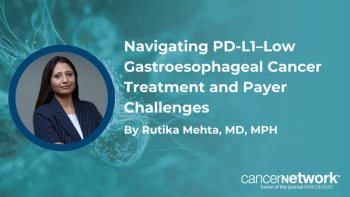
Rutika Mehta, MD, MPH, discusses perioperative durvalumab plus FLOT and first-line options for patients with low or negative PD-L1 gastroesophageal cancer.

Sunnie Kim, MD, discusses postoperative management for patients without a pathologic response after neoadjuvant durvalumab plus FLOT.
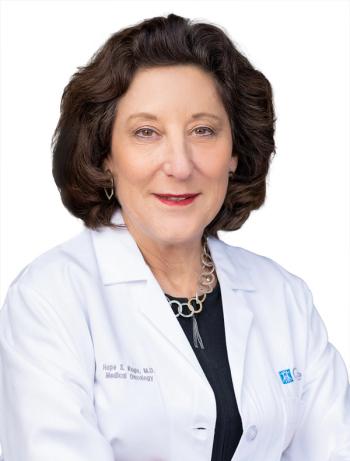
Hope S. Rugo, MD, discussed KEYNOTE-B49 data showing pembrolizumab plus chemotherapy improved PFS in PD-L1-positive HR+/HER2- breast cancer.

In a prospective cohort, a 3-gene blood model predicted 1-year castration resistance with an AUC of 0.89 in metastatic hormone-sensitive prostate cancer.

Rutika Mehta, MD, MPH, explains how she sequences MSI, HER2, claudin 18.2, and PD-L1 testing when tissue is limited in gastroesophageal cancer.
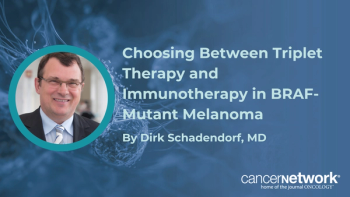
Dirk Schadendorf, MD, outlineed which patients with BRAF V600–mutant melanoma, including those with brain metastases, may be candidates for triplet therapy.
Advertisement
Advertisement
Trending on CancerNetwork
1
KEYNOTE-B49 Points to a PD-L1-Defined Subset Benefiting From Immunotherapy in Breast Cancer
2
Closing the Gaps in Precision Oncology for Breast Cancer
3
Navigating PD-L1–Low Gastroesophageal Cancer Treatment and Payer Challenges
4
Managing Patients With No Pathologic Response After Durvalumab Plus FLOT
5