

Opinion|Videos|September 28, 2026
Weighing Toxicity Against Survival Benefit in Counseling
Matthew Gumbleton, MD, PhD, of Huntsman Cancer Institute and Siddhartha Devarakonda, MD, of Providence Swedish Cancer Institute discuss how they translate grade 3 or higher adverse event rates into a conversation a patient can actually use in epidermal growth factor receptor (EGFR)-mutated advanced non–small cell lung cancer (NSCLC).
Advertisement
Matthew Gumbleton, MD, PhD, of Huntsman Cancer Institute and Siddhartha Devarakonda, MD, of Providence Swedish Cancer Institute discuss how they translate grade 3 or higher adverse event rates into a conversation a patient can actually use in epidermal growth factor receptor (EGFR)-mutated advanced non–small cell lung cancer (NSCLC). Dr Gumbleton says toxicity grading is hard for patients and clinicians to conceptualize, so his central message is to reach out early rather than wait for a scheduled follow-up. Dr Devarakonda says the first visit for a patient with metastatic disease can take 30 to 40 minutes before toxicity is even raised, and that beyond a point patients stop absorbing information. Rather than reciting every percentage, he gives a few facts, notes that no treatment is free of adverse effects, and tailors the discussion to the patient's work, caregiving demands and sun exposure before offering a recommendation.
Advertisement
Related to this article
Daniel C. McFarland, DO, and Yesne Alici, MD, discussed medical aid in dying in cancer care, New York’s safeguards, and the role of psycho-oncology.
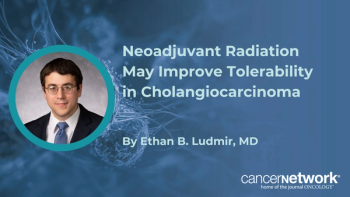
Ethan B. Ludmir, MD, explains the rationale for moving radiation into the neoadjuvant setting for borderline resectable cholangiocarcinoma.

An analysis of the BENEFIT trial supports isatuximab plus bortezomib, lenalidomide, and dexamethasone as a new standard of care in transplant-ineligible NDMM.
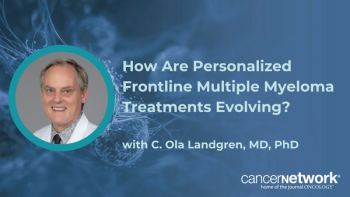
C. Ola Landgren, MD, PhD, discusses how MRD-driven strategies may eliminate the transplant-eligible vs transplant-ineligible framework in multiple myeloma.

Hans C. Lee, MD, discussed how community oncologists with limited access to MRD testing can think about the new IMS/IMWG definition of cure in myeloma.
A patient-reported outcomes analysis from the phase 3 IRAKLIA trial showed higher satisfaction with subcutaneous isatuximab via on-body injector.

The phase 3 EXCALIBER-RRMM trial supports iberdomide plus daratumumab and dexamethasone as a new standard of care in relapsed/refractory multiple myeloma.
C. Ola Landgren, MD, PhD, discusses disparities in myeloma care access between academic and community practices and how his center works to bridge that gap.
Advertisement
Advertisement
Trending on CancerNetwork
1
Acting on a HER2 Result and Navigating Access to Therapy
2
The Case for Frontline Zongertinib in HER2-Mutant NSCLC
3
Emerging Endocrine Doublets and Serial ESR1 Testing in HR+/HER2− mBC
4
Isatuximab-Based Therapy Shows “Impressive” PFS Projections in NDMM
5