
Opinion|Videos|April 27, 2026
Case-Based Sequencing After IO in Advanced Renal Cell Carcinoma
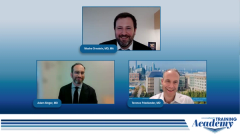
In this case-based segment on advanced renal cell carcinoma, Dr. Ornstein presents a patient with intermediate-risk disease who experienced progression after 14 months of frontline dual immune checkpoint inhibitor therapy. He highlights the importance of interpreting prior treatment response and clinical status when selecting second-line therapy.
Advertisement
Episodes in this series
In this case-based segment on advanced renal cell carcinoma, Dr. Ornstein presents a patient with intermediate-risk disease who experienced progression after 14 months of frontline dual immune checkpoint inhibitor therapy. He highlights the importance of interpreting prior treatment response and clinical status when selecting second-line therapy.
Dr. Singer discusses how the duration of response to prior therapy informs treatment decisions, noting that this patient achieved meaningful benefit, suggesting a disease biology that remains responsive to systemic therapy. For a fit patient seeking the most effective option, he favors regimens with strong efficacy data, such as lenvatinib with everolimus or cabozantinib, referencing randomized data showing improved progression-free survival with combination therapy. Dr. Ornstein adds that while efficacy is critical, toxicity considerations must also be weighed, particularly in the refractory setting. The discussion emphasizes balancing efficacy and tolerability while individualizing treatment selection in advanced renal cell carcinoma.
Advertisement
Related to this article

Peter Forsyth, MD, discusses a first-in-human trial of intrathecal dendritic cell therapy for leptomeningeal disease from breast cancer.
Adding radiotherapy to tislelizumab and chemotherapy also appeared to prolong progression-free survival in a real-world setting.
![“[E]ven if patients relapse following an allogeneic transplant, donor lymphocyte infusions can be incredibly helpful,” said Mary Jo Lechowicz, MD.](https://cdn.sanity.io/images/0vv8moc6/cancernetwork/06df696db42b151710c58727b1333ee098de6453-1200x800.jpg?w=350&fit=crop&auto=format)
“[E]ven if patients relapse following an allogeneic transplant, donor lymphocyte infusions can be incredibly helpful,” said Mary Jo Lechowicz, MD.

The Community Oncology Alliance is urging CMS and Congress to address Medicare Part B drug negotiation policies that threaten independent cancer practices and patient access.

In a phase 1 trial, the MVA-vectored neoantigen vaccine TG4050 produced no dose-limiting toxicities or relapses in those with resected HPV-negative HNSCC.

At SOHO 2026, experts highlighted new findings and advances across diseases including lymphoma, myelodysplastic syndrome, and leukemia.

Poster sessions at WCLC 2026 detail how surgery, nursing, and pathology can contribute to the multidisciplinary care of patients with lung cancer.
A positive CHMP opinion supports the perioperative use of pembrolizumab plus enfortumab vedotin in resectable MIBC regardless of cisplatin eligibility.
Advertisement
Advertisement
Trending on CancerNetwork
1
CELMoDs After T-Cell–Engaging Therapy in Multiple Myeloma
2
Key Takeaways for Multidisciplinary Lung Cancer Care From WCLC 2026
3
FDA Approves Imlunestrant Combo in ESR1-Mutated Breast Cancer
4
Pembrolizumab/Enfortumab Vedotin Earns Positive CHMP Opinion in MIBC
5