

Opinion|Videos|October 15, 2024
ctDNA in CRC Management: Evolving Approaches for Personalized Care
Panelists discuss how circulating tumor DNA (ctDNA) is revolutionizing colorectal cancer (CRC) management by enabling more personalized and precise approaches to diagnosis, treatment selection, and monitoring of disease progression.
Advertisement
Episodes in this series
Advertisement
Related to this article

Jasmine Zain, MD, emphasized the importance of good patient counseling when outlining the potential risks of secondary T-cell malignancies following CAR T-cell therapy.
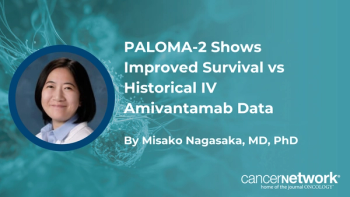
Misako Nagasaka, MD, PhD, discusses PALOMA-2’s 70% 3-year survival rate compared with historical MARIPOSA data for intravenous amivantamab.
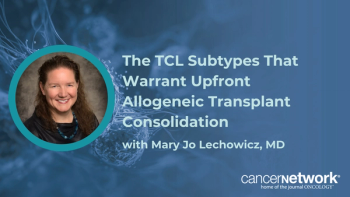
Adult T-cell lymphoma and leukemia may warrant upfront allogeneic transplant, according to Mary Jo Lechowicz, MD.

Poster presentations at SOHO 2026 may inform multiple myeloma practice across the newly diagnosed and relapsed/refractory settings.

The IND clearance for IASO208, a CD20-targeted in vivo CAR-T therapy requiring no leukapheresis or lymphodepletion, enables advancement of a phase 1b trial.

The OMNI-EGFR inhibitor BH-30643 produced a 45% objective response rate among patients with EGFR C797S–positive disease in the phase 1/2 SOLARA trial.

Data presented at WCLC 2026 support the use of B7-H3–directed antibody drug conjugates and brain MRI surveillance in small cell lung cancer.
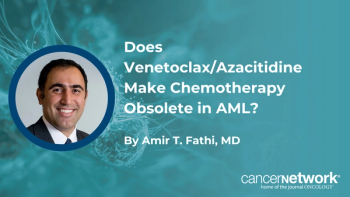
Amir T. Fathi, MD, explains which AML subgroups were excluded from PARADIGM and why chemotherapy remains standard for them.
Advertisement
Advertisement
Trending on CancerNetwork
1
Trastuzumab Botidotin Prolongs PFS vs T-DM1 in HER2+ Advanced Breast Cancer
2
Daraxonrasib Receives FDA Breakthrough Therapy Status in 1L Metastatic PDAC
3
How Does Azacitidine/Venetoclax Impact Hospital Burden in AML?
4
IASO208 Receives FDA IND Clearance for Relapsed/Refractory B-Cell Lymphoma
5