

Opinion|Videos|November 12, 2024
CLM in GALAXY: MRD Predicts Adjuvant Therapy Benefit and Prognosis
Panelists discuss how minimal residual disease (MRD) detection in patients with colorectal liver metastases (CLM) in the GALAXY study predicts both the benefit of adjuvant therapy and overall prognosis, potentially guiding more personalized treatment decisions.
Advertisement
Episodes in this series
Advertisement
Related to this article

Data from the OrigAMI-4 trial support the accelerated approval of amivantamab and hyaluronidase-lpuj for this HNSCC population.

Bhanu Prasad Venkatesulu, MBBS, MD, discussed why fewer radiation oncologists offer prostate brachytherapy and the patients for whom he still recommends it.

Chinmay Jani, MD, explains how air pollution and asbestos contribute to lung cancer deaths beyond tobacco.

Claudine Isaacs, MD, and community oncologists weigh ASCENT-03 and ASCENT-04 data, crossover, and toxicity management with sacituzumab govitecan in TNBC.
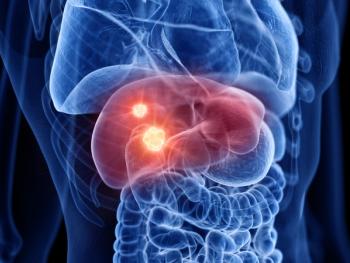
The FDA assigned an April 9, 2027, target action date to resubmitted applications for rivoceranib plus camrelizumab in unresectable or metastatic hepatocellular carcinoma.
Adam C. Olson, MD, MSc-GH, discussed letting patients choose between modalities with comparably strong evidence, and the data that shaped his approach.
Data from the phase 3 MANGROVE study support the application for zanubrutinib/rituximab in this mantle cell lymphoma population.

Sunnie Kim, MD, discussed perioperative durvalumab plus FLOT, ctDNA-guided de-escalation, irAE monitoring, and biomarkers in gastroesophageal cancer.
Advertisement
Advertisement
Trending on CancerNetwork
1
FDA Approves SC Amivantamab for Recurrent/Metastatic HNSCC
2
Setting Up an HDR Brachytherapy Program Amid a National Decline
3
Zamto-Cel Improves EFS vs R-GemOx in Transplant-Ineligible R/R LBCL
4
16-Fraction PMRT With IMN Irradiation Noninferior in High-Risk Breast Cancer
5