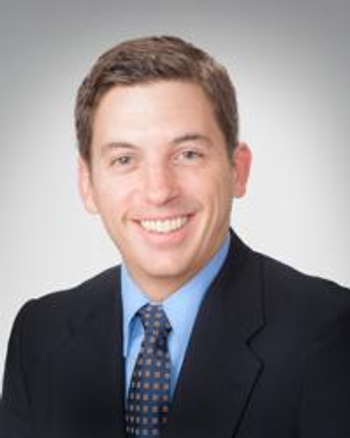
Rutika Mehta, MD, MPH, discussed biomarker testing, PD-L1–low treatment, FLOT dosing, early referral, and ctDNA in gastroesophageal cancer.
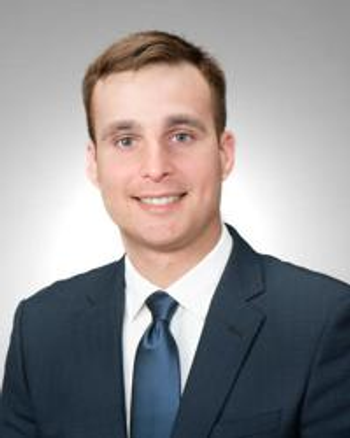
Sunnie Kim, MD, discussed perioperative durvalumab plus FLOT, ctDNA-guided de-escalation, irAE monitoring, and biomarkers in gastroesophageal cancer.
CancerNetwork® spoke with Sunnie Kim, MD, associate professor of medicine in the Division of Medical Oncology at the University of Colorado School of Medicine, a gastrointestinal medical oncologist at the University of Colorado Cancer Center, about real-world challenges in the management of gastroesophageal cancer. Kim discussed postoperative management after perioperative durvalumab (Imfinzi) plus FLOT (fluorouracil, leucovorin, oxaliplatin, and docetaxel) based on the phase 3 MATTERHORN trial (NCT04592913),1 including findings from the phase 2 VESTIGE trial (NCT03443856) of adjuvant nivolumab (Opdivo) plus ipilimumab (Yervoy).2 She also addressed circulating tumor DNA (ctDNA)–guided de-escalation, monitoring for immune-related adverse events, infusion logistics with zolbetuximab-clzb (Vyloy) plus FOLFOX (leucovorin, fluorouracil, and oxaliplatin),3,4 her rationale for neoadjuvant therapy in clinical T2N0 disease, broad biomarker testing, and emerging strategies to overcome resistance.
Unfortunately, at this time we don’t have a great alternative strategy in the adjuvant setting. There have been studies looking at whether different adjuvant therapies, like ipilimumab plus nivolumab, could work better in the era of FLOT alone, not necessarily FLOT plus durvalumab, and unfortunately we didn’t see a benefit.2 For patients who don’t have any pathological response after neoadjuvant FLOT plus durvalumab, I do continue FLOT on the back end with durvalumab, because sometimes we have patients who have clinical or radiologic improvements, and that’s to be considered as well as the pathological response. Of course, in the future, we need more effective strategies and treatments that can overcome resistance to FLOT plus durvalumab. My practice right now is to still offer the same treatment after surgery.
The de-escalation space for me is still very patient dependent, meaning that I don’t use this broadly. As we know, most patients who have undergone a gastrectomy or esophagectomy are struggling. Their anatomy has been completely altered, and it is hard for them to tolerate a treatment like FLOT or FLOT plus durvalumab on the back end. For the patient who is clearly struggling, where you’re not sure you’re going to be able to get them all the recommended doses, I will usually try to get at least a baseline pretreatment ctDNA.
Then, if the postsurgical ctDNA is negative, I’ll have a conversation with the patients who are struggling with further chemotherapy, or if I feel like it might even be unsafe for them to continue. If it’s negative, I’ll say, well, it’s not a fully validated strategy to completely stop, but we can start having conversations, and I’d like to get at least a few serial ctDNA tests before we let them completely stop everything. It is an emerging space right now, but it is still important to take care of the patients who are struggling quite a bit with postoperative therapy.
As we all know, there are a lot of delayed immune-related adverse events that happen with PD-1 and PD-L1 inhibitors. Fortunately, for these patients who are getting durvalumab on the back end after surgery, we’re seeing them monthly. For the most part, we’re able to monitor these patients pretty closely and see if any emerging immune-related toxicities are occurring. Of course, that means watching their endocrine function, looking at [thyroid-stimulating hormone], and looking for any signs of adrenal insufficiency, too. Sometimes you can see that in the electrolytes, and if patients are feeling more fatigued, have malaise, or feel like they’re coming down with the flu, my antenna for endocrine dysfunction goes way up.
Other things include watching their kidney function, making sure that they’re not developing the rarer toxicities like immune-related nephritis, and checking their vitals very closely. If they start having an oxygen desaturation, or if we’re seeing signs of pneumonitis on scans, we need to be aware of how to pause the drug and reinstate it safely. Of course, there are the more common adverse effects like rash and diarrhea. Those are a little bit more obvious, and those are symptoms that patients will sometimes report directly to us. For some of the more subtle toxicities, practitioners need to be aware, be asking patients the right questions, and make sure that we’re following the lab work closely.
When we talk about making sure that patients don’t have delays in care, the first thing I like to implement is having patients receive G-CSF with every infusion, so that they’re most likely going to be in a good place in terms of their blood counts to receive the next cycle on time. The worst situation is when you have them scheduled and they’re not able to get treatment because of neutropenia or severe thrombocytopenia, and then you have to delay. That’s where the wasted chair space comes into play. Otherwise, these are long regimens. There’s unfortunately no real shortcut to giving FLOT and durvalumab, so making sure that patients stay on schedule is going to be very important.
Another challenging treatment that we use in gastroesophageal cancer is zolbetuximab plus chemotherapy such as FOLFOX.3 Often, for the first 1 to 2 doses, we have to give zolbetuximab very slowly so that patients don’t experience the severe nausea and vomiting that they can get in the chair. We tend to give zolbetuximab on day 1 and FOLFOX on day 2. After 1 to 2 doses, patients tend to tolerate the drug better, and as soon as we get that signal, we can usually combine the 2-day treatment into a 1-day treatment, so patients get FOLFOX and zolbetuximab on the same day. Certainly, our treatments are long, and hopefully we’ll get some subcutaneous options in the future so we can administer drugs much more quickly than with an IV infusion.
Technically, T2N0 is stage I and could go to surgery first. The problem is that our diagnostic tools sometimes don’t give us the full picture, and we now have more modern literature showing that among patients who were initially diagnosed with clinical T2N0 disease, upward of 60% have upstaging at the time of upfront surgery. At that point, you’re in a difficult place, because if they have a positive lymph node, or the tumor is not T2 but T3, then you need to give them some kind of adjuvant therapy, and these adjuvant therapies are very hard to tolerate after an esophagectomy or a gastrectomy.
My practice, knowing that most patients do get upstaged from T2N0 to higher stages at the time of surgery, is to offer them neoadjuvant therapy, because we know that neoadjuvant therapy, even with aggressive regimens like FLOT plus durvalumab, is much better tolerated before surgery than after surgery.1
This is one of my favorite topics. Biomarker testing in gastroesophageal cancer is rapidly developing, and there are 4 biomarkers that you must have: claudin 18.2, HER2, PD-L1, and mismatch repair/MSI-high testing, because those have immediate relevance to patients in terms of their treatment options. I tend to send broader next-generation sequencing for these patients at any stage, just so we have that information at our fingertips. By sending these broad molecular panels, you can get the immunohistochemistry results very quickly, but you can also check for rarer alterations like RET fusions, NTRK alterations, and BRAF V600E mutations. Sending for that broad testing is best, so you get one report.
One of the challenges we see in biomarker testing is that if you’re testing these biomarkers piecemeal, when you go back to the chart to try to find the results, they’re all in different places, and it’s much easier to miss something. Having it all on one document is better. The other thing is that a lot of these companies are trying to integrate into various practices’ electronic medical records, so you don’t necessarily have to go find the PDF; it’s already built into the electronic medical record system and much easier to find.
We’re in a great time right now in terms of drug development, where we are looking for other biomarkers, but we are also finding new ways to target our tried-and-true biomarkers. In the claudin 18.2 space, for example, we have a current approval for a monoclonal antibody targeting claudin 18.2,3,4 but the drug development space is progressing very rapidly. We have antibody-drug conjugates targeting claudin 18.2 and bispecific antibodies to help the immune system better target claudin 18.2, and some of our more sophisticated cellular therapies, like CAR T-cell therapy, tumor-infiltrating lymphocytes, and vaccine therapies, are also very promising.
1. Janjigian YY, Al-Batran SE, Wainberg ZA, et al. Perioperative durvalumab in gastric and gastroesophageal junction cancer. N Engl J Med. 2025;393(3):217-230. doi:10.1056/NEJMoa2503701
2. Lordick F, Mauer ME, Stocker G, et al. Adjuvant immunotherapy in patients with resected gastric and oesophagogastric junction cancer following preoperative chemotherapy with high risk for recurrence (ypN+ and/or R1): European Organisation of Research and Treatment of Cancer (EORTC) 1707 VESTIGE study. Ann Oncol. 2025;36(2):197-207. doi:10.1016/j.annonc.2024.10.829
3. Shitara K, Lordick F, Bang YJ, et al. Zolbetuximab plus mFOLFOX6 in patients with CLDN18.2-positive, HER2-negative, untreated, locally advanced unresectable or metastatic gastric or gastro-oesophageal junction adenocarcinoma (SPOTLIGHT): a multicentre, randomised, double-blind, phase 3 trial. Lancet. 2023;401(10389):1655-1668. doi:10.1016/S0140-6736(23)00620-7
4. Shah MA, Shitara K, Ajani JA, et al. Zolbetuximab plus CAPOX in CLDN18.2-positive gastric or gastroesophageal junction adenocarcinoma: the randomized, phase 3 GLOW trial. Nat Med. 2023;29(8):2133-2141. doi:10.1038/s41591-