

News|Videos|August 23, 2026
Efficacy Results - Complete Response and Progression-Free Survival
Dr. Matthew Karr shares efficacy results from a trial of epcoritamab plus R-mini-CVP in elderly DLBCL, including an 86% complete response rate.
Advertisement
Despite dropping anthracycline entirely, the regimen produced an 86% complete response rate, matching a prior anthracycline-containing epcoritamab combination. One-year progression-free survival exceeded 95%, though overall survival data remain too immature to assess. Both physicians note cross-trial comparison limits given the 22-patient sample, but agree the results are encouraging against the historical ~60% complete response benchmark from mini-CHOP — strong efficacy achieved while removing one of the more toxic components of standard chemotherapy.
Advertisement
Related to this article
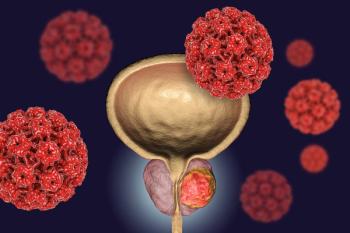
Copper Cu 64 PSMA I&T is under evaluation in 2 phase 3 prostate cancer trials, SOLAR-STAGE and SOLAR-RECUR.

Yujin Hoshida, MD, PhD, discussed the evidence for GLP-1 drugs, diet, and exercise as ways to prevent liver cancer caused by metabolic disease.

The EC has approved daraxonrasib monotherapy for adults with previously treated metastatic pancreatic adenocarcinoma, with or without an identified RAS mutation.

“We still do not have convincing evidence that these agents serve as HCC chemopreventive drugs,” said Yujin Hoshida, MD, PhD, of GLP-1 receptor agonists.

A post hoc RTOG 9902 analysis tied adjuvant chemotherapy to better disease-free survival in high-risk prostate cancer with a post-radiation PSA above 0.2 ng/mL.
The IDMC recommended stopping the PRISM-1 trial after quemliclustat plus chemotherapy did not reach the overall survival efficacy boundary in metastatic pancreatic cancer.
In the phase 1 AURORAS-1 trial, the pan-RAS molecular glue ERAS-0015 produced confirmed responses across KRAS-mutant solid tumors.

Presenters at the 44th Annual CFS discuss key trends across multiple myeloma, B-cell malignancies, and small cell lung cancer.
Advertisement
Advertisement
Trending on CancerNetwork
1
PSA Response After Radiation May Guide Adjuvant Chemo in Prostate Cancer
2
EC Approves Daraxonrasib for Previously Treated Metastatic Pancreatic Cancer
3
Bringing Bispecifics and Clinical Trials to Community SCLC Practices
4
Rethinking HCC Surveillance and Treatment Amid a Shifting Risk Landscape
5