

News|Videos|August 23, 2026
Safety and Tolerability in Older, Frail Patients With DLBCL
Dr. Matthew Karr reviews safety and tolerability data for epcoritamab plus R-mini-CVP, including full treatment completion in frail, elderly patients with DLBCL.
Advertisement
All 22 patients completed the full six-cycle regimen, compared with only about 70% completion historically with mini-CHOP — a meaningful signal in patients well into their 80s, many at performance status 2. Toxicities were consistent with known bispecific class effects, primarily low-grade CRS, plus one grade 2 ICANS case that resolved after switching premedication from prednisone to dexamethasone. Dr. Karr emphasizes these are manageable, familiar side effects rather than new safety signals.
Advertisement
Related to this article
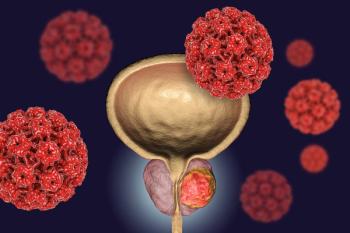
Copper Cu 64 PSMA I&T is under evaluation in 2 phase 3 prostate cancer trials, SOLAR-STAGE and SOLAR-RECUR.

Yujin Hoshida, MD, PhD, discussed the evidence for GLP-1 drugs, diet, and exercise as ways to prevent liver cancer caused by metabolic disease.

The EC has approved daraxonrasib monotherapy for adults with previously treated metastatic pancreatic adenocarcinoma, with or without an identified RAS mutation.

“We still do not have convincing evidence that these agents serve as HCC chemopreventive drugs,” said Yujin Hoshida, MD, PhD, of GLP-1 receptor agonists.

A post hoc RTOG 9902 analysis tied adjuvant chemotherapy to better disease-free survival in high-risk prostate cancer with a post-radiation PSA above 0.2 ng/mL.

The IDMC recommended stopping the PRISM-1 trial after quemliclustat plus chemotherapy did not reach the overall survival efficacy boundary in metastatic pancreatic cancer.

In the phase 1 AURORAS-1 trial, the pan-RAS molecular glue ERAS-0015 produced confirmed responses across KRAS-mutant solid tumors.

Presenters at the 44th Annual CFS discuss key trends across multiple myeloma, B-cell malignancies, and small cell lung cancer.
Advertisement
Advertisement
Trending on CancerNetwork
1
PSA Response After Radiation May Guide Adjuvant Chemo in Prostate Cancer
2
EC Approves Daraxonrasib for Previously Treated Metastatic Pancreatic Cancer
3
Bringing Bispecifics and Clinical Trials to Community SCLC Practices
4
Rethinking HCC Surveillance and Treatment Amid a Shifting Risk Landscape
5