

Opinion|Videos|November 25, 2026
Evaluating CELMoDs vs Traditional Triplets in Relapsed/Refractory Multiple Myeloma
Faculty continue the case-based discussion of treatment selection for a patient with standard-risk disease, slow biochemical first relapse, and no prior CD38-directed therapy.
Advertisement
Faculty continue the case-based discussion of treatment selection for a patient with standard-risk disease, slow biochemical first relapse, and no prior CD38-directed therapy. They discuss how disease biology, prior treatment exposure, and available options influence sequencing decisions, with several approaches considered reasonable for this patient. Consultation with a myeloma specialist may help community clinicians weigh treatment choices, patient preferences, access, and logistical considerations. The discussion then compares iberdomide-based therapy with traditional triplet regimens, including daratumumab-based and proteasome inhibitor-based combinations. Faculty emphasize that the EXCALIBER-RRMM MRD-negative response findings are encouraging, but progression-free survival data are needed to better establish clinical benefit. Cross-trial comparisons with historical regimens require caution. For patients who cannot access T-cell-redirecting therapies, an iberdomide-based regimen may be a reasonable option. Quality of life, cumulative toxicity, infusion burden, and the practical demands of prolonged treatment should also inform regimen selection.
Advertisement
Related to this article

Adding bezuclastinib to sunitinib may lead to additional responses after initial progression on sunitinib monotherapy, according to Neeta Somaiah, MD.

In a phase 1/2 pilot study, seleno-L-methionine plus axitinib and pembrolizumab yielded a 70% ORR in treatment-naive metastatic clear cell RCC.

Peak subgroup data at CTOS 2026 show numerically longer PFS with bezuclastinib plus sunitinib in exon 9-mutant GIST and activity after sunitinib failure.

Halneuron met the primary end point of a phase 2b trial, as more patients had at least 50% pain reduction at week 4 vs placebo in chemotherapy-induced neuropathic pain.

Neeta Somaiah, MD, explains how combining bezuclastinib and sunitinib provides complementary KIT coverage, including in the exon 9 subgroup.

Bezuclastinib plus sunitinib is now FDA approved for imatinib-pretreated GIST after the phase 3 PEAK trial showed a median PFS of 16.5 vs 9.2 months.

In honor of Pancreatic Cancer Awareness Month, experts discuss how advances in SBRT, MRI-guided adaptive radiation, and systemic therapy are reshaping care.
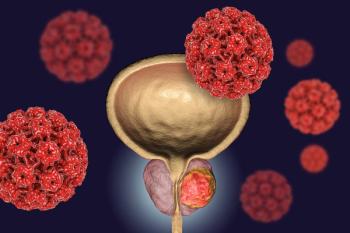
Copper Cu 64 PSMA I&T is under evaluation in 2 phase 3 prostate cancer trials, SOLAR-STAGE and SOLAR-RECUR.
Advertisement
Advertisement
Trending on CancerNetwork
1
FDA Approves Bezuclastinib Plus Sunitinib for Imatinib-Pretreated GIST
2
Why Radiation Belongs in the Future of Pancreatic Cancer Care
3
Bezuclastinib/Sunitinib Shows Activity in Exon 9, Crossover GIST Subgroups
4
Seleno-L-Methionine Combo Yields 40% CR Rate in Treatment-Naive ccRCC
5