Allen Khodab, MD discussed how patients with larger prostates had reduced IPSS scores that normalized to the same level as those with normal-sized glands.
A 10-year analysis of 3477 patients found low prostate cancer–specific mortality with focal high-intensity focused ultrasound or cryotherapy for nonmetastatic disease.
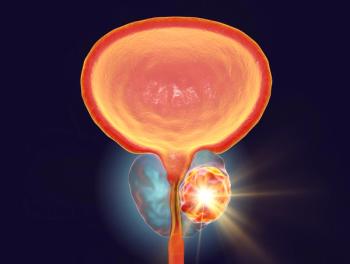
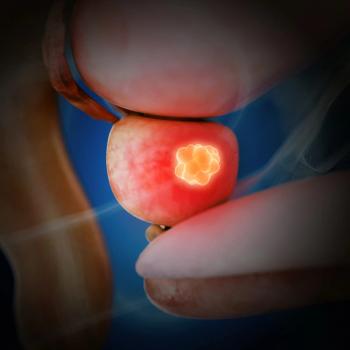
In an analysis of 3477 patients with nonmetastatic prostate cancer, focal high-intensity focused ultrasound (HIFU) or cryotherapy demonstrated a 10-year cumulative incidence of prostate cancer–specific mortality of 0.13% (95% CI, 0.027%-0.45%), according to findings published in European Urology.1
Data were drawn from the prospective, nationally mandated UK HIFU Evaluation and Assessment of Treatment registry and International Cryotherapy Evaluation registry, which included patients treated at 14 UK centers between 2004 and 2024. Notably, the cohort included a substantial proportion of patients with unfavorable intermediate-risk (23%) and high-risk (25%) disease by European Association of Urology (EAU) 2025 criteria.
Among the 3477 patients (HIFU, n = 2897; cryotherapy, n = 580), only 2 prostate cancer–specific deaths occurred within 10 years. The 10-year cumulative incidence of all-cause mortality was 12.0% (95% CI, 8.8%-15.0%), and metastasis developed in 3.3% of patients (95% CI, 2.1%-4.9%). Androgen deprivation therapy (ADT) use for any indication reached a 10-year cumulative incidence of 14% (95% CI, 11%-17%).
On an intention-to-treat basis, 10-year local re-treatment and radical treatment were 33% (95% CI, 30%-37%) and 30% (95% CI, 27%-34%), respectively. In a post hoc per-protocol analysis that censored patients who underwent radical treatment despite remaining eligible for a further focal ablative session, the estimates were 13% (95% CI, 11%-16%) for local re-treatment and 8.9% (95% CI, 6.9%-11%) for radical treatment.
Cancer-specific mortality at 10 years was 0.15% with HIFU and 0% with cryotherapy, and all-cause mortality was 12% and 6.5%, respectively. The metastasis rates were similar between modalities (3.3% vs 2.8%), whereas ADT use was lower with HIFU (13% vs 21%). Radical treatment in the intention-to-treat analysis was 30% (95% CI, 27%-34%). Across EAU risk groups, the cumulative incidence of metastasis was 2.1% for favorable intermediate-risk disease compared with 4.2% and 4.7% for unfavorable intermediate-risk and high-risk disease, respectively.
A landmark sensitivity analysis restricted the cohort to 426 patients with at least 7 years of not experiencing any primary or secondary end point prior, then assessed outcomes at 10 and 12 years. No prostate cancer–specific deaths occurred in this subgroup. The 10- and 12-year cumulative incidences of metastasis were both 0.45% (95% CI, 0.042%-2.3%), and per-protocol local re-treatment was 4.2% (95% CI, 2.1%-7.3%) at 10 years and 5.0% (95% CI, 2.6%-8.6%) at 12 years. The authors noted that this pattern suggests focal therapy outcomes remain durable well beyond initial treatment among patients who remain event free at 7 years, though this landmark subgroup is not representative of the overall cohort.
The authors noted that their results are comparable to 10-year outcomes reported after radical treatment in the ProtecT trial (NCT02044172), in which cancer-specific mortality ranged from 0.6% to 1.0% and metastasis rates were approximately 3% to 4%.2
The study's authors identified registry-based limitations, including missing data, right censoring, and a lack of standardization across institutions in how further local treatment and ADT were applied. They called for a dedicated prognostic risk calculator, further prospective study of focal therapy in high-risk disease, and improved tools for detecting and managing locally recurrent disease after ablation.