Now Playing
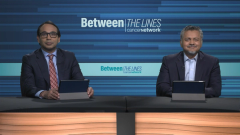
The hosts open the program and set out what the discussion will cover in relapsed or refractory multiple myeloma: the area of unmet need in patients who have already received a proteasome inhibitor (PI) and an immunomodulatory drug (IMiD), the regulatory path that led from monotherapy to a combination, the DREAMM-7 trial design and efficacy outcomes, safety and monitoring, and where an antibody-drug conjugate (ADC) fits among the many options available at early relapse.
The hosts open the program and set out what the discussion will cover in relapsed or refractory multiple myeloma: the area of unmet need in patients who have already received a proteasome inhibitor(PI)andanimmunomodulatorydrug(IMiD),theregulatorypaththatledfrommonotherapy to a combination, the DREAMM-7 trial design and efficacy outcomes, safety and monitoring, and where an antibody-drug conjugate (ADC) fits among the many options available at early relapse.
The faculty then trace the development history of belantamab mafodotin. They describe the landscape around 2018, when daratumumab as a single agent produced a response rate close to 30% and only naked antibodies were available, elotuzumab targeting SLAMF7 and daratumumab targeting CD38, leaving an ADC as an unmet need. DREAMM-1 response rates are discussed from
the phase 1 trial, that then lead to DREAMM-2, which supported accelerated approval on a response rate close to 30% in patients who had received 4 prior lines. Three confirmatory trials were designed simultaneously. DREAMM-3 tested single-agent belantamab mafodotin against pomalidomide and dexamethasone and produced a median progression-free survival of 11 months, numerically higher but short of its prespecified endpoint because the control arm exceeded7monthsagainstanexpectationof4to5months,promptingUSwithdrawal.Thefaculty introduce DREAMM-7 and DREAMM-8 studies.