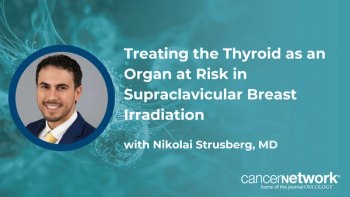
Nikolai Strusberg, MD, discussed other toxicities of proton vs photon breast RT, practice implications, and next steps in capsular contracture research.
Combining ctDNA and modern imaging with novel therapeutics may help determine subsets of patients who are eligible to receive reduced treatment courses.
At the 3rd Biennial Miami Precision Medicine Conference, Craig H. Moskowitz, MD, spoke with CancerNetwork® about meaningfully defining and treating subgroups of patients with lymphoma to help move the field forward. Rather than “lumping subtypes of lymphoma together” as broad categories, he emphasized treating patients based on their individual disease characteristics.
Moving the field forward, Moskowitz said, will require defining the lymphoma subpopulations who more immediately require modern therapeutic strategies. Among patients with large B-cell lymphoma and Hodgkin lymphoma, for example, the use of circulating tumor DNA (ctDNA) and modern imaging may help determine how to cure patients with less extensive treatment.
Moskowitz is a professor of medicine at the Miller School of Medicine of the University of Miami Health System and the director of academic clinician development at Sylvester Comprehensive Cancer Center.
Transcript:
The key thing, from my point of view, is not lumping subtypes of lymphoma together. There’s just not one diffuse large B-cell lymphoma. There’s just not one mantle cell lymphoma. There’s not one marginal zone lymphoma. There’s not one follicular lymphoma. Each of them has a number of subcategories with them that behave differently.
Then the patient should be treated based on their subcategory, if at all possible. That is not necessarily easy to do, especially with our industry partners who like to lump all the patients together. But in reality, at the end of the day, that’s not going to move the field forward. The field will be moved forward by looking at subsets of patients and defining which subsets of patients need to receive more modern therapeutics. More importantly, it’s very clear with the curable malignancies—large [B-cell] lymphoma and Hodgkin lymphoma—that the key thing is using novel techniques to decrease the amount of therapy [by] using ctDNA and modern imaging with modern therapeutics to cure patients with less treatment. That’s where the field is going.